Thixomolding vs. Die Casting: Definitive Comparison for 2026 Manufacturing
Abstract:
Thixomolding vs die casting is no longer just a process choice—it is a performance decision. For manufacturers targeting lighter parts, tighter tolerances, and better surface quality, magnesium thixomolding offers clear advantages. With advanced control of the semi-solid metal casting process, YIZUMI thixomolding machines help improve consistency, reduce defects, and support high-value production.
For decades, High-Pressure Die Casting (HPDC) was the dominant technology for high-volume metal production. However, the rise of Electric Vehicles (EVs) has made "lightweighting" the primary engineering directive, and the consumer electronics sector is pushing for wall thicknesses so thin. HPDC can't meet the demand and enter Thixomolding.
In traditional die casting, metal must be heated until it is completely liquid. While this allows for fast filling, it introduces three major "Liquid Metal" headaches: turbulence & porosity, high shrinkage, and environmental hazard. Unlike die casting, the process behaves more like plastic injection molding, by processing magnesium in a semi-solid "slush" state (thixotropic state).
This guide provides a side-by-side technical and economic breakdown of Thixomolding vs. Die Casting.
Process Breakdown: Liquid vs. Slush
While die casting and Thixomolding processes result in a metal part, the physics of how that metal enters the mold couldn't be more different.
Die Casting: Liquid Path
Traditional High-Pressure Die Casting (HPDC) relies on total phase change. Magnesium or aluminum ingots are melted in a separate furnace until they are 100% liquid. A hydraulic plunger then forces this molten metal into a steel die at high velocities.
Benefit: It is incredibly fast. The high heat and liquid state allow for rapid filling of large, complex cavities, such as engine blocks or transmission cases.
Challenge: Because the metal is a "thin" liquid, it moves with high turbulence to entrap air, causing internal porosity which can prevent the part from being heat-treated or welded later.
Thixomolding: Semi-Solid Path
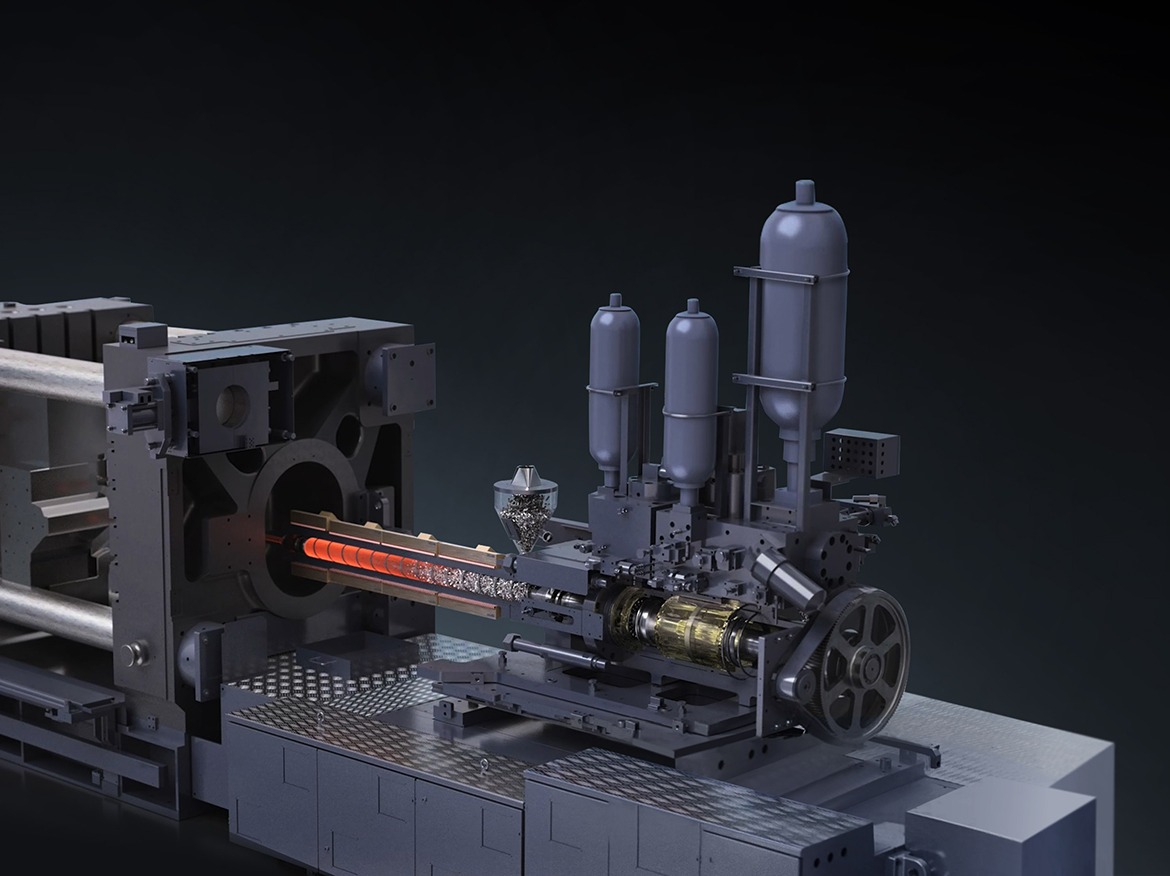
Thixomolding is often described as "injection molding for metal," using small magnesium chips (about the size of rice) fed into a room-temperature hopper. These chips are moved through a heated barrel by a reciprocating screw—identical to a plastic injection molding machine.
Benefits: Unlike the "splashing" of die casting, Thixomolding "pushes" the air out of the mold ahead of the metal. This leads to near-zero porosity, allowing for parts that are stronger, thinner, and capable of being welded or high-temperature powder-coated. On the other hand, there is no open furnace, no dross, and no dangerous molten metal pools.
Head-to-Head: The Data Floor
To understand why the industry is pivoting toward Thixomolding, we have to look at the hard numbers.
| Feature | Die Casting (HPDC) | Thixomolding | Results |
| Minimum Wall Thickness | >1.5mm | 0.3mm - 0.5mm | Thixomolded parts can be up to 30% lighter than their die-cast counterparts while maintaining the same structural footprint. |
| Shrinkage | High | Low | YIZUMI machines achieve an injection ending position deviation of just 0.4mm, resulting in "net-shape" parts that often require zero secondary machining. |
| Porosity | 2% - 5% | <1% | - |
| Secondary Machining | Intensive | Minimal (Net-Shape) | - |
| Cover Gas Usage | SF6 (High GWP) | Argon (Noble/Safe) | - |
| Heat Treatability | No (Blistering risk) | Yes (T4/T6 standard) | - |
| Part Quality | The mold life of Thixomolding is twice as long as that of die casting. Product deformation is smaller than that of die casting. | ||
Which Is Suitable for Your Business (Application Map)
Choose Die Casting for...
Large structural parts (engine blocks), high-volume automotive frames, and lower-cost aluminum components.
Choose Thixomolding for...
Ultra-thin laptop cases, EV battery housings, complex medical devices, and parts requiring high-end surface finishes.
YIZUMI Thixomolding Solutions: Precision in Semi-Solid Metal
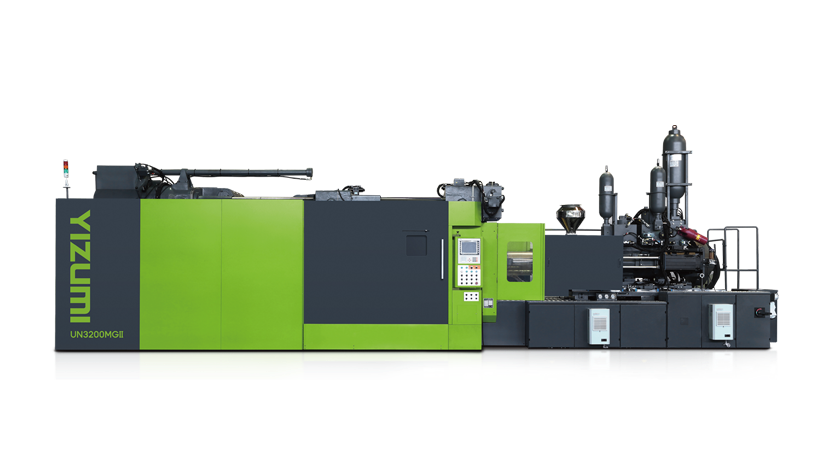
YIZUMI MGII · Plus Series Thixomolding Machine is designed for magnesium alloy processing, offering clamping forces ranging from 650T to over 3000T to accommodate everything from smartphone frames to large-scale EV battery housings. It is engineered to bridge the gap between high-volume output and aerospace-level precision. Explore its 6 advantages:
- Manages the semi-solid temperature within a hyper-strict range. This ensures the "slush" maintains a consistent solid-to-liquid ratio, which is the key to achieving a ±0.1% weight consistency in every shot.
- To fill ultra-thin walls (0.3mm), the MG series features an injection speed of up to 6m/s or higher.
- Uses proprietary bimetallic alloys for the screw and barrel to ensure a service life that exceeds industry standards, even when running 24/7 cycles.
- A vacuum-sealed system transports magnesium chips from the storage bin directly into the machine, eliminating moisture contamination and oxygen exposure.
- Through the Yi+ Smart Manufacturing Platform, factory managers can monitor the health of the screw and the energy consumption per part from a mobile device.Features integrated fire-suppression and argon-monitoring protocols.
Conclusion
While die casting will always have a place in heavy industrial manufacturing, Thixomolding is a leading choice for the next generation of "Light, Thin, and Green" products. For manufacturers in the EV, 5G, and aerospace sectors, the ability to produce heat-treatable, zero-porosity magnesium parts is a significant competitive advantage. YIZUMI MGII · Plus Series offers a comprehensive "Total Solution" in the market—combining the safety of plastic injection molding with the structural strength of magnesium alloy. Reach out to the YIZUMI Service Team.