Yi+Vision | Nicolai Lammert: The Philosophy Behind Additive Manufacturing
Long mold lead times and high costs make traditional tooling prohibitively expensive for large parts and small-batch orders. When a machine can bypass molds entirely, using standard plastic pellets to build industrial-grade functional parts layer by layer, is the traditional reliance on "tooling" being re-examined? Dr.-Ing. Nicolai Lammert, General Manager of YIZUMI Germany and Head of Additive Manufacturing at YIZUMI, has been deeply engaged in the field for over a decade, witnessing the pivotal leap from lab-scale prototyping to industrial mass production.
In Nicolai's view, the value of additive manufacturing lies not in replacing traditional processes like injection molding or die casting, but in opening up an entirely new path for industrial production—tooling-free, flexible, efficient, and well-suited for small batches and large parts. SpaceA is evolving from "a single machine" into "a complete production ecosystem." This is not a distant vision, but a real transformation already taking place at customer sites. In this episode, gain his insights on how additive manufacturing is reshaping the boundaries of industrial production.
Introduction ·

Dr.-Ing. Nicolai Lammert
——————————————————
General Manager of YIZUMI Germany and
Head of Additive Manufacturing at YIZUMI
01
| From Lab to Factory
The Industrial Transition of Additive Manufacturing
Nicolai notes that the most significant breakthrough in additive manufacturing in recent years is not a leap in any single performance metric, but rather the technology's systemic transition from the lab to real-world industrial settings.
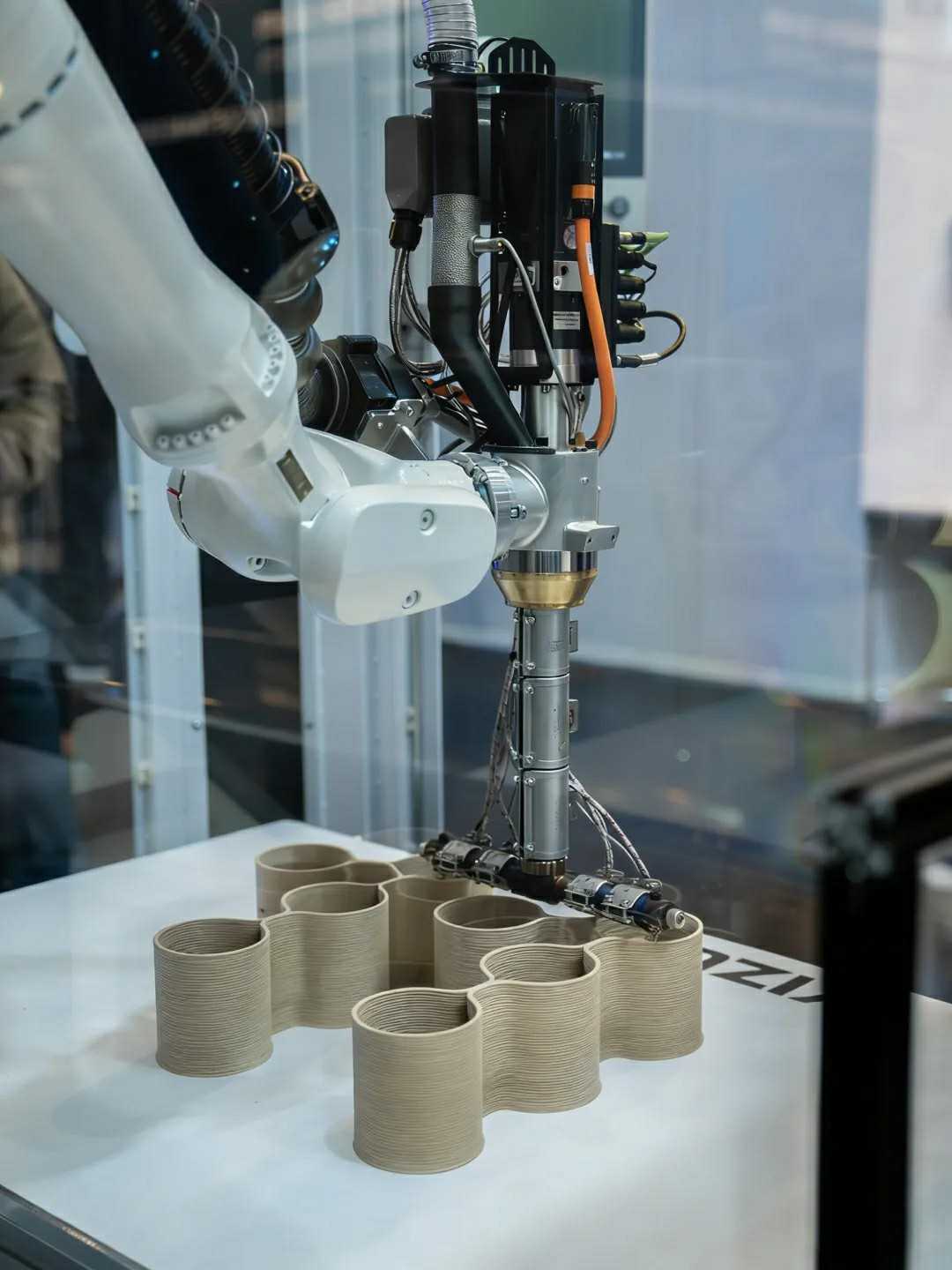
In terms of speed, screw-extrusion-based pellet additive manufacturing has achieved material throughput of several kilograms per hour—a qualitative leap over many filament-based systems—making large parts and industrial applications truly viable. On the materials front, SpaceA can process standard thermoplastic pellets, including both unfilled and highly filled variants, covering engineering polymers, fiber-reinforced composites, and material systems already widely validated in injection molding. This is critical for industrial customers, who need materials that are certified, reliably supplied, and cost-controlled.
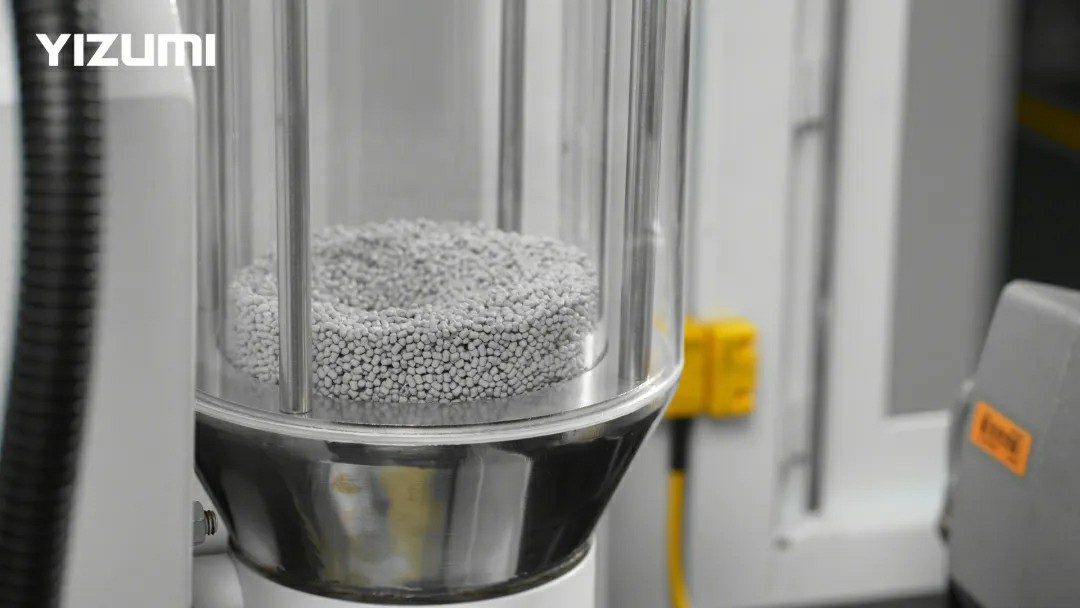
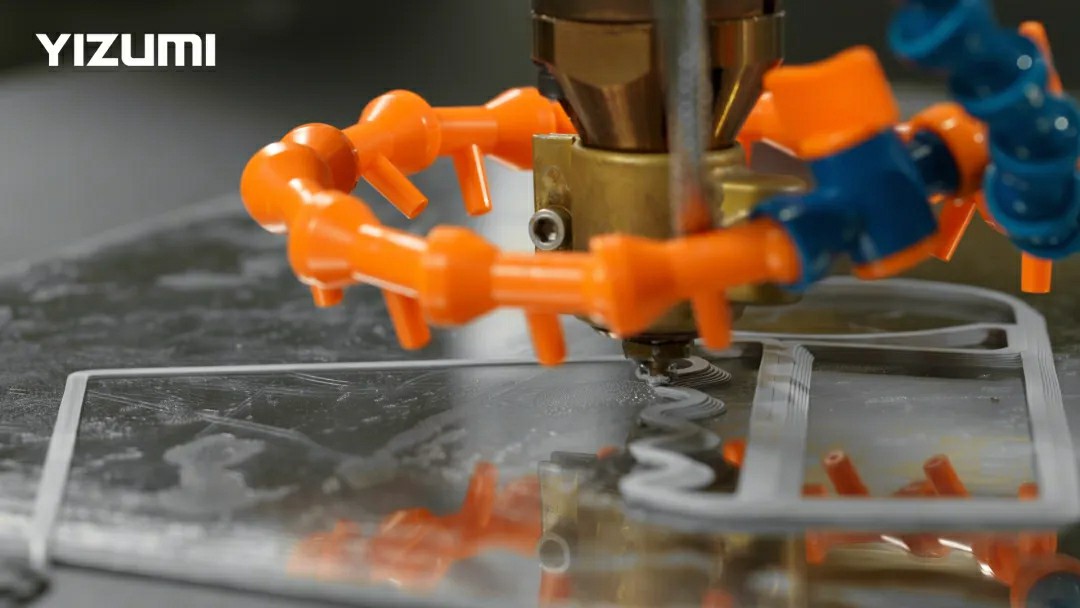
Breakthroughs have also been achieved in process control and precision. SpaceA Gen2 uses synchronized control of the extruder axis and the robot axis, enabling real-time coordination of material output, travel speed, and toolpath curvature. This delivers superior extrusion bead geometry, smoother surfaces, and improved dimensional stability, especially in dynamic high-speed movements.
More importantly, there has been a breakthrough in application scenarios. Additive manufacturing is no longer limited to prototypes—industries such as automotive (BMW, Volkswagen, etc.), rail transit, aerospace, and general manufacturing have already begun adopting the technology for functional parts and even certified components. The real breakthrough is not just faster machines or better materials, but the fact that additive manufacturing is entering serious industrial use cases, including certified, safety-relevant and series-production environments.
02
| Not to Replace, but to Expand
As Nicolai notes, the true value of additive manufacturing is not to compete with traditional processes, but to open up entirely new possibilities for industrial production. Conventional molding processes such as injection molding and die casting remain irreplaceable in mass production, but additive manufacturing offers a differentiated path for another set of needs: when traditional tooling is too costly, too time-consuming, or lacks flexibility—such as for low-volume runs, large parts, custom components, or frequent design changes—SpaceA opens up a tooling-free route for industrial production.
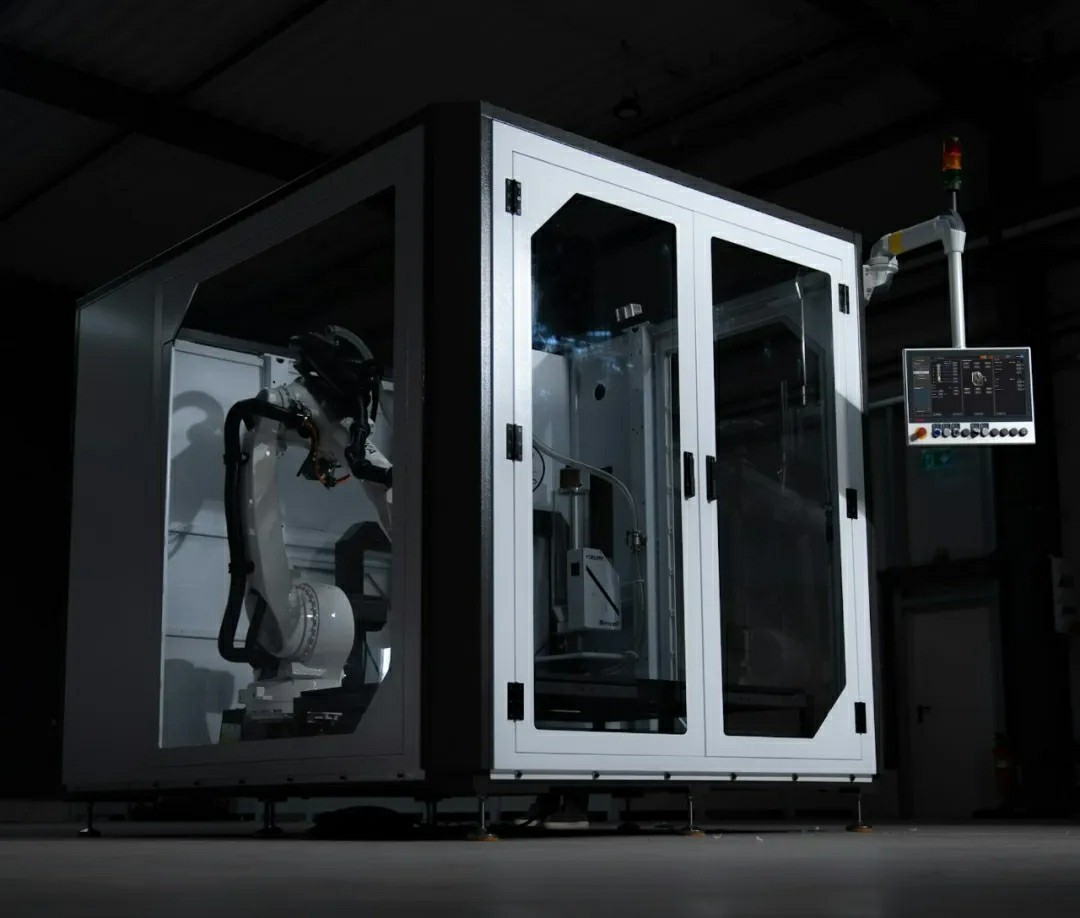
Nicolai puts forward a key judgment: the core question is not "which technology will replace which," but "which combination of technologies creates the greatest value for customers." This is especially critical for YIZUMI—the company has strong expertise in injection molding, die casting, automation, and plastics processing, additive manufacturing allows us to connect this experience with a much more flexible production approach.
SpaceA Gen2 is built around four core principles: superior ROI, low material supply costs, high production efficiency, and high automation potential. Customers are not just buying a machine—they are investing in a flexible production platform that is easy to operate, fast to produce, and competitive in per-part cost.
03
| From RWTH Aachen to the World
SpaceA was born out of a research project at RWTH Aachen University in Germany and has now become YIZUMI's flagship additive manufacturing product. The most critical step in its journey—from lab-scale proof of concept to an industrial-grade product—was the leap from "functional" to "reliable."
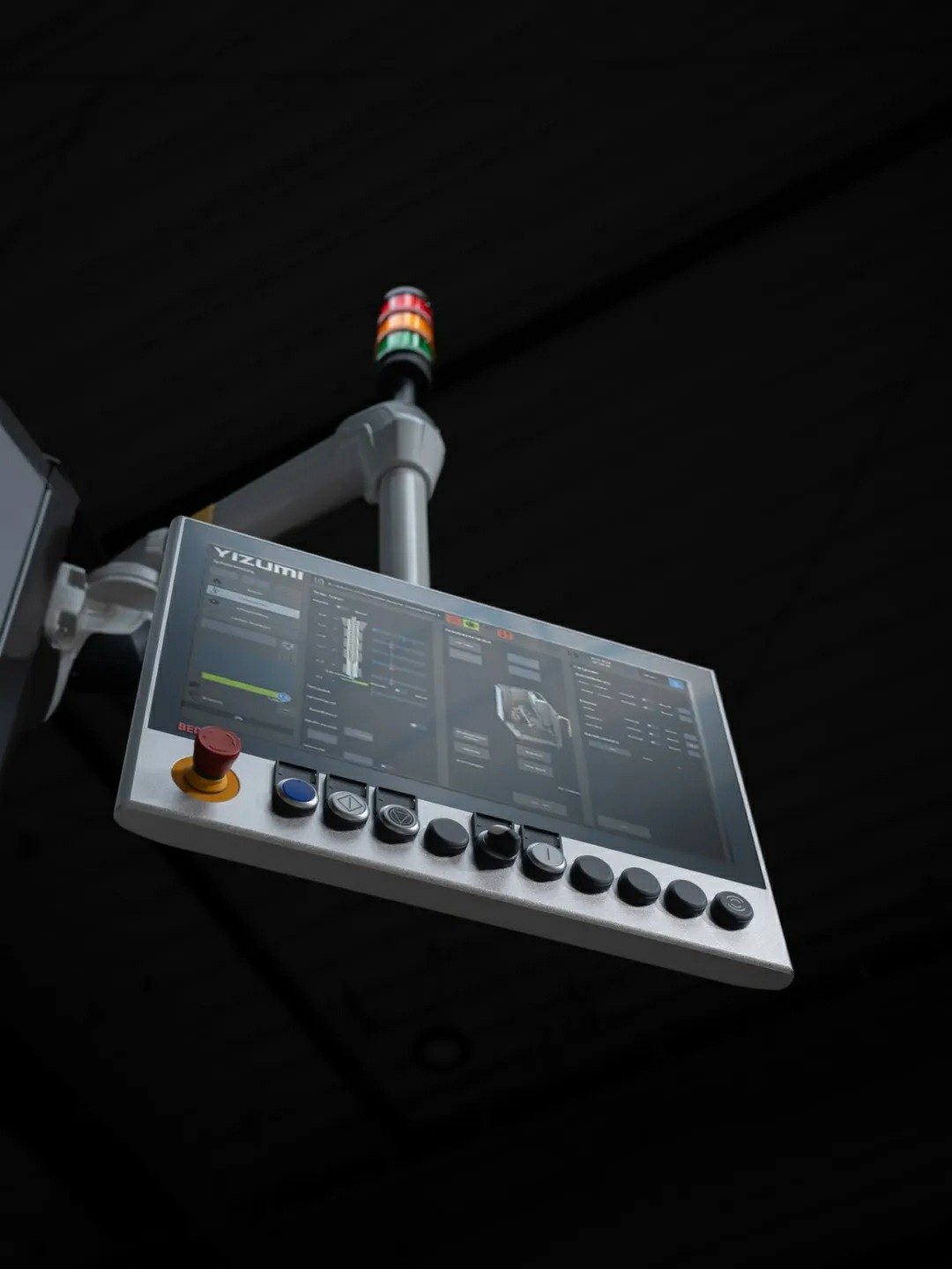
In a research setting, a process is considered successful if it works under controlled conditions. In an industrial environment, the same process must run stably 24/7, handling different materials, operators, and application scenarios. For SpaceA, the team developed not just an extruder or a robotic cell, but a complete system: material drying and feeding, extrusion and plasticization, motion control, process monitoring, human-machine interface (HMI), safety integration, data handling, and serviceability—every single component had to meet industrial-grade standards.
Beyond technology, the greater challenge lies in gaining the industry's trust. Additive manufacturing has long been associated with prototyping and lab-scale applications, and many industrial customers need time to accept the process stability, repeatability, and economic viability of this technology. Therefore, what the team needs to prove is not just that "the machine can print," but that the entire production workflow can deliver real value: reliable part quality, low material costs, short cycle times, scalability, and a clear return on investment.
From RWTH Aachen to YIZUMI's Global Innovation Center, SpaceA's industrialization journey is also a microcosm of technological collaboration between China and Europe. German engineering emphasizes systematic thinking, process understanding, and reliability, while China's innovation culture drives execution with remarkable speed and pragmatism. According to Nicolai, the key to combining the two lies in centering on customer value—every feature must solve a real customer problem, and this creates a common language that transcends cultural backgrounds.
04
| Redefining Production
Changing How Customers Think About Molds
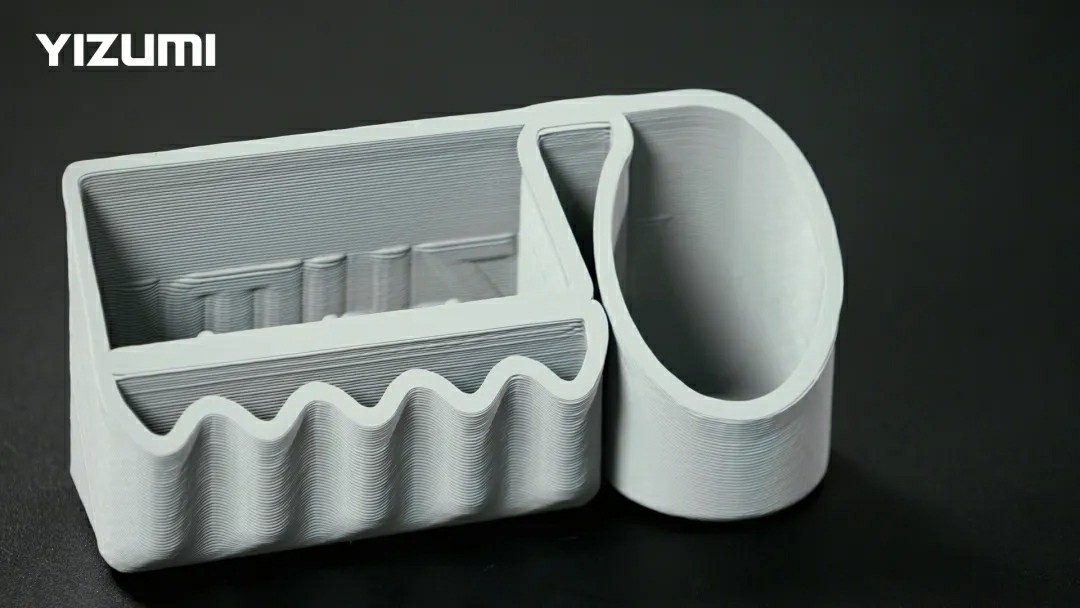
In Nicolai’s view, the most significant change brought by SpaceA is not any single application, but the change in mindset that happens at customer sites. Very often, the first reaction from customers is: “But the surface is not as smooth as an injection-molded part.”That is indeed true—additive manufacturing has its own visual language, with clearly visible layer structure. Yet as collaboration deepens, many customers come to understand and even appreciate this distinctive surface character. It becomes part of the identity of the component, reflecting a different production philosophy.
Nicolai points out that many industrial plastic parts have been produced using the same process for decades—sometimes 30, 40, or even 50 years—relying on dedicated molds, tooling, or fixtures. These processes are proven and reliable, but they are also rigid, expensive to change and strongly dependent on tooling. SpaceA enables customers to question these long-established production routes: do we really need a mold for this part? Do we really need a long tooling phase?
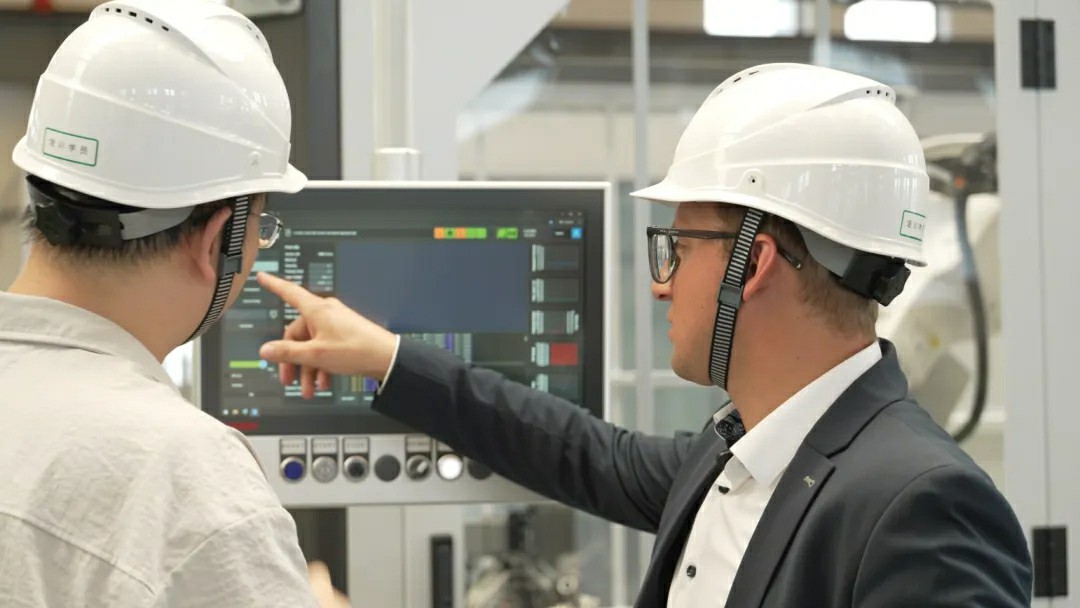
This is where SpaceA creates real value. It allows applications traditionally bound to molds to be produced in a more flexible, moldless way. Additive manufacturing is not simply replicating traditional manufacturing; it helps customers see production from a new perspective—rethinking design, production processes, material usage, and lead times.
05
| Next Step
From Machine to Virtual Supply Chain
SpaceA Gen2 has moved from an industrial control platform into customers’ automated environments. The next breakthrough lies in the virtual supply chain beyond the machine. The focus shifts from “what and how the machine prints” to “how customers go from idea to finished part.” A complete data and software environment is being built around the machine to enable a fast, efficient, end-to-end path from design concept to final product.
Nicolai anticipates that over the next decade, major breakthroughs in additive manufacturing will come from the convergence of digital toolchains, new material systems, autonomous production cells, and flexible human–machine collaboration. Data-driven process optimization will be deployed at scale, enabling equipment to autonomously adapt to variations in materials and operating conditions. Beyond the precision and energy-efficiency advantages of electric drive technology, its high-sampling-rate operational data can also feed AI algorithm iteration and predictive maintenance.
“Additive manufacturing is not meant to replace traditional manufacturing; it is expanding the boundaries of industrial production—enabling more flexible processes, shorter lead times, and lower costs,”Nicolai emphasizes. “What YIZUMI aims to do is deeply integrate additive manufacturing with traditional molding, automation, and process expertise, helping customers select the most suitable technology combinations and unlocking more possibilities for high-end manufacturing.”