Applications of Electric Injection Molding Machines in Medical Manufacturing
Abstract:
The demand for high-quality medical devices and components — including disposable consumables, precision micro-components, and complex polymer parts — continues to rise sharply. This growth has propelled the adoption of advanced manufacturing solutions, particularly electric injection molding machines, which are increasingly recognized as the gold standard for producing high-precision plastic parts in the medical industry.
In today’s rapidly evolving medical manufacturing sector, precision, repeatability, cleanliness, and efficiency are paramount. The demand for high-quality medical devices and components — including disposable consumables, precision micro-components, and complex polymer parts — continues to rise sharply. This growth has propelled the adoption of advanced manufacturing solutions, particularly electric injection molding machines, which are increasingly recognized as the gold standard for producing high-precision plastic parts in the medical industry.
Electric injection molding machines integrate advanced motion control, servo-driven axes, and intelligent process monitoring to deliver superior quality, energy savings, and automated production capabilities. Their relevance in medical manufacturing spans from high-volume disposable products to intricate microfluidic devices and critical surgical components.
Why Electric Injection Molding Machines Are Transformative in Medical Manufacturing
1. Precision and Repeatability
One of the primary advantages of electric injection molding machines is their ability to maintain ultra-precise control over injection speed, pressure, and position. These features ensure consistent part quality across long production runs — a critical requirement in medical manufacturing, where even slight deviations can lead to product failure or compromised patient safety. Electric systems eliminate variability associated with hydraulic leakage and mechanical friction, resulting in tighter tolerances and finer dimensional control.
2. Energy Efficiency and Cleaner Production
Electric injection molding machines are significantly more energy-efficient than traditional hydraulic machines because they only consume power when motions are executed. This results in reduced operational costs and lower heat generation — an advantage in cleanroom environments where temperature control is essential.
In medical manufacturing, where strict contamination control is enforced, electric machines — with their reduced reliance on hydraulic fluids — help minimize the risk of oil contamination that can compromise medical parts or lead to costly rework.
3. Faster Cycle Times and Higher Throughput
Electric injection molding machines offer faster and more consistent cycle times, thanks to direct servo motor drives and independent motion control of injection, clamping, plasticizing, and ejection axes. Faster cycle times equate to higher output per shift, enabling manufacturers to meet large-volume demands for disposables such as syringes, caps, tube connectors, and sample vials.
4. Automation and Industry 4.0 Integration
Modern electric injection molding machines integrate seamlessly with automation systems — including robotic part handling, in-line inspection, and data analytics platforms — supporting Industry 4.0 capabilities. Real-time monitoring, process data logging, and closed-loop quality control enhance traceability, an increasingly important requirement in regulated medical device production.
Core Applications in Medical Manufacturing
1. Disposable Medical Devices
The global medical plastics market is robust, with disposable medical products making up a significant segment due to hygiene and cross-infection control requirements. Electric injection molding machines are widely used to produce products including:
- (1) Syringes and syringe barrels
- (2) Needle hubs
- (3) Infusion set components
- (4) Disposable medical caps and closures
- (5) Specimen collection vials and tube caps
These products require high repeatability, clean operation, and consistent dimensional accuracy, which electric injection molding precisely delivers.
2. Precision Micro and Miniature Components
Medical devices often include micro components — such as microfluidic channels in diagnostic chips, tiny connectors, and surgical instrument parts — that demand extremely tight tolerances. Electric machines with high-response servo control and sophisticated motion algorithms can consistently maintain micron-level precision, enabling the reliable production of these critical parts.
For example, YIZUMI’s specialized solutions in micro precision molding technologies address this need effectively. Their expertise in controlling injection parameters at micro scales helps manufacturers achieve sub-millimeter precision with excellent product uniformity.
3. Customized Medical Instrument Housings
Electric injection molding machines are also ideal for producing housings for handheld diagnostic instruments, surgical tools, and portable monitoring devices. These components often require complex geometries, fine surface finishes, and strict compliance with regulatory standards — areas in which electric machines excel due to their repeatable motion control and process stability.
YIZUMI’s Role in Advancing Medical Injection Molding
Among global manufacturers of injection molding solutions, YIZUMI has established itself as a trusted partner for the medical manufacturing industry, offering advanced electric injection molding machines tailored to the specific needs of medical part production. With a commitment to precision engineering, automation integration, and industry-focused design, YIZUMI delivers machines that help medical manufacturers achieve higher productivity, reduced defects, and stronger compliance with quality standards.
Featured YIZUMI Electric Injection Molding Solutions
Below are three standout electric injection molding machines from YIZUMI that are particularly well suited for various applications in medical manufacturing:
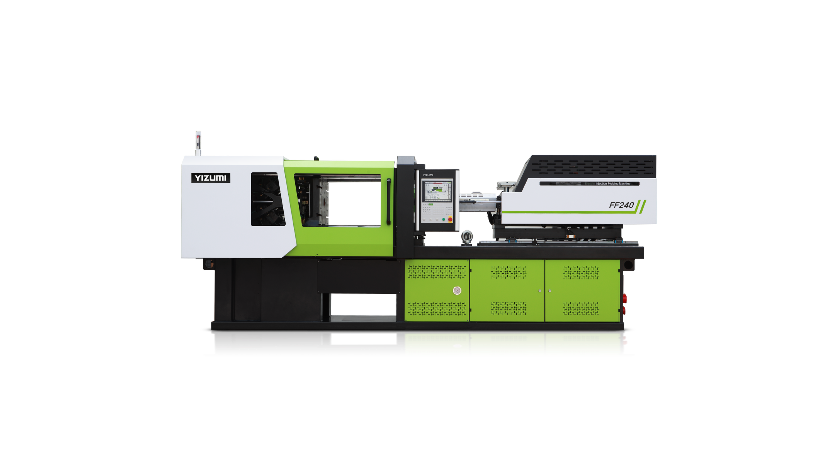
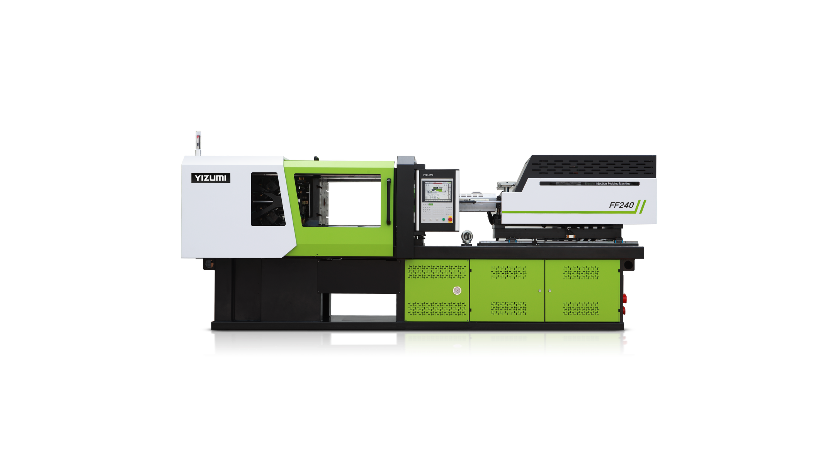
1. FF Series Electric Injection Molding Machine
The FF Series electric injection molding machines offer a blend of high precision, automation-ready architecture, and flexibility for a broad range of medical parts. Designed with advanced servo direct control technology and independent motor drives for injection, plasticizing, clamping, and ejection, the FF Series delivers consistent performance for both low- and high-volume production runs.
Key highlights include:
- (1) Enhanced processing accuracy through independent control axes.
- (2) Improved cycle consistency and part repeatability.
- (3) Seamless integration with automated peripherals for lights-out production.
- (4) Suitable for precision medical consumables, housings, and complex components in medical device assemblies.
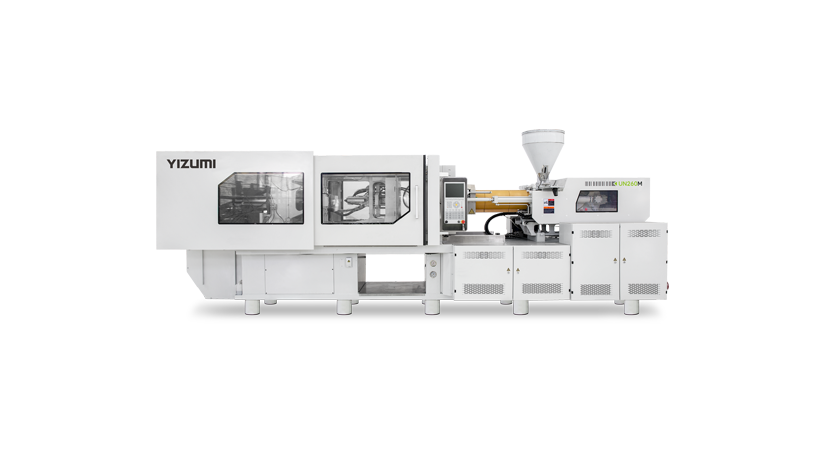
2. YIZUMI Injection Molding Machine for Medical Industry (FFM Series)
The FF-M Series is specifically engineered for medical manufacturing applications. Building on the strengths of electric drive technology, this series incorporates features uniquely beneficial to medical parts production:
- (1) A Tie-Bar Free (TBF) clamping structure to maintain a clean molding environment and reduce contamination risks.
- (2) High-speed injection capabilities to meet the demanding throughput of medical consumable production lines.
- (3) Intelligent closed-loop control systems to deliver stable and repeatable molding across long production runs, an essential attribute for medical parts with tight tolerances.
These machines can support production scales ranging from disposable component batches to high-volume consumables like caps and micro components.
3. FFN Series Electric Injection Molding Machine
The FF-N Series expands on the electric injection molding platform with features that enhance stability, mold protection, and production flexibility:
- (1) Tie-Bar Free design to maintain a clean mold area and prevent contamination.
- (2) Optional advanced ejection systems improving product accuracy and repeatability.
- (3) Built-in hydraulic support where needed, enabling a wider range of molding processes without sacrificing electric drive benefits.
- (4) A “SMART” mold protection feature to detect minute obstacles and reduce the risk of mold damage.
This series is suitable for medical manufacturers seeking flexible production lines that balance speed, precision, and long-term reliability.
Integration With Automation and Quality Systems
Electric injection molding machines by YIZUMI support real-time process monitoring, remote operation, and networking capabilities, allowing manufacturers to implement robust quality control systems. Such connectivity enables:
- (1) In-line data capture for compliance reporting.
- (2) Predictive maintenance models based on machine performance trends.
- (3) Integration with robotic part extraction, sorting, and inspection systems — essential for automated medical production cells.
These integrations enhance throughput while ensuring rigorous quality control — a major differentiator for premium medical device producers.
Conclusion
Electric injection molding machines are transforming medical manufacturing by delivering precision, repeatability, efficiency, and automation readiness — traits that are indispensable in today’s competitive, regulated landscape. As demand for high-quality medical devices and disposable components continues to rise, electric machines empower manufacturers to produce complex parts consistently and at scale.
YIZUMI’s electric injection molding solutions — including the FF Series, FF-M Series, and FF-N Series — exemplify the innovations driving this transformation. Their combination of advanced servo control, flexible automation readiness, and targeted design for medical applications makes them compelling choices for manufacturers seeking to elevate production quality and operational efficiency.
By adopting these cutting-edge technologies, medical manufacturers can achieve accelerated throughput, lower defect rates, and stronger compliance — ultimately enabling safer medical products and better patient outcomes.