Injection Molding Machine Clamping Systems: Toggle vs Two-Platen Compared
Abstract:
In injection molding, the clamping system is one of the most critical components of an injection molding machine. While injection units, control systems, and automation solutions often receive significant attention, the clamping mechanism ultimately determines mold stability, part consistency, machine footprint, and production efficiency.
In injection molding, the clamping system is one of the most critical components of an injection molding machine. While injection units, control systems, and automation solutions often receive significant attention, the clamping mechanism ultimately determines mold stability, part consistency, machine footprint, and production efficiency.
Among the most widely used clamping technologies in the global plastics industry are toggle clamping systems and two-platen clamping systems. Each has evolved significantly over the past decades and continues to play a vital role in modern manufacturing, from high-speed packaging to large automotive components.
This article provides an in-depth comparison of toggle vs two-platen injection molding machine clamping systems, focusing on working principles, structural characteristics, application scenarios, energy efficiency, and selection considerations. Rather than positioning one system as universally superior, the goal is to help manufacturers choose the most suitable solution based on real production requirements.
As a global injection molding machine manufacturer, YIZUMI offers both toggle-clamping hydraulic injection molding machines and two-platen injection molding machines, enabling customers to match clamping technology precisely to their application needs.
The Role of the Clamping System in Injection Molding Machines
In an injection molding machine, the clamping system performs several essential functions:
- (1) Holding the mold securely closed during injection and packing
- (2) Withstanding injection pressure to prevent flash
- (3) Ensuring precise mold alignment
- (4) Supporting stable and repeatable production cycles
- (5) Enabling fast mold opening and closing for efficient throughput
Clamping force, platen rigidity, tie-bar structure, and motion control all directly affect part quality, cycle time, and mold lifespan. For this reason, the choice between toggle clamping and two-platen clamping is often a strategic decision rather than a purely technical one.
Overview of Injection Molding Machine Clamping Technologies
Before diving into the comparison, it is helpful to understand how these two systems differ at a structural level.
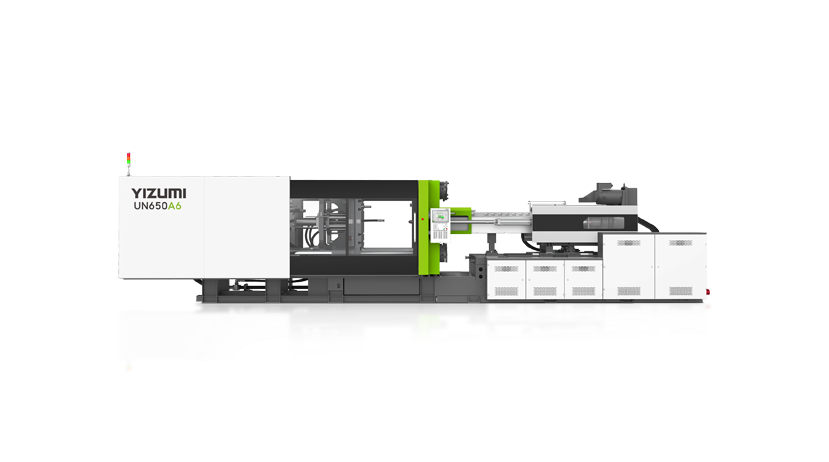
Toggle Clamping System Overview
A toggle clamping system uses a mechanical linkage—commonly a five-point or multi-link toggle mechanism—to generate clamping force. Hydraulic cylinders drive the toggle arms, which amplify force mechanically as they approach the locked position.
Key characteristics of toggle clamping systems include:
- (1) Mechanical force amplification
- (2) High clamping efficiency near mold lock-up
- (3) Fast mold movement
- (4) Well-suited for repetitive, high-cycle production
Toggle clamping has been widely adopted in hydraulic injection molding machines, especially in applications where speed and energy efficiency are critical.
Two-Platen Clamping System Overview
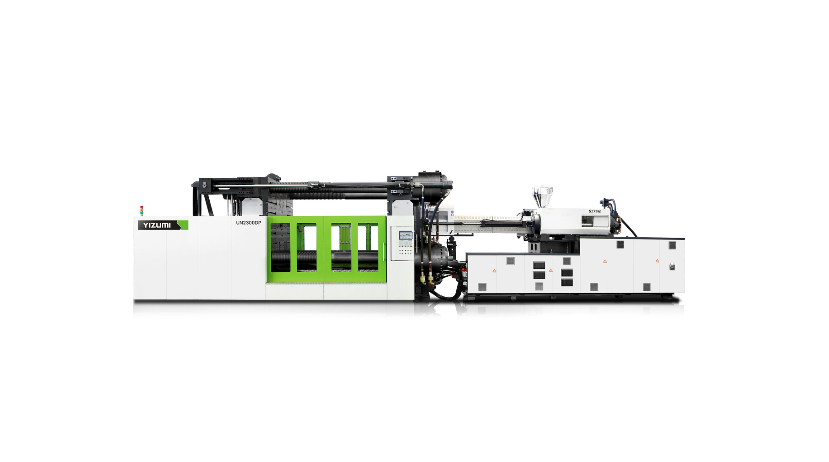
A two-platen clamping system consists of a fixed platen and a moving platen, connected by tie bars or guided by linear bearings. A central hydraulic cylinder (or multiple cylinders) directly generates the clamping force without mechanical amplification.
Key characteristics of two-platen systems include:
- (1) Direct hydraulic force generation
- (2) Fewer moving mechanical components
- (3) Compact machine length relative to clamping force
- (4) Excellent support for large molds and long mold opening strokes
Two-platen designs are commonly used in large-tonnage injection molding machines and applications involving bulky or heavy molds.
Working Principles: Toggle vs Two-Platen Clamping
How Toggle Clamping Systems Work
In a toggle-clamping hydraulic injection molding machine, the hydraulic system drives the toggle linkage to open and close the mold. As the toggle arms straighten, mechanical advantage increases dramatically, allowing the machine to achieve high clamping force with relatively low hydraulic pressure.
Key stages include:
- Fast mold closing using hydraulic motion
- Slow-down phase to protect the mold
- Toggle lock-up where mechanical amplification generates full clamping force
- Injection and holding under stable mechanical lock
- Toggle release and mold opening
Because the system locks mechanically during injection, energy consumption during the holding phase can be reduced.
How Two-Platen Clamping Systems Work
In a two-platen injection molding machine, the clamping force is generated directly by hydraulic cylinders acting on the moving platen. The system applies uniform force across the mold without relying on mechanical amplification.
Key stages include:
- Mold closing via hydraulic motion
- Clamping force buildup through direct hydraulic pressure
- Injection and holding under controlled hydraulic force
- Mold opening with long stroke capability
The simplicity of force transmission allows precise control, especially for large molds requiring even pressure distribution.
Structural Differences and Machine Design Implications
Machine Footprint and Space Utilization
- Toggle clamping machines often require a longer machine bed due to the toggle linkage and tie-bar structure.
- Two-platen injection molding machines typically offer a shorter overall machine length, making them advantageous in facilities with limited floor space.
For manufacturers operating high-tonnage equipment in constrained workshops, machine footprint can be a decisive factor.
Platen Support and Mold Compatibility
Toggle systems provide strong platen support for standard mold sizes and are well suited to applications with frequent mold changes.
Two-platen systems excel when handling:
- Large molds
- Deep molds
- Molds requiring long opening strokes
This makes two-platen designs popular in automotive, logistics, and large container manufacturing.
Clamping Force Distribution and Mold Protection
Uniform clamping force is critical for part quality and mold longevity.
- Toggle clamping systems rely on precise mechanical alignment. Modern designs, including those offered by YIZUMI, integrate advanced platen parallelism control to ensure consistent force distribution.
- Two-platen systems naturally provide uniform force due to direct hydraulic actuation, which can be beneficial for large or asymmetric molds.
Both systems, when properly engineered, can meet high standards for mold protection and dimensional stability.
Energy Efficiency Considerations
Energy consumption is a major concern in industrial injection molding operations.
Toggle Clamping Energy Characteristics
Because the toggle mechanism mechanically locks during the holding phase:
- Hydraulic pressure requirements are reduced
- Energy consumption during packing and holding is lower
- Heat generation in the hydraulic system is minimized
This makes toggle-clamping hydraulic injection molding machines attractive for high-volume production environments.
Two-Platen Energy Characteristics
Two-platen machines rely on continuous hydraulic pressure to maintain clamping force. However, modern hydraulic systems and servo-driven technologies have significantly improved efficiency.
In large-tonnage applications, the overall energy efficiency of a two-platen injection molding machine can remain competitive, especially when optimized for specific cycle profiles.
Production Speed and Cycle Time
Cycle time directly impacts productivity and cost per part.
- Toggle clamping machines are known for fast mold movement and short dry cycle times, making them ideal for thin-wall packaging, consumer goods, and electronics housings.
- Two-platen machines prioritize stability and mold handling capability over raw speed, though advances in hydraulic control have narrowed the gap.
The choice depends on whether the priority is maximum output or stable processing of complex, large parts.
Maintenance and Long-Term Reliability
Maintenance requirements differ between the two systems:
Toggle Clamping Maintenance
- Involves mechanical linkages and pins
- Requires regular lubrication and alignment checks
- Well-understood technology with predictable service intervals
Two-Platen Maintenance
- Fewer mechanical joints
- Greater reliance on hydraulic components
- Simplified mechanical structure but higher demands on hydraulic system integrity
Manufacturers often base their decision on in-house maintenance expertise and long-term operating conditions.
Application Scenarios: Matching Technology to Demand
Rather than asking which system is “better,” a more productive question is which system fits the application best.
Typical Applications for Toggle-Clamping Injection Molding Machines
- Packaging products
- Consumer goods
- Medical disposables
- Electrical and electronic components
- High-speed, high-volume production
Typical Applications for Two-Platen Injection Molding Machines
- Automotive interior and exterior parts
- Large logistics containers
- Industrial components
- Household appliances with large housings
- Structural plastic parts requiring large molds
YIZUMI’s product portfolio reflects this reality, offering both clamping technologies to address a wide range of industrial needs.
YIZUMI’s Approach to Clamping System Diversity
As a manufacturer serving global markets, YIZUMI recognizes that no single clamping system can address all production challenges.
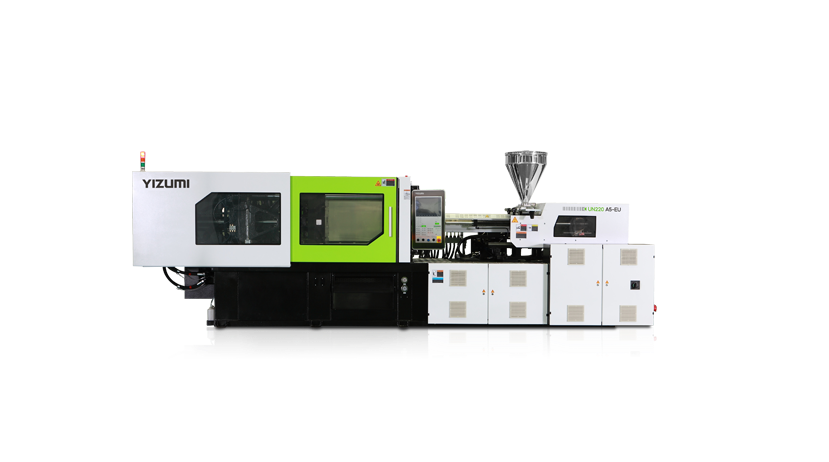
Toggle-Clamping Hydraulic Injection Molding Machine
YIZUMI’s toggle-clamping hydraulic injection molding machines are designed to deliver:
- High-speed operation
- Stable mechanical locking
- Energy-efficient performance
- Reliable consistency in mass production environments
They are widely adopted in industries where cycle time and repeatability are critical.
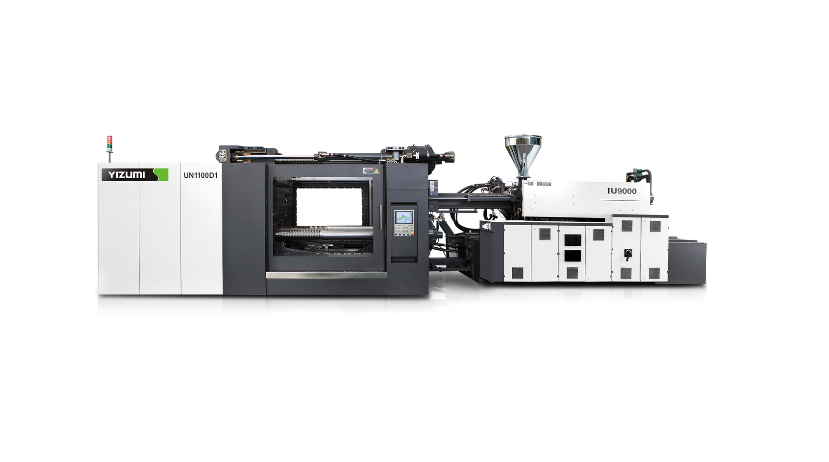
Two-Platen Injection Molding Machine
YIZUMI’s two-platen injection molding machines focus on:
- Compact machine layout
- Strong mold support
- Uniform clamping force
- Flexibility for large and complex molds
This makes them suitable for manufacturers handling large-scale or structurally demanding products.
By offering both solutions, YIZUMI enables customers to select equipment based on application demands rather than technological limitations.
Key Factors to Consider When Choosing Between Toggle and Two-Platen
When selecting an injection molding machine clamping system, manufacturers should evaluate:
- (1) Required clamping force
- (2) Mold size and weight
- (3) Production volume and cycle time targets
- (4) Factory layout and space constraints
- (5) Energy efficiency goals
- (6) Maintenance capabilities
- (7) Long-term scalability
A thorough assessment often reveals that both toggle and two-platen machines can coexist within the same facility, each serving different product lines.
Conclusion: Choosing the Right Clamping System for Your Production Goals
The comparison between toggle clamping systems and two-platen clamping systems highlights that each technology offers distinct advantages depending on production requirements.
Toggle-clamping hydraulic injection molding machines excel in speed, efficiency, and high-volume production, while two-platen injection molding machines provide superior mold handling capability, compact layouts, and stability for large parts.
Rather than focusing on which system is better, manufacturers should prioritize application-driven selection. With both technologies available in its product lineup, YIZUMI supports this flexible approach, helping customers align equipment choices with their specific molding challenges and long-term manufacturing strategies.