How Are Injection Molding Machines Used for Consumer Electronics Parts?
Abstract:
See how injection molding machines turn plastic resin into precise consumer electronics parts, from housings and buttons to connectors and thin-wall components. Learn the process, machine options, key parameters and YIZUMI solutions that support stable quality and efficient mass production.
Injection molding machines are used for consumer electronics parts by melting plastic resin, injecting it into a precision mold, cooling the part, and ejecting a finished component. This process is widely used to manufacture electronic housings, buttons, connectors, battery covers, internal brackets, light guides and other plastic parts that require stable dimensions, repeatable quality and high production efficiency.
Consumer electronics are becoming thinner, lighter and more integrated. A smartphone housing, a laptop frame, a wireless earbud case or a connector shell may look simple from the outside, but each part has to meet strict requirements for appearance, strength, assembly accuracy and production consistency.
That is why injection molding has become one of the most important manufacturing processes in the 3C electronics industry. With the right injection molding machine, mold design, material and process control, manufacturers can produce complex plastic parts in large volumes while keeping quality stable from the first shot to mass production.
Why Injection Molding Is Used for Consumer Electronics Parts
Consumer electronics parts usually have three major requirements: they must look good, fit accurately and survive daily use. Injection molding is well suited for this because it can produce repeatable parts with complex geometry, fine details and consistent surface quality.
Typical advantages include:
· High production efficiency for mass manufacturing
· Stable part dimensions for assembly
· Good surface quality for visible exterior parts
· Flexible material choices for strength, heat resistance or insulation
· Suitability for produce thin-wall and complex structures
· Compatibility with automation, insert molding and multi-component molding
For products such as smartphones, laptops, wearable devices, smart home products and communication devices, these advantages directly affect product quality and production cost.
A small dimensional error in a connector housing may affect assembly. A weak snap-fit may shorten product life. A visible weld line on a premium housing may fail cosmetic inspection. Injection molding machines help manufacturers manage these risks through controlled melting, injection, packing, cooling and ejection.
How an Injection Molding Machine Works
An injection molding machine turns plastic pellets into finished plastic parts through a controlled production cycle.
The process usually includes four main stages:
1. Plasticizing: Plastic resin is fed into the barrel, heated and mixed by the screw until it becomes molten material.
2. Injection: The molten plastic is injected into a closed mold cavity under pressure.
3. Packing and cooling: Pressure is maintained to compensate for shrinkage while the part cools and solidifies inside the mold.
4. Ejection: The mold opens, and ejector pins or automation equipment remove the finished part.
For consumer electronics parts, this process must be highly controlled. Thin-wall parts need fast and stable filling. Cosmetic housings need smooth surface quality. Connectors and internal brackets need precise dimensions. Soft-touch or multi-color parts may require multi-component molding or overmolding.
Common Consumer Electronics Parts Made by Injection Molding
| Part Type | Typical Application | Key Requirement |
| Housings and covers | Smartphones, routers, remotes, chargers | Appearance, strength, dimensional stability |
| Buttons and keys | Keyboards, controllers, remote controls | Tactile feel, wear resistance, repeatability |
| Connectors and ports | USB, HDMI, power connectors | Precision, insulation, tight tolerances |
| Battery covers | Wearables, handheld devices, smart products | Fit, safety, durability |
| Internal brackets | Laptops, tablets, smart devices | Strength, assembly accuracy |
| Light guides and lenses | LED indicators, display components | Optical clarity, surface quality |
| Soft-touch grips and seals | Wearables, controllers, handheld devices | Comfort, sealing, material bonding |
| Decorative panels | Premium consumer electronics | Texture, color, scratch resistance |
Which Injection Molding Machines Are Suitable for Consumer Electronics?
Different consumer electronics parts require different molding solutions. Different applications may require different machine types.
Electric Injection Molding Machines
Electric injection molding machines are often suitable for precision parts that require accurate control, stable repeatability and cleaner production. They are commonly considered for small and medium-sized electronics parts, precision housings, connectors and components with strict dimensional requirements.
YIZUMI’s FF Series electric injection molding machine is positioned for quality consistency, efficiency, precision and complex product needs, with clamping forces ranging from 900 to 13,800 kN.
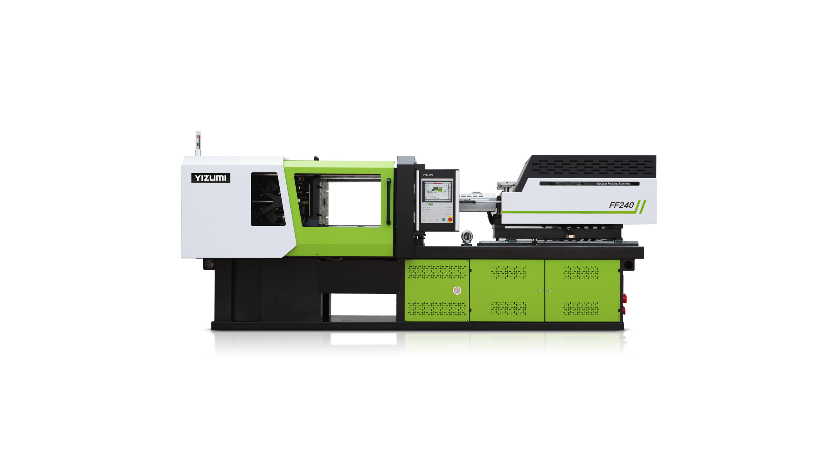
FF Series Electric Injection Molding Machine
High-Speed Injection Molding Machines
High-speed machines are useful when the part has a thin-wall structure or short cycle-time requirement. For consumer electronics, this may apply to thin covers, frames, trays or light plastic structural parts.
YIZUMI’s product range includes high-speed injection molding machines such as the P Series, P-M Series, P-E Series and PS5 Series.
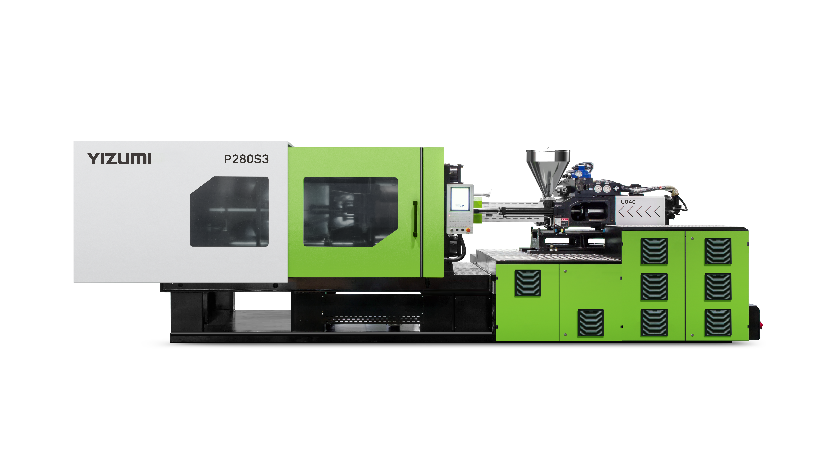
P Series High-speed Injection Molding Machine
Multi-Component Injection Molding Machines
Multi-component molding is useful when two colors, two materials or hard-soft combinations are required in one part. It can reduce secondary assembly and improve product design flexibility. Examples include soft-touch buttons, decorative housings, sealing structures and multi-color consumer product parts.
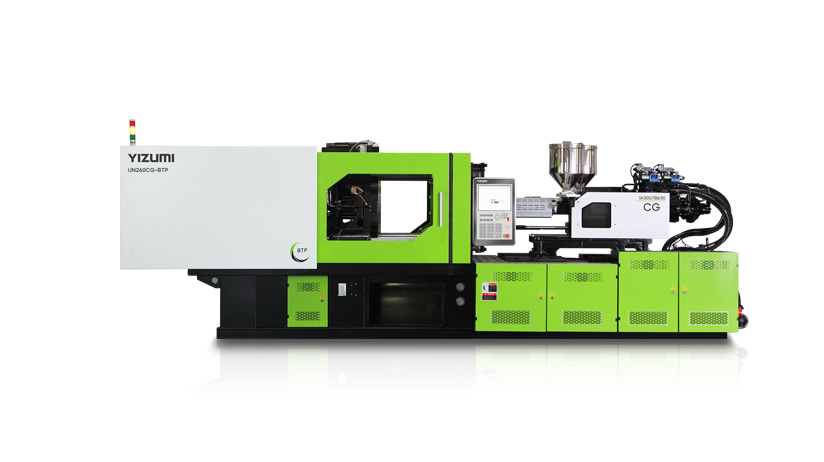
Multi-component Injection Molding Machine
Vertical Injection Molding Machines
Vertical machines are often used for insert molding, where metal inserts, terminals, threaded parts or electronic contacts need to be molded into plastic. This can be useful for connectors, electrical parts and components that combine plastic insulation with metal functions.
Thin-Wall Injection Molding Machines
Consumer electronics products are becoming thinner and lighter, so thin-wall molding is increasingly important. Machines for thin-wall parts need fast response, stable injection and reliable clamping performance. YIZUMI’s SJII Series is listed as an injection molding machine for high-end thin-wall products and is also recommended on the 3C Electronics application page.
Key Machine Parameters That Affect Electronics Part Quality
For consumer electronics molding, the machine needs to do more than run fast. Consistency is just as important.
Important parameters include:
· Melt temperature: affects flow, surface quality and material degradation
· Mold temperature: affects shrinkage, gloss and dimensional stability
· Injection speed: affects filling of thin walls and small features
· Packing pressure: helps control sink marks and part shrinkage
· Cooling time: affects warpage and cycle time
· Clamping force: prevents flash and keeps the mold closed during injection
· Screw recovery: affects material consistency between cycles
· Ejection control: protects thin or delicate parts from damage
A stable process window is especially important when parts are produced in multi-cavity molds. If one cavity produces acceptable parts and another produces defects, the problem may come from flow balance, cooling balance, venting or machine-process variation.
How YIZUMI Supports Consumer Electronics Injection Molding
YIZUMI provides injection molding solutions for consumer electronics manufacturers that need precision, stability and efficient mass production. From electronic housings and connectors to battery covers, internal brackets and thin-wall components, YIZUMI helps support reliable molding performance for demanding 3C applications.
Key Features
Precision molding performance: Supports tight tolerances, stable injection control and consistent part quality for small and complex electronics components.
Solutions for thin-wall parts: Helps produce lightweight housings, covers and structural parts that require fast filling and stable cycle times.
Multi-component molding options: Suitable for parts that require two materials, two colors or hard-soft integration, helping reduce secondary assembly.
Insert molding capability: Supports components with metal inserts, terminals or functional embedded parts, commonly used in connectors and electrical components.
Automation-ready production: Can be combined with automation for part take-out, runner cutting, weighing, sorting, inspection and packaging.
Smart manufacturing support: Helps monitor equipment status, process parameters and production traceability for more stable high-volume manufacturing.
Conclusion
Injection molding machines make consumer electronics parts by melting resin, injecting it into precision molds, cooling it, and ejecting stable finished components. This process supports housings, buttons, connectors, battery covers, brackets, light guides, and thin-wall parts that need tight tolerances, smooth surfaces, repeatable quality, and efficient mass production. With the right machine, material, mold, parameters, automation, and control, manufacturers improve quality and scale faster.
FAQ
Q1. What consumer electronics parts are made by injection molding machines?
A: Injection molding machines are commonly used to produce housings, buttons, connectors, battery covers, internal brackets, light guides, lenses, decorative panels and soft-touch components.
Q2. Why is injection molding used for consumer electronics parts?
A: It offers stable dimensions, high repeatability, good surface quality and efficient mass production, making it suitable for parts that need precise assembly and consistent appearance.
Q3. What plastics are best for injection molded electronic parts?
A: Common choices include ABS, PC, PC/ABS, PA, PBT, PMMA, LCP, TPU and TPE. The right material depends on strength, heat resistance, insulation, transparency, flexibility and cost.
Q4. Can injection molding produce thin-wall electronics parts?
A: Yes. Thin-wall injection molding is widely used for lightweight housings, covers and structural components, but it requires fast filling, stable clamping, proper cooling and suitable material flow.
Q5. How do injection molding machines affect part quality?
A: Machine control affects injection speed, pressure, temperature, cooling, clamping and ejection. These factors directly influence warpage, flash, sink marks, short shots and dimensional accuracy.
Q6. Is injection molding cheaper than 3D printing for electronics parts?
A: 3D printing is often better for early prototypes and low volumes, while injection molding often offers a lower per-part cost for mass production after the mold investment is justified.