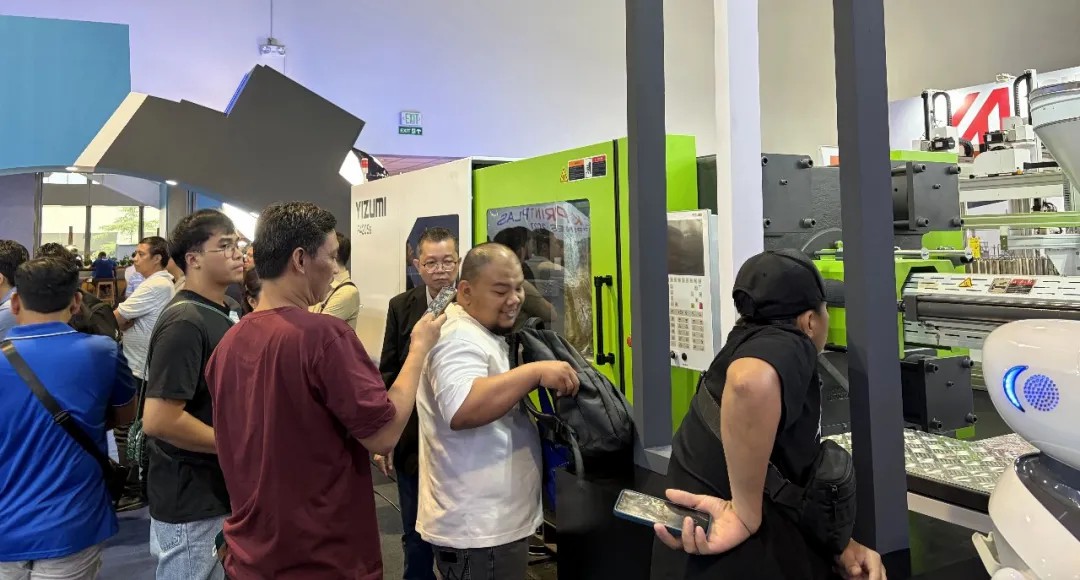
Thomas Kosthorst: What if Injection Molding Machines Start Thinking?
What if injection molding machines could autonomously determine process parameters and correct production deviations—much like self-driving cars respond to changing road conditions? How would this transform the role of operators?
Thomas Kosthorst, Chief Expert of Digitalization & Control at YIZUMI Global Innovation Center, has dedicated more than 30 years to the injection molding industry. During this time, he has witnessed major technological shifts—from open-loop to real-time closed-loop control, from conventional hydraulic systems to servo-driven solutions, and from standalone machines to integrated production systems.
Introduction ●

Thomas Kosthorst
——————————————————
- YIZUMI Chief Expert of Digitalization & Control
- 35+ years of Industry Experience
- YIZUMI Global Innovation Center
In Thomas's view, competition has long moved beyond hardware alone. Control software, data capabilities and process knowledge have become equally important sources of differentiation. Injection molding machines are beginning to follow a development path comparable to that of the automotive industry—from manual operation to assisted control and, ultimately, increasingly autonomous production.
In this episode, Thomas outlines the technologies and development steps that could lead toward the long-term vision of "autonomous driving" for injection molding machines.
01
| 30 Years of Evolution
Reshaping Injection Molding with Control and Drive Technology
According to Thomas, the most fundamental change in injection molding over the past three decades has not been a single technological breakthrough, but the progressive integration of real-time control, advanced drive technology and increasing machine intelligence.
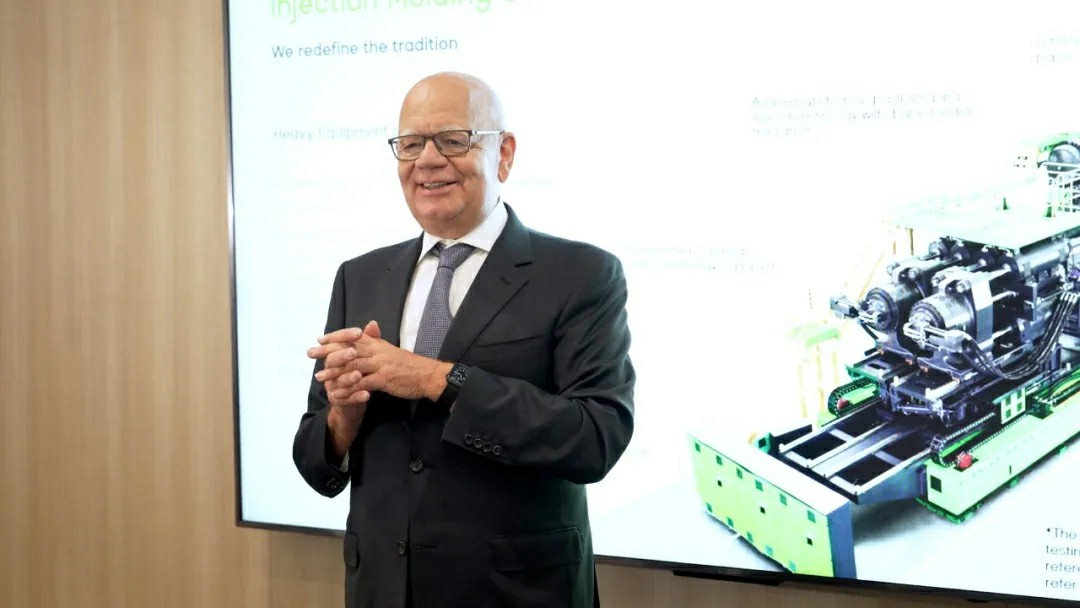
In the early 1990s, the commercialization of high-performance real-time controllers enabled many machine functions to move from open-loop operation to closed-loop control. Technologies such as precise V/P switching significantly improved process stability and product consistency.
Drive technology evolved in parallel. Servo-electric and servo-hydraulic systems increasingly complemented or replaced conventional hydraulic concepts, offering faster dynamic response, higher positioning accuracy and substantial improvements in energy efficiency and maintenance requirements.

For high-tonnage machines, particularly two-platen injection molding systems, advances in control algorithms have enabled increasingly sophisticated motion coordination. Despite growing mechanical complexity, modern systems can achieve precise multi-axis synchronization and highly controlled clamping-force management.
Processing technology has also advanced significantly. Multi-component injection molding, high-performance engineering plastics, in-mold assembly and plastic-metal composite manufacturing have become established technologies. Additive manufacturing is increasingly being integrated into mold development and specialized production processes.
Looking ahead, semantic machine models, digital twins, AI-driven process optimization and autonomous process control are likely to become key development areas. Together, these technologies could enable equipment to optimize itself with progressively less human intervention—following a development logic similar to the transition toward autonomous driving in the automotive industry.
02
| Digital Breakthrough
Turning Data into Process Knowledge
Thomas observes that industrial digitalization is still frequently associated primarily with connecting machines and transferring data to cloud platforms. Connectivity is essential, but it is only the starting point. The real value emerges when production data is transformed into actionable process knowledge that improves productivity, quality and sustainability.
Successfully translating digitalization into production practice requires the combination of operational data with deep process expertise. Specialized models can analyze signals such as pressure, speed, torque, temperature and energy consumption to identify relationships that may not be apparent through conventional monitoring. This can support earlier detection of quality risks and provide operators with more precise guidance for process optimization.
A key distinction lies in the different roles of Large Language Models and Physical AI.
- LLMs — Knowledge and Interface: Large Language Models are particularly suited to semantic understanding and knowledge-based interaction. In injection molding, they can support human-machine communication, interpret technical documentation, assist maintenance personnel and provide access to domain knowledge contained in unstructured information.
- Physical AI — Process Understanding and Control: Physical AI is concerned with understanding and interacting with physical systems. In injection molding, it relies heavily on operational machine and process data, potentially complemented by historical, simulated and synthetic data. Instead of reasoning primarily through language, these systems analyze states, trajectories and process relationships. Their objective is to recognize complex patterns, predict process deviations and ultimately support adaptive control in real time.
The data challenge in industrial AI is fundamentally different from that in many large-scale digital applications. In high-volume production, manufacturers cannot intentionally produce large numbers of defective parts simply to generate training data. Samples representing rare failure modes are therefore scarce.
As a result, the data-rich development approaches common in many digital domains cannot be transferred directly to injection molding. Industrial AI requires a more specialized framework based on rigorous data engineering, precise condition and quality labeling, domain expertise and advanced process modeling.
03
| Toward a Vendor-Independent Next-Generation Control Platform for Industrial AI
Thomas works with YIZUMI's Digital Research Institute (DRI) on the company's long-term technology roadmap. Important steps have included optimizing the control supplier base, standardizing the HMI environment and strengthening internal competencies in control engineering.
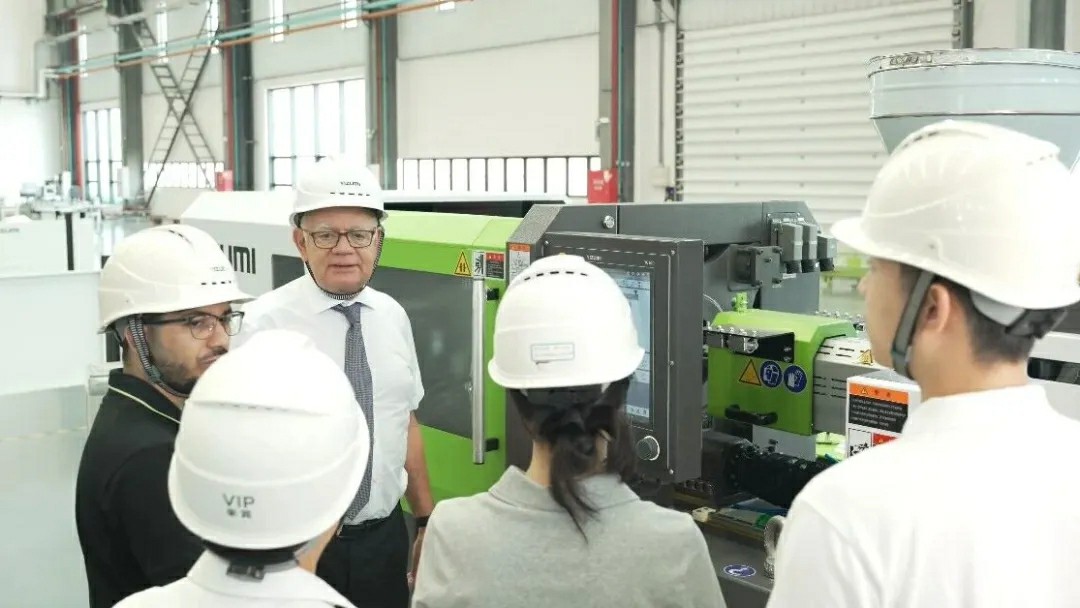
The next phase focuses on two areas: establishing an open control architecture that improves software consistency, maintainability and reliability, and integrating data-driven AI technologies more deeply into the machine and process-control environment.
Thomas notes that although China's injection molding industry has advanced rapidly, continued investment in foundational technologies remains important—particularly in advanced mechatronic system design, dynamic motion control and process knowledge.
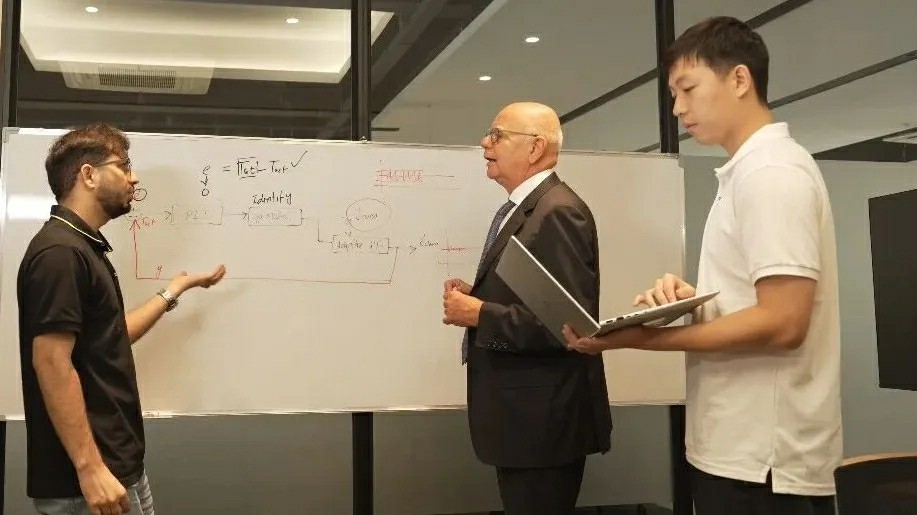
The industry is gradually shifting from primarily integrating external technologies toward developing stronger proprietary engineering and process capabilities. A combination of internal know-how, intellectual property, open standards and carefully selected technology partnerships—prioritizing partners with strong innovation potential in AI—will be important for sustained product differentiation and the effective deployment of industrial AI.
This internal platform strategy forms the technical foundation on which the broader industry transformation described below will be built.
04
| The Next Decade of Opportunity
Multi-Technology Integration Reshapes Manufacturing
Thomas anticipates that the evolution of the injection molding industry over the next decade will be shaped by the convergence of digital intelligence, next-generation material solutions—including circular polymers, bio-based materials and advanced composites, autonomous production systems, new forms of human-machine interaction enabled by technologies such as augmented reality and AI-assisted interfaces, and energy-efficient drive technologies.
A key enabler of this transformation will be the introduction of Physical AI. By combining sensing, real-time data processing, process understanding and intelligent control, Physical AI can connect digital intelligence directly with physical production processes. With high-accuracy sensors, real-time analytics and advanced process models, machines can gradually evolve from simply reacting to deviations toward anticipating process fluctuations and adapting parameters accordingly. The objective is to prevent quality defects wherever possible, rather than identifying and rejecting faulty parts only after they have been produced.
This development is also changing what customers expect from equipment suppliers. Instead of viewing injection molding machines as isolated capital equipment, manufacturers increasingly require integrated, end-to-end production capabilities.
The industry is therefore moving toward modular, increasingly autonomous production units that coordinate molding, handling, quality inspection and data management. Standardized connectivity based on OPC UA and industry-specific information models will facilitate integration with MES and other manufacturing IT systems, creating more transparent, adaptive and responsive production environments.

Sustainable manufacturing is becoming a fundamental industry requirement. Recycled and bio-based materials will see broader adoption, demanding parallel advances in mold design, process control and machine technology. Because these materials may exhibit greater variability in flow behavior, thermal properties and mechanical performance than conventional virgin polymers, robust sensing and precise process control will become increasingly important. The objective will be to process higher proportions of recycled and alternative materials while maintaining consistent quality and process stability.
Building on the servo and drive innovations of the past three decades, drive technology will continue to advance significantly. Electric drive systems will continue to gain importance because of their precision, controllability and energy efficiency. Internal drive signals such as motor current, torque and position can provide useful additional information about machine conditions and complement dedicated process sensors.
Hydraulic drive systems will remain important, particularly where high forces, power density or specialized operating conditions are required. Although they provide less direct internal condition information than electric servo drives, external sensors combined with modern control algorithms can provide the data required for AI-based optimization, condition monitoring and predictive maintenance.
Both electric and hydraulic architectures can therefore become integral parts of sensor-rich, AI-enabled production systems. Their future roles will depend less on a general question of technological superiority than on application-specific requirements and the respective strengths of each drive concept.
Human-machine interaction will undergo an equally important transformation. Agentic AI can increasingly act as an intelligent co-pilot for operators. Rather than navigating complex parameter structures and manually interpreting large volumes of process data, operators will increasingly define production objectives and constraints. AI agents can then analyze machine and process conditions, identify optimization opportunities and recommend appropriate actions.
Human operators will retain final decision-making authority, particularly for safety-, quality- and production-critical interventions. Combined with technologies such as augmented reality, this new interaction model can make sophisticated production equipment easier to operate, support less experienced personnel and help address the global shortage of skilled operators.
Taken together, these developments point toward a new era of competition—one defined less by control hardware and more by intelligence, data and software. Thomas summarizes the shift as follows:
"The competitive landscape of the injection molding industry has fundamentally changed. Hardware alone is no longer the primary source of competitive differentiation—control software, data capabilities and process knowledge are becoming equally critical."
He adds:
"The mission of YIZUMI Global Innovation Center is to integrate advanced control technology, digital AI, automation solutions and sustainable manufacturing principles into our products. The goal is to create injection molding manufacturing systems that are stable in operation, open in architecture and increasingly capable of autonomous learning and optimization—supporting YIZUMI's continued expansion in the global high-end market."
*The opinions shared by the expert are for reference purposes only.