YIZUMI Advances Medical Injection Molding with Integrated Precision Solutions
Abstract:
Medical injection molding requires coordinated control of cleanliness, resin, precision, automation and data. Discover how integrated production cells support repeatable part quality, lower contamination risk and stable output for medical components.
Medical manufacturers are under growing pressure to produce cleaner, more precise components at higher volumes while maintaining stable quality across every cavity and production batch. Meeting these requirements involves more than increasing injection speed or installing a machine inside a cleanroom. It requires coordinated control of contamination, material preparation, molding parameters, tooling, part handling and production data.
The most effective approach is to design the molding machine, mold, automation and quality controls as one integrated production cell. Cleanroom ready equipment helps reduce contamination risks, precise injection control supports dimensional and weight consistency, and automated handling limits human contact. Real-time process monitoring also enables manufacturers to identify variation before it develops into repeated defects or unplanned downtime.
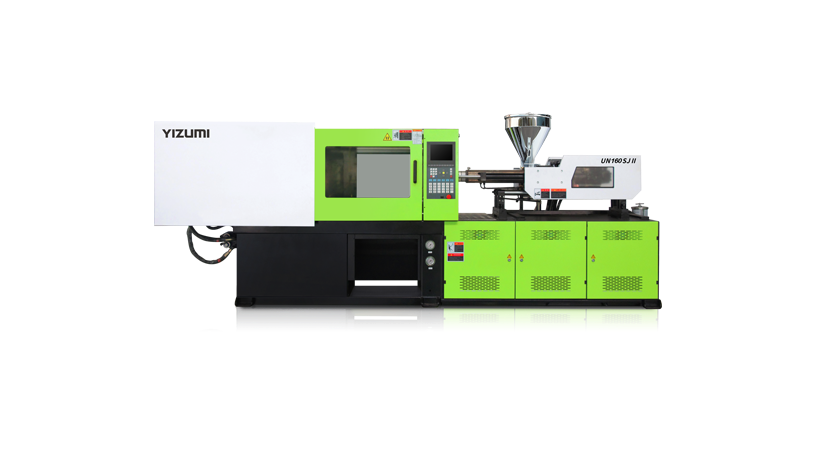
YIZUMI Medical Injection Molding Solutions bring these capabilities together for products such as syringes, blood collection tubes, PVC drip chambers and diagnostic consumables. Through the FF-M Series electric medical machine, P-M series high-speed machines and T-M series hydraulic medical machines, intelligent control technology and turnkey production planning, YIZUMI helps manufacturers improve cleanliness, precision, repeatability and productive output according to the requirements of each application.
What Is Medical Injection Molding?
Medical injection molding is the controlled production of plastic components for medical, diagnostic, pharmaceutical and healthcare applications. Plastic resin is prepared, melted and injected into a precision mold. The molded part is then cooled, removed, inspected and, when required, transferred directly to assembly or packaging.
What makes medical injection molding different from general plastic production is not the basic molding cycle. The difference lies in the level of control surrounding every cycle.
Manufacturers may need to control:
1. Airborne particles and product handling
2. Material batches and drying conditions
3. Injection pressure, speed and temperature
4. Part weight and dimensional variation
5. Mold cavity balance
6. Automated inspection and rejection
7. Production records and process changes
Medical components can be produced from PP, PE, PS, PET, PVC, COP, COC and engineering plastics. Material selection should consider contact type, transparency, chemical resistance, sterilization method, moisture sensitivity and dimensional stability. A resin described as medical grade does not, by itself, make the finished component compliant.
The Four Performance Goals Medical Manufacturers Need to Balance
Cleanliness, precision, consistency and productivity are closely connected. Improving one without considering the others can create new problems.
For example, increasing injection speed may help fill a thin wall tube, but excessive speed can also cause burning, jetting or flash if the mold venting and process settings are unsuitable. Adding more cavities can raise theoretical output, but an unbalanced mold may increase scrap and reduce the number of acceptable parts produced each hour.
A more useful production measurement is: Good parts per hour = Mold cavities × Cycles per hour × Production yield
This calculation encourages manufacturers to evaluate cycle time, cavity balance, downtime and reject rates together.
How to Improve Cleanliness in Medical Injection Molding
Match the cleanroom to the product risk
ISO 14644-1 classifies cleanrooms according to airborne particle concentration. It does not require every medical plastic component to be manufactured in the same cleanroom class. The appropriate environment should be based on product use, contamination risk, downstream processing and applicable customer or regulatory requirements.
ISO Class 7 and ISO Class 8 environments are frequently considered for medical consumables, but the selection should be justified for the specific product. Using a higher cleanroom class than necessary can increase construction, energy and maintenance costs without improving the product in a meaningful way.
Reduce contamination sources around the mold
Potential contamination can come from lubricants, material dust, personnel, maintenance activities, mold wear and uncontrolled part handling.
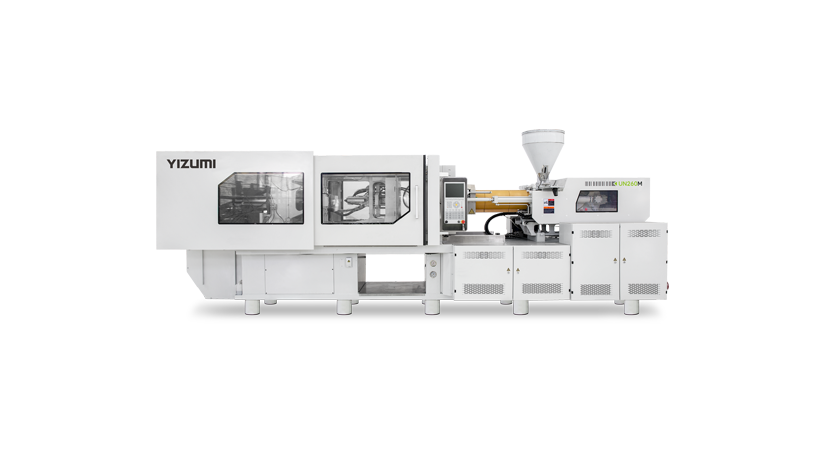
All electric machines can support cleaner production because the principal machine movements are driven by electric servo systems. Machine architecture also matters. The YIZUMI FF-M medical injection molding machine uses a Tie-Bar Free structure in which the platen does not contact the tie bars. The absence of lubricating oil on the tie bars helps reduce a potential source of product contamination.
Closed material conveying, controlled resin storage and automatic part pick-up further reduce exposure. Maintenance areas should also be considered during factory planning so that tools, personnel and particle generating activities do not unnecessarily enter the clean production zone.
FF-M Series Injection Molding Machine Special for Medical Industry
Automated handling after molding
A clean molding process can lose its value if operators manually collect, inspect and stack parts in an uncontrolled manner.
Robots can pick up parts and transfer them to vision inspection, assembly, stacking or packaging. Automation does not eliminate the need for process control, but it reduces unnecessary contact and makes handling more repeatable.
How to Improve Precision and Part Quality
Define critical dimensions before selecting the machine
Machine selection should begin with the part, not the available clamping force.
Manufacturers should provide:
1. Part drawing and critical tolerances
2. Material and grade
3. Part weight and wall thickness
4. Flow length and cavity depth
5. Mold cavity count
6. Target cycle time
7. Annual production volume
8. Cleanroom and automation requirements
This information helps determine the required injection unit, screw, pressure, speed, mold space and clamping structure.
Control injection and holding pressure
Small changes in pressure can affect weight, dimensions, shrinkage and sealing performance. Closed loop control helps the machine correct deviations during production.
YIZUMI's FF-M achieves injection and holding pressure stability within ±0.1 MPa. Its linear guide structure provides guiding accuracy of up to 0.02 mm, while mold opening and closing repeatability reaches ±0.03 mm under specified conditions.
These figures should be assessed alongside the mold, material and process window. A precise machine cannot compensate for poor gate placement, uneven cooling or unstable resin preparation.
Use a validated process window
A single successful machine setting is not enough for stable medical production. The process should establish an operating window that continues to produce acceptable parts when normal material and environmental variation occurs.
Useful variables to monitor include:
1. Fill time
2. Peak injection pressure
3. Transfer position
4. Cushion
5. Part weight
6. Mold temperature
7. Cooling time
8. Cavity level dimensions
Changing several variables at once makes it difficult to identify the true cause of a defect. Structured trials and documented parameter limits create a stronger basis for repeatable production.
How to Improve Consistency Across Every Cycle
Consistency is especially challenging in high cavity production. A part from one cavity may meet specifications while another cavity gradually develops flash, incomplete filling or dimensional drift.
Material drying, mold balance, hot runner temperature, cooling and machine response must therefore work together.
The FF-M Series uses YIZUMI's SDC servo direct control technology. The published control cycle is 0.125 ms, compared with 2 to 4 ms for the referenced previous control architecture. Intelligent weight control can also monitor and adjust process parameters in response to influences such as mold temperature and raw material properties.
Manufacturers should still verify consistency through part weight data, cavity sampling and dimensional studies. Automated vision systems can identify visible defects, but vision inspection should complement process monitoring rather than replace it.
How to Improve Productivity Without Sacrificing Quality
Select speed according to the product
High speed injection is useful for thin wall and deep cavity medical consumables because the melt must fill the mold before excessive cooling occurs.
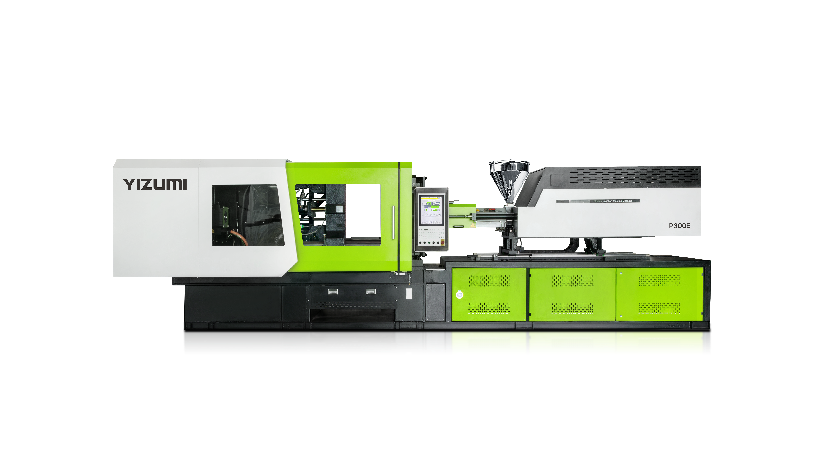
The YIZUMI P-M series medica high speed injection molding machine can be configured with an optional maximum injection speed of up to 500 mm/s. Its high rigidity clamping structure is designed for deep cavity parts and products with a large length to diameter ratio. An optional electric injection unit can improve injection control and support synchronous plasticizing.
However, maximum speed should not be the default setting. The correct speed is the one that fills the cavity consistently without causing burning, jetting, excessive shear or flash.
Coordinate molding and downstream operations
A short molding cycle provides limited value if the line stops during part removal, inspection or packaging. Productivity planning should include:
1. Robot takeout time
2. Vision inspection speed
3. Assembly or stacking time
4. Packaging flow
5. Mold change time
6. Preventive maintenance
7. Reject handling
YIZUMI's medical injection molding solutions can cover production planning, machine and mold selection, part handling, inspection and intelligent production management. This allows the molding machine and downstream equipment to be evaluated as one production cell.
Three Medical Injection Molding Applications
The following applications show how YIZUMI combines precise injection control, application specific machine configurations, multi cavity molds and automation to address different medical production requirements.
| Application | PVC drip chamber | Prefilled syringe | Blood collection tube |
| Machine | FF300M | FF200M | P250M |
| Material | PVC | COP | PET |
| Cavities | 24 | 32 | 32, 48 or 64 |
| Reference cycle | 8±1 seconds | 25±1 seconds | 8±1 seconds |
| Main production focus | Stable PVC processing and cavity balance | Clean, precise and automated production | High speed deep cavity molding |
FF300M for 24 Cavity PVC Drip Chamber Production
The FF300M supports a 24 cavity molding solution for medical PVC drip chambers. PVC requires careful control of material temperature, injection conditions and residence time because excessive heat can contribute to degradation, discoloration and black spots.
For a multi cavity mold, stable filling is just as important as production speed. Balanced material distribution and consistent process control help maintain part dimensions and appearance across all 24 cavities. This application demonstrates how precise machine control and suitable mold design can support reliable PVC processing while reducing scrap and unnecessary manual inspection.
FF200M for COP Prefilled Syringes
The FF200M all electric medical injection molding machine is configured for COP prefilled syringe components using a 32 cavity mold. Each component measures Φ13.8 × 64.5 mm, weighs 1.4 g and has a molding cycle of 25 seconds.
The production cell integrates the injection molding machine, mold, robot and auxiliary equipment. Precise electric control supports dimensional and weight consistency, while automated pick-up reduces direct operator contact with molded components. Coordinating material preparation, molding and part handling as one process helps manufacturers improve cleanliness, repeatability and production efficiency.
P250M for PET Blood Collection Tubes
The P250M High-Speed Medical Injection Molding Machine is designed for high speed production of deep cavity medical consumables such as PET blood collection tubes. Published application configurations include 32, 48 or 64 cavity full hot runner molds with a reference cycle time of 8±1 seconds.
Blood collection tubes combine a long flow path with demanding transparency, appearance and dimensional requirements. The P250M addresses these needs through high speed injection, a rigid clamping structure and configurations developed for deep cavity molding. Its compact design can also help manufacturers use cleanroom floor space more efficiently.
Together, these applications illustrate how YIZUMI Medical Injection Molding Solutions can be adapted to different materials, part geometries and production volumes. Equipment selection should still be based on the actual product drawing, resin, mold design, quality criteria, automation requirements and target output. Published performance data is based on specific test conditions and should be confirmed for each customized production system.
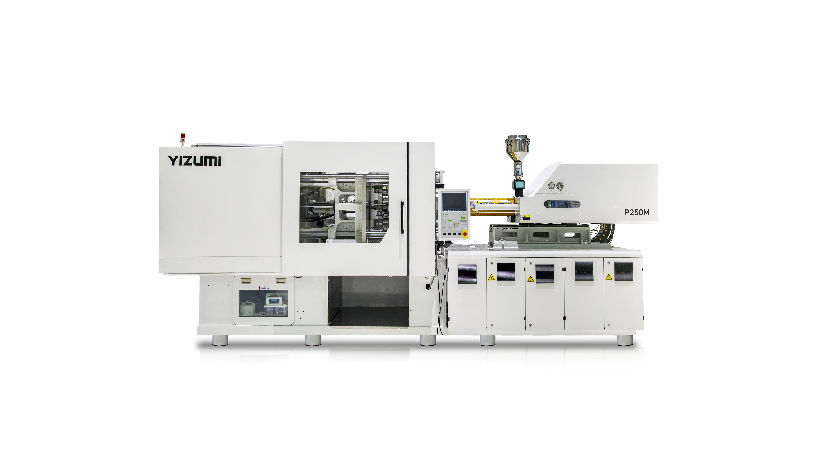
P-M Series High-speed Injection Molding Machine
Common Medical Injection Molding Mistakes
Assuming cleanroom production means sterile production
A controlled molding environment reduces contamination risk. It does not replace validated sterilization when sterilization is required.
Choosing a machine based only on injection speed
High speed is useful only when the mold, material and process can use it effectively.
Increasing cavity count without evaluating balance
More cavities increase theoretical output, but poor filling or cooling balance can reduce yield.
Relying only on final inspection
Inspection finds defects after they occur. Stable process control helps prevent them.
Treating the machine as a separate purchase
Mold design, material preparation, robot handling, inspection and production data all influence the final result.
FAQ
Q1. How can medical manufacturers reduce injection molding contamination?
A: Use a justified cleanroom environment, clean machine architecture, controlled material handling, automated part removal and documented cleaning procedures. Maintenance and personnel flow should also be considered during production line planning.
Q2. How can product weight variation be reduced?
A: Monitor material drying, mold temperature, fill time, transfer position, cushion and injection pressure. Closed loop pressure control and intelligent weight monitoring can help compensate for normal process variation.
Q3. Does every medical product require an ISO Class 7 cleanroom?
A: No. The required environment depends on product use, contamination risk, downstream processing and applicable regulatory or customer requirements.
Build the Production System Around the Medical Product
Improving medical injection molding is not a choice between cleanliness, precision, consistency and productivity. These goals must be developed together.
YIZUMI combines FF-M and P-M medical molding equipment with mold analysis, automation, inspection, factory planning and intelligent production management. This gives manufacturers a practical path from initial product evaluation to repeatable volume production.
To evaluate a project, provide YIZUMI with the product drawing, material, part weight, cavity count, annual volume, target cycle, cleanroom requirement and required downstream automation.
Contact YIZUMI to request a medical injection molding machine and production cell recommendation.