Die Casting Surface Finishing: What Should Be Planned Before Molding?
Abstract:
Great die casting finishes start long before coating. From alloy choice and mold layout to venting, injection stability, ejection, automation, and inspection, early planning helps prevent porosity, surface marks, coating failure, and costly rework while matching each part with the right machine setup.
Surface finishing is often treated as the final step in die casting, but the quality of a finished surface is decided much earlier. Product design, alloy selection, mold layout, injection stability, venting, die temperature control, and part handling all influence whether a casting can be painted, powder coated, plated, polished, or used as-cast with consistent results.
Before molding a die cast part, buyers should define the final surface function, visible areas, finish type, alloy, mold design requirements, die casting machine capability, secondary operations, masking areas, and inspection standards. These decisions affect gate location, parting line placement, draft angle, porosity control, coating quality, and total production cost.
For manufacturers selecting a die casting machine, early surface finish planning helps reduce rework, improve appearance consistency, and avoid costly mold changes. It also makes it easier to match the production target with the right machine type, clamping force, injection control, vacuum configuration, automation level, and quality monitoring system.
Why Surface Finishing Should Be Planned Before Molding
A die cast surface is not created by coating alone. It starts with how molten metal fills the cavity, how air escapes, how the mold temperature is controlled, how the part is ejected, and how consistent the machine remains over thousands or millions of cycles.
Surface finishing should be planned before molding because the final finish affects:
· Alloy selection
· Mold material and mold surface texture
· Gate, runner, overflow, and vent position
· Parting line placement
· Ejector pin location
· Draft angle
· Wall thickness and rib design
· Vacuum or venting requirements
· Injection speed and pressure control
· Trimming, deburring, blasting, painting, plating, or coating processes
· Quality inspection standards
If the finish is decided after the mold is built, many surface-related problems become expensive to correct. A gate mark on a visible surface, a parting line across a decorative face, porosity under a plated area, or poor coating adhesion can turn a technically “successful” casting into a rejected part.
What Should Be Planned Before Molding?
Before molding starts, the surface finish should be treated as an engineering requirement, not a final decoration step. The quality of a painted, powder-coated, plated, polished, or as-cast surface depends on decisions made before the mold is built.
In practical terms, buyers should confirm the product function, alloy, surface class, mold layout, venting method, ejection design, die casting machine capability, secondary operations, inspection standards, and production volume before molding. These items affect surface defects, finishing cost, mold life, cycle stability, and long-term part quality.
1. End-Use Performance Requirements
The first planning question is simple: how will the die cast part be used?
A part exposed to heat, vibration, moisture, chemicals, outdoor conditions, or mechanical load needs different surface planning from a decorative indoor component. For example, an automotive housing may need corrosion resistance and dimensional stability, while a 5G/3C product shell may need a clean cosmetic surface with minimal visible marks.
Before molding, define:
· Operating environment
· Load or stress condition
· Heat exposure
· Corrosion risk
· Assembly requirements
· Sealing or leakage requirements
· Electrical conductivity or shielding needs
· Cosmetic appearance level
This step helps determine whether the part can remain as-cast or needs blasting, painting, powder coating, plating, polishing, conversion coating, machining, or leak testing.
2. Alloy and Surface Finish Compatibility
The alloy should be selected together with the surface finish. Aluminum, zinc, and magnesium castings do not respond to finishing in the same way.
Aluminum die castings are often used for structural, automotive, EV, appliance, and industrial components. They are commonly painted, powder coated, blasted, machined, or conversion coated. Zinc die castings are suitable for smaller decorative parts and often perform well with plating and polishing. Magnesium die castings are valued for lightweight applications but require careful surface protection and handling.
| Alloy | Common Finishing Options | What to Confirm Before Molding |
| Aluminum | Powder coating, painting, shot blasting, conversion coating, machining | Porosity control, coating adhesion, corrosion protection, machining allowance |
| Zinc | Electroplating, polishing, painting, powder coating, as-cast finish | Cosmetic surface quality, gate location, parting line position, plating suitability |
| Magnesium | Painting, conversion coating, powder coating, surface pretreatment | Corrosion protection, thin-wall filling, handling protection, coating process |
If the wrong alloy is paired with the wrong finish, the result may be poor adhesion, uneven color, visible porosity, corrosion problems, or higher finishing cost.
3. Surface Classification on the Drawing
Not every surface needs the same finish level. Before molding, the drawing should clearly separate visible, functional, hidden, machined, and masked surfaces.
| Surface Zone | Typical Requirement | Planning Impact |
| Class A visible surface | High appearance quality | Keep gates, ejector marks, flash, and parting lines away |
| Functional surface | Assembly, sealing, heat transfer, or contact performance | Control flatness, tolerance, coating thickness, and masking |
| Hidden surface | Lower cosmetic requirement | Suitable for gates, overflows, vents, ejector pins, or trimming marks |
| Machined surface | Accuracy after machining | Plan stock allowance and avoid deep porosity |
| Masked surface | No coating or plating allowed | Protect threads, holes, sealing areas, and electrical contact points |
A surface map gives the mold designer, die casting machine supplier, finishing team, and quality team the same reference point. It also prevents over-finishing non-critical areas.
4. Mold Layout for Gates, Vents, Overflows, and Parting Lines
Mold layout has a direct influence on surface finishing. Gates, overflows, vents, parting lines, and ejector pins all leave physical traces on the casting. Once the mold is built, moving these features can be difficult and expensive.
Before molding, confirm:
· Where the parting line can be accepted
· Which surfaces can carry gate marks
· Where overflows should be placed
· How vents will remove trapped air
· Where ejector pins can be located
· Whether trimming marks will be visible
· Whether cosmetic surfaces need special texture or polishing
The goal is to keep process marks away from visible and functional surfaces whenever possible.
5. Venting and Porosity Control
Porosity is one of the most common reasons surface finishing fails. Small internal pores may not be obvious in the as-cast part, but they can appear after machining, polishing, plating, coating, heat exposure, or leak testing.
For parts requiring high surface quality, pressure tightness, plating, or structural performance, porosity control should be discussed before mold approval.
Key items to plan include:
· Vent location and vent capacity
· Overflow design
· Vacuum-assisted die casting requirement
· Melt quality control
· Shot profile stability
· Die temperature control
· Release agent control
· X-ray, CT, or leak testing requirements
For surface-critical aluminum and magnesium parts, vacuum capability and stable injection control may be important machine selection factors.
6. Draft Angle and Ejection Strategy
A clean surface also depends on clean part release. If the draft angle is too small, the part may drag against the die surface during ejection. This can create scratches, pull marks, deformation, or local surface damage.
Before molding, review:
· Draft angle on external walls
· Draft angle on internal ribs and pockets
· Extra draft for textured surfaces
· Ejector pin location
· Ejector balance
· Risk of sticking or drag marks
· Die surface treatment needs
Ejector pins should be moved away from Class A surfaces when possible. If an ejector mark cannot be avoided, the acceptable position and depth should be defined before tooling.
7. Wall Thickness, Ribs, Bosses, and Local Geometry
Part geometry has a strong effect on surface consistency. Thick sections, sudden wall transitions, heavy bosses, sharp corners, and long flow paths can create sink marks, shrinkage porosity, cold shuts, flow marks, and uneven cooling.
Before molding, check whether the design includes:
· Thick sections behind visible surfaces
· Non-uniform wall thickness
· Deep ribs
· Large bosses
· Sharp internal corners
· Thin-wall areas far from the gate
· Areas that are difficult to vent
· Features that may trap finishing media or coating
A better design usually uses uniform wall thickness, coring, gradual transitions, rounded corners, and properly supported ribs. These changes help improve filling, cooling, ejection, and finishing consistency.
How Surface Finish Affects Die Casting Machine Selection
A die casting machine does more than close a mold and inject metal. For surface-critical parts, the machine must deliver stable filling, repeatable pressure control, reliable locking force, and consistent production conditions.
1. Machine Type: Cold Chamber or Hot Chamber
Cold chamber die casting machines are commonly used for aluminum and magnesium alloys. They are suitable for structural, automotive, EV, industrial, home appliance, and larger parts.
Hot chamber die casting machines are typically used for zinc and certain magnesium applications. They are suitable for smaller, high-volume parts where cycle speed and precision are important.
YIZUMI offers both cold chamber and hot chamber die casting machine solutions, allowing buyers to select machine technology based on alloy, part size, production volume, and finishing expectation.
2. Locking Force
Insufficient locking force can lead to flash, parting line problems, trimming scars, and dimensional instability. These issues can become more serious when the part requires a premium surface finish.
When planning surface finishing, buyers should not choose a machine by tonnage alone. The required locking force should be calculated based on:
· Projected area
· Injection pressure
· Part geometry
· Runner and overflow design
· Mold structure
· Flash tolerance
· Surface class
· Production stability requirement
3. Injection Stability
Surface defects often come from unstable filling. If the shot profile is inconsistent, the part may show flow marks, cold shuts, air entrapment, or porosity.
For demanding parts, buyers should evaluate:
· Slow shot control
· Fast shot acceleration
· Pressure build-up performance
· Switching accuracy
· Repeatability
· Injection curve monitoring
· Process parameter storage
YIZUMI HII-S and LEAP Series die casting machines are designed for stable, precise, and repeatable casting performance, helping manufacturers improve consistency in high-volume production.
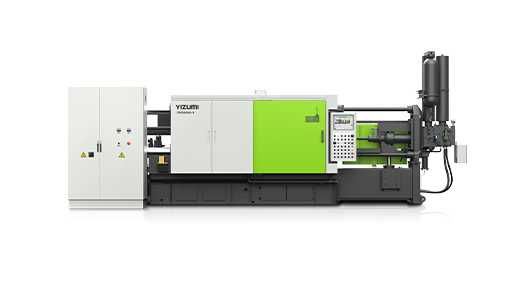
HII-S Series High-end Cold Chamber Die Casting Machine
4. Vacuum and Venting
If a part needs plating, pressure tightness, welding, heat treatment, or a premium cosmetic surface, porosity control becomes critical.
Vacuum die casting or optimized venting should be considered early for:
· Automotive structural parts
· EV battery components
· Large integrated die castings
· Sealing surfaces
· Thin-wall housings
· Premium coated or plated parts
· Parts requiring low leakage
Vacuum planning affects mold design, machine integration, process monitoring, and quality inspection.
5. Die Temperature Control
A stable mold temperature helps improve metal flow, reduce cold shuts, control solidification, and improve surface consistency.
Poor thermal balance can cause:
· Sink marks
· Flow marks
· Sticking
· Drag marks
· Warpage
· Dimensional variation
· Local surface defects
For surface-critical production, mold temperature control should be treated as part of the machine and cell planning process.
6. Automation and Process Monitoring
Automation improves repeatability by reducing variation in spraying, ladling, extraction, cooling, trimming, and part handling.
For finished parts, this matters because scratches, inconsistent release agent, over-spraying, or handling damage can reduce surface quality even after a good shot.
YIZUMI intelligent die casting cell solutions can support automated production processes such as robot take-out, spraying, cooling, de-slagging, trimming, engraving, conveying, and related post-processing operations.
Die Casting Machine Application Examples
Automotive and EV Components
Automotive and EV die castings often require corrosion resistance, dimensional consistency, low porosity, and stable production quality.
Common surface-related requirements include:
· Powder coating
· E-coating
· Machined sealing surfaces
· Corrosion resistance
· Leak testing
· Dimensional stability
· Process traceability
For large automotive or EV components, surface finish planning should be connected with machine tonnage, injection stability, vacuum readiness, die temperature control, and automation.
YIZUMI LEAP Series, HII-S Series, NEXT² Series, and ultra-large die casting solutions can support different automotive and new energy vehicle production needs, depending on part size, alloy, and process requirement.
5G and 3C Products
5G and 3C products often require thin walls, lightweight design, clean surfaces, and stable dimensions.
Surface planning should focus on:
· Thin-wall filling
· Gate hiding
· Ejector pin location
· Cosmetic surface mapping
· Scratch prevention
· Coating adhesion
· Automation handling
For these parts, injection repeatability and part handling are especially important. A good casting can still be damaged by poor extraction, cooling, or transfer.
Fitting and Construction Castings
Zinc die casting is widely used for decorative hardware, bathroom fittings, and home furnishing components.
These parts often need:
· Smooth cosmetic surfaces
· Plating
· Polishing
· Consistent parting line control
· Minimal visible defects
· High-volume repeatability
For zinc parts, hot chamber die casting machines are often considered because of their efficiency and suitability for high-volume small to medium components.
Home Appliance Parts
Home appliance components may need painting, powder coating, or as-cast surfaces depending on whether the part is visible after assembly.
Planning should include:
· Color consistency
· Coating thickness
· Scratch resistance
· Assembly tolerance
· Handling protection
· Masked holes or contact areas
For appliance parts, the process should be stable enough to maintain both appearance and dimensional consistency across long production runs.
Questions to Ask Before Buying a Die Casting Machine
Before selecting a die casting machine, buyers should ask:
1. Which machine type is suitable for this alloy?
2. Is cold chamber or hot chamber better for this part?
3. What clamping force is required?
4. Is the shot capacity enough for the part, runner, gate, and overflow?
5. Is vacuum required for the surface or performance target?
6. Can the injection process be monitored and recorded?
7. Can the machine integrate with spraying, extraction, trimming, cooling, and post-processing automation?
8. How will die temperature be controlled?
9. What process data can be used for quality traceability?
10. Can the engineering team review the part before mold design is finalized?
These questions help connect the surface finish target with machine capability, instead of treating them as separate decisions.
Common Mistakes Buyers Should Avoid
1: Selecting the Finish After the Mold Is Built
Once the mold is completed, gate marks, ejector pin marks, and parting lines are already fixed. If they are in the wrong place, correction may require rework, extra polishing, or even mold modification.
2: Treating Every Surface as Cosmetic
This increases finishing cost. Define visible, functional, hidden, machined, and masked surfaces separately.
3: Choosing the Die Casting Machine by Tonnage Only
Tonnage matters, but it is not the full story. Surface-critical parts also require stable injection, repeatability, vacuum readiness, thermal control, and automation compatibility.
4: Ignoring Porosity Until After Machining
Porosity may appear after machining, polishing, coating, plating, or heat exposure. For sealing, plating, or structural parts, porosity control must be planned early.
5: Forgetting Coating Thickness
Coating thickness can affect threads, holes, sealing surfaces, electrical contact points, and assembly tolerance.
6: Not Validating the Finish Before Mass Production
Samples and pilot runs are important, especially for plating, powder coating, high-gloss surfaces, leak-tight parts, and parts exposed to outdoor environments.
How YIZUMI Helps Buyers Plan Better Surface Finish Before Molding
A good surface finish starts before the first shot. With die casting solutions covering LEAP, Ultra Large, HII-S, HII, HM, and NEXT² Series, YIZUMI helps buyers match surface requirements with the right machine platform, process stability, automation layout, and production plan.
From aluminum automotive parts and large EV structural castings to zinc decorative components, magnesium thin-wall 5G/3C products, and home appliance parts, YIZUMI supports early-stage planning so that mold design, machine selection, injection performance, venting, and post-processing needs are considered together. This helps reduce rework, improve surface consistency, and support stable mass production.
Key Advantages
· Broad machine portfolio: Cold chamber, hot chamber, ultra-large, and two-platen die casting solutions for different alloys, part sizes, and production volumes.
· Stable casting performance: LEAP Series focuses on casting precision, reproducibility, advanced hydraulic systems, high-performance control, rapid response, and process stability.
· Large-part capability: NEXT² Series supports thin-walled structural parts with highly repeatable dry shot speeds of up to 11 m/s and improved injection performance.
· High-volume zinc applications: HM Series hot chamber solutions are suitable for zinc alloy parts that often require smooth decorative surfaces, plating, polishing, or coating.
· Automation and cell integration: Intelligent die casting cell solutions can help improve repeatability in spraying, extraction, cooling, trimming, conveying, grinding, and part handling.
· Engineering support before tooling: Buyers can review surface finish targets, alloy choice, machine configuration, mold layout, vacuum needs, and automation planning before mold design is finalized.
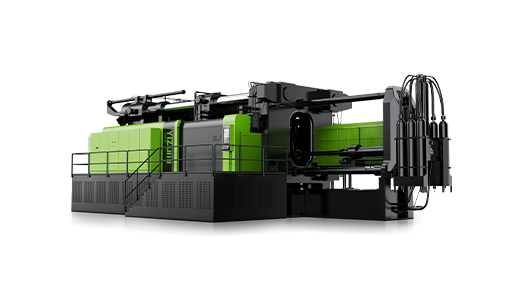
LEAP Series Die Casting Machine
Conclusion
Before molding, die casting surface finishing should be planned as an engineering requirement, not a final decoration step. Buyers should define the part’s end use, visible and functional surfaces, alloy, finish type, gate and parting line layout, ejector marks, draft angle, wall thickness, venting, vacuum needs, die temperature control, machine capability, secondary finishing, masking areas, and inspection standards. Early planning helps reduce porosity, coating failure, rework, mold changes, and total production cost.
FAQ
Q1. What should be planned before molding a die cast part?
A: Plan the final surface function, alloy, finish type, visible areas, mold layout, venting, ejection, machine capability, secondary operations, masking, and inspection standards.
Q2. Why does surface finishing need to be considered before die casting?
A: Because gate marks, parting lines, porosity, ejector marks, and surface defects are largely determined by mold design and casting process stability before coating or polishing begins.
Q3. How does alloy selection affect die casting surface finishing?
A: Aluminum, zinc, and magnesium respond differently to painting, powder coating, plating, polishing, and corrosion protection, so the alloy must match the required finish.
Q4. What causes coating or plating failure on die cast parts?
A: Common causes include porosity, trapped air, poor venting, release agent residue, unstable injection, improper pretreatment, and unsuitable alloy or surface design.
Q5. How does die casting machine selection affect surface quality?
A: Machine type, clamping force, injection stability, vacuum configuration, die temperature control, automation, and process monitoring all affect surface consistency and defect control.