What Matters Most When Choosing Die Casting Machines for Modern Production
Abstract:
Choosing a die casting machine today goes beyond tonnage and peak speed. What actually drives long-term value is stable shot consistency, repeatable process control, and how well the equipment integrates with automation cells. Machines like the YIZUMI LEAP and HII-S series focus on real-time closed-loop control and rigid structural platforms to reduce flash and improve uptime. Before investing, it's smarter to prioritize application fit and future flexibility over headline specs.
Choosing die casting machines today is about more than locking force or output. Manufacturers are putting more weight on process stability, repeatability, energy use, automation compatibility, and long-term return. That shift is the same kind of buying logic now shaping other advanced molding equipment categories as well.
Key Factors When Choosing Die Casting Machines
Application Fit Comes First
A die casting machine should match the actual production task, not just the target tonnage. Alloy type, part size, wall thickness, quality requirements, and output expectations all affect the right machine choice. A better application match usually leads to smoother production, more stable quality, and fewer avoidable process problems later.
Stable Shot Performance Matters More Than Peak Speed
High speed can improve output, but speed alone does not guarantee better production results. What matters more is whether the machine can maintain stable shot performance from cycle to cycle. Consistent injection behavior helps reduce casting defects, control variation, and keep daily production more predictable.
Machine Structure Supports Long-Run Performance
A solid mechanical platform plays a major role in production confidence. Buyers should pay attention to clamping reliability, platen rigidity, mold protection, and overall stability under load. Strong structure usually supports better dimensional consistency, lower mold risk, and more dependable long-run operation.
Repeatability Directly Affects Production Cost
Repeatability has a direct impact on efficiency and margin. When pressure, position, and cycle behavior stay consistent, factories usually see less rework, fewer manual corrections, and lower inspection pressure. In real production, repeatability often creates more value than headline speed numbers.
Automation Compatibility Should Be Evaluated Early
Many die casting plants now plan around robotics, automated cells, and connected process control. Because of that, automation compatibility should be part of the selection process from the beginning. A machine that works well with automation systems is usually better positioned for labor savings, process consistency, and future plant upgrades.
Product Range Adds Long-Term Flexibility
A machine platform should support current jobs while leaving room for future business. Many manufacturers now look for equipment suppliers with broader product ranges, because a wider lineup makes it easier to handle different casting sizes, new applications, and changing production plans over time. That kind of flexibility can be valuable when customer needs start to shift.
Why Product Range Matters
A machine should fit current production, but it should also leave room for future work. More buyers want equipment platforms that can support different casting sizes, different applications, and changing program requirements over time. That is where a broader die casting machines becomes useful. YIZUMI’s lineup includes LEAP Series, LEAP Ultra-large, HII-S Series, HII Series, HM Series, and NEXT² Series 2-platen machines, covering cold chamber, hot chamber, ultra-large, and two-platen configurations.
A Closer Look at YIZUMI Die Casting Machines
LEAP Series
The LEAP Series die casting machine is built around casting precision, reproducibility, rapid response, and process stability. Its real-time closed-loop control system detects process deviation and adjusts the injection process immediately, which is aimed at improving repeatability and casting consistency. It also uses end-of-cavity speed breaking to reduce flash while helping productivity and die life, and its re-engineered toggle system is designed for longer service life and higher platen rigidity. Models are available from 380T to 5000T.
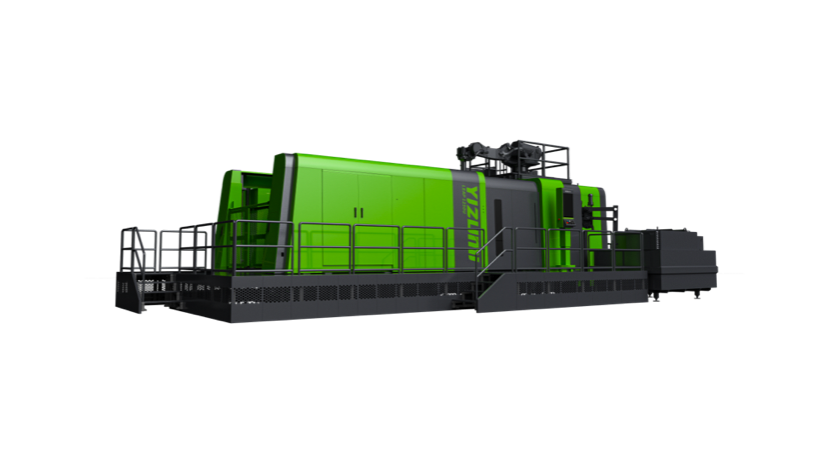
LEAP Series Die Casting Machine
HII-S Series
The HII-S Series is positioned as a high-end cold chamber platform. Its design combines an intuitive HMI, advanced hydraulics, faster cycles, reduced energy use, and global-standard repeatability. On the machine side, it uses a high-rigidity platen structure, auto die height adjustment for stable locking forces, and a QC package that records injection curves and monitors key casting parameters. YIZUMI also states that pressure build-up time is improved by more than 30%, while the deviation between set and actual cavity-filling switch-over is kept to within 5 mm, with repeatability of 3 mm or less. The HII-S range covers both 180–900T and 1000–9000T segments.
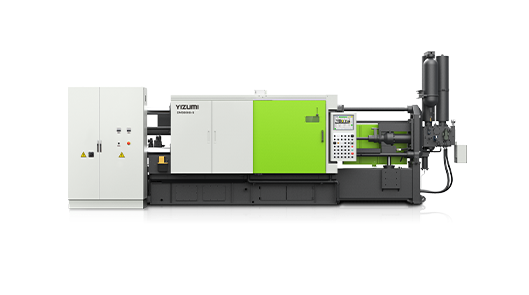
HII-S Series High-end Cold Chamber Die Casting Machine
HM Series
The HM Series is designed for hot chamber die casting. It focuses on precision and reliability across versatile alloy applications. The zinc-alloy versions cover 90–400T and are aimed at bathroom, hardware, and home furnishing applications, while the magnesium versions cover 200–400T and target thin-wall 3C parts such as mobile phone cases and tablets. That makes the series relevant for manufacturers looking for compact, high-efficiency production in lighter-alloy segments.
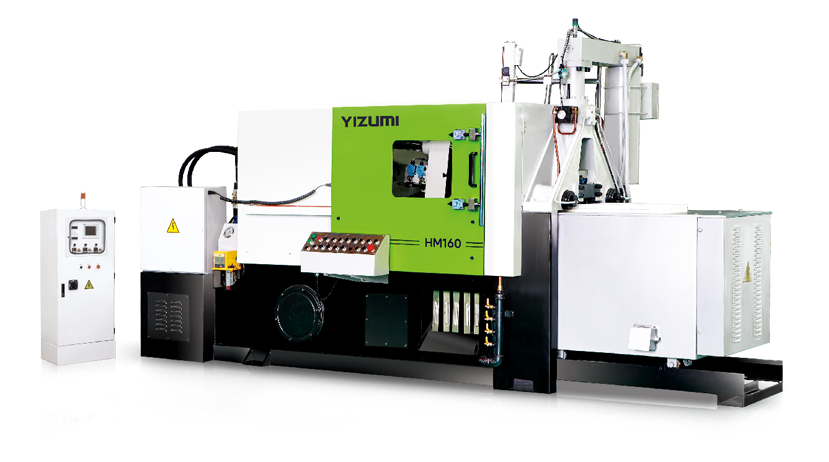
HM Series High-per for mance Hot Chamber Die Casting Machine
NEXT² and Ultra-Large Options
For buyers evaluating plant layout, part size, or future expansion, machine architecture matters. YIZUMI includes both a NEXT² Series 2-platen die casting machine and an Ultra-large series in its lineup, giving buyers more than one structural path depending on casting scale and production goals.
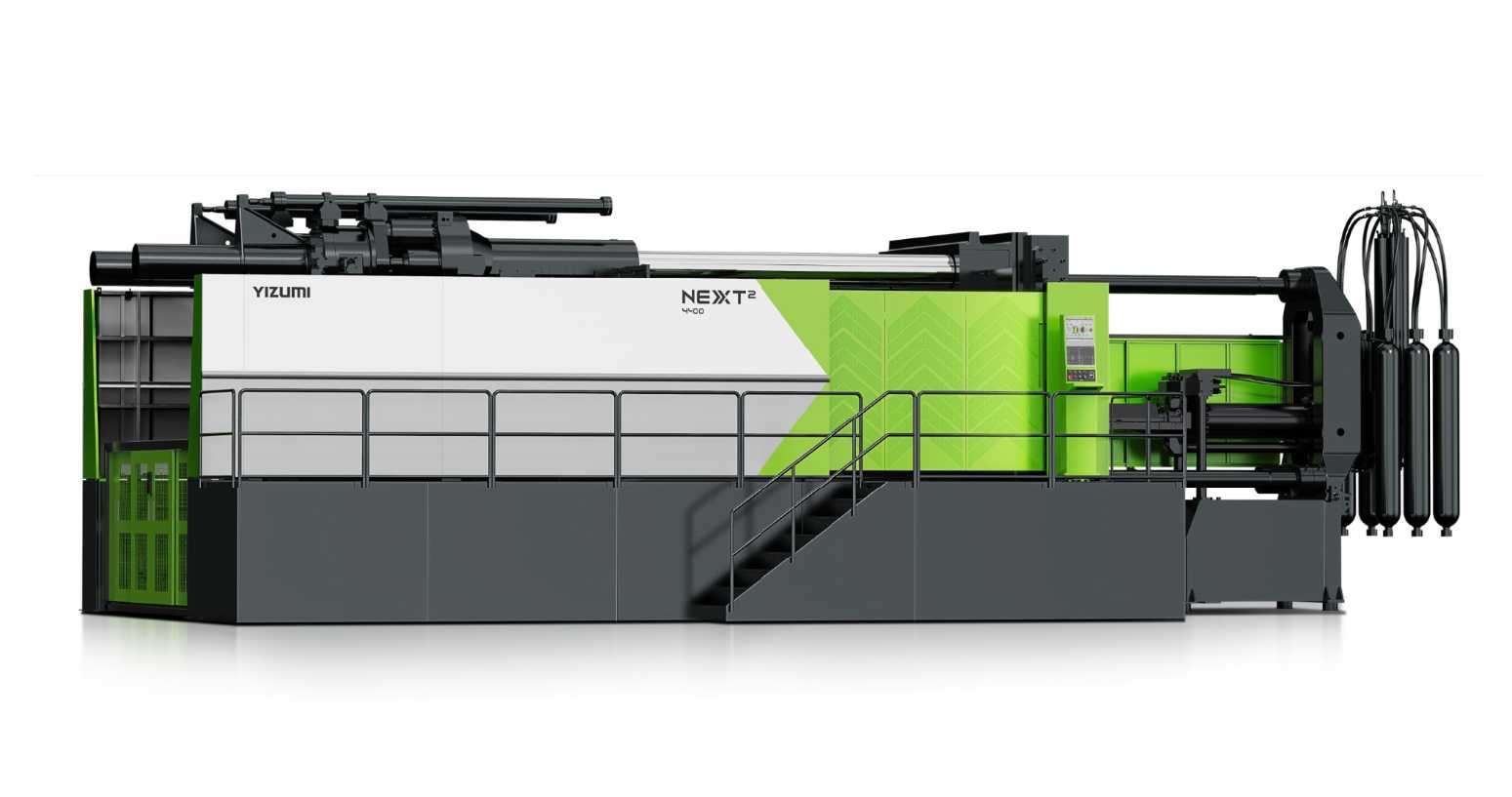
NEXT² Series 2-platen Die Casting Machine
Conclusion
The best die casting machines are not defined by one number alone. They are defined by how well they support stable production, repeatable quality, automation integration, and long-term flexibility. For manufacturers planning the next equipment investment, that is the standard that matters most. A lineup like YIZUMI’s is relevant because it combines multiple machine architectures, industry-oriented application coverage, automation alignment, and global service into one broader die casting offering.
FAQ
Q1. What should I look for first when comparing die casting machines?
A: Start with process stability and repeatability. Speed and locking force matter, but a machine that cannot maintain stable shot behavior and consistent production will usually create higher hidden costs over time.
Q2. Why is repeatability so important in die casting?
A: Repeatability helps reduce rework, trimming issues, inspection burden, and process adjustment. It is one of the biggest factors behind stable margins in real production.
Q3. Are automation features really necessary for die casting lines now?
A: For many manufacturers, yes. More lines are being designed as connected cells with robotics and integrated controls, so automation compatibility increasingly affects long-term equipment value.