What is Cleanroom Injection Molding?
Abstract:
Cleanroom injection molding is a controlled plastic manufacturing process designed to minimize contamination while ensuring high part precision. It is widely used in medical, pharmaceutical, diagnostic, semiconductor, and optical applications, combining cleanroom environments, automation, material control, and process validation to improve product safety, quality, and consistency.
Cleanroom injection molding is a specialized plastic manufacturing process used when cleanliness is just as important as part accuracy. Instead of producing molded plastic components on a standard factory floor, the molding process takes place inside a controlled cleanroom environment where airborne particles, dust, moisture, and other contaminants are carefully managed.
This process is widely used for medical devices, diagnostic components, pharmaceutical packaging, electronics, optics, and other precision parts where even small contamination can affect product performance, safety, or compliance.
What Does Cleanroom Injection Molding Mean?
Cleanroom injection molding refers to the production of plastic parts inside a cleanroom or controlled manufacturing area that meets specific cleanliness requirements. The goal is to reduce the risk of contamination during molding, handling, inspection, and packaging.
In a standard injection molding process, plastic resin is melted, injected into a mold, cooled, and ejected as a finished part. Cleanroom injection molding follows the same basic molding principle, but the surrounding environment is much more strictly controlled.
A cleanroom may control factors such as:
· Airborne particle levels
· Air filtration
· Air pressure
· Temperature
· Humidity
· Personnel access
· Material handling
· Equipment cleanliness
· Packaging procedures
For industries such as medical devices or pharmaceuticals, the cleanroom is not just a production space. It is part of the quality system.
How Cleanroom Injection Molding Works
In cleanroom injection molding, the injection molding machine, mold, robotics, conveyors, inspection stations, and packaging areas may all be located inside or connected to a classified cleanroom. Operators follow gowning procedures, materials enter through controlled transfer areas, and parts are often handled with automation to reduce human contact.
A typical cleanroom molding workflow include:
1. Material preparation
Resin and components are inspected, dried, and prepared under controlled conditions.
2. Cleanroom entry
Operators enter through gowning rooms and airlocks to reduce particle transfer.
3. Molding setup
Machines, molds, tools, and work areas are cleaned and verified before production.
4. Injection molding
Parts are molded inside a controlled environment using validated process parameters.
5. Automated removal
Robots or protected handling systems remove parts from the mold to reduce contamination.
6. Inspection and monitoring
Parts are checked for dimensional accuracy, visual quality, and cleanliness requirements.
7. Clean packaging
Finished parts are packaged in controlled conditions before leaving the cleanroom.
This controlled workflow helps prevent contamination from entering the part or package during production.
How Cleanroom Injection Molding Differs From Standard Injection Molding
| Attribute | Cleanroom Injection Molding | Standard Injection Molding |
| Contamination risk | Lower due to controlled air, gowning, cleaning, and monitoring | Higher exposure to dust, fibers, and uncontrolled handling |
| Cost | Higher because of filtration, qualification, monitoring, and documentation | Lower for noncritical parts |
| Cycle time | Core molding cycle may be similar, but total production flow can be slower | Usually faster changeovers and less release overhead |
| Documentation | Often includes validation, traceability, environmental records, and batch release | Usually lighter unless required by the customer |
| Typical industries | Medical, pharma, diagnostics, optics, semiconductor | Consumer goods, industrial parts, automotive, general products |
Key Characteristics of Cleanroom Injection Molding
Cleanroom injection molding is not defined by the molding machine alone. The real difference is the controlled manufacturing system around the press. Air quality, material movement, operator behavior, tooling condition, process data, and packaging all need to work together to reduce contamination risk and keep production consistent.
Controlled Air Quality
Air control is one of the most important parts of cleanroom injection molding. The cleanroom is designed to reduce airborne particles that could land on exposed plastic parts during molding, inspection, assembly, or packaging.
Key air-control factors include:
· ISO cleanroom classification
· HEPA or ULPA filtration
· Air change rate control
· Positive pressure management
· Temperature and humidity control
· Particle monitoring
· Controlled airflow direction
Contamination Control
Contamination can come from people, tools, packaging, resin bags, carts, machines, or even poor movement inside the room. A cleanroom molding program must reduce these risks through clear operating procedures.
Common contamination-control measures include:
· Gowning procedures
· Airlocks or pass-through chambers
· Limited operator access
· Written cleaning procedures
· Controlled material entry
· Reduced manual handling
· Clean packaging inside the cleanroom
· Routine environmental monitoring
Cleanroom-Compatible Equipment
A standard injection molding machine may not be ideal for cleanroom production. Cleanroom molding often requires machines and automation systems that are easier to clean and less likely to generate particles or oil contamination.
Important equipment considerations include:
· Electric injection molding machines
· Enclosed moving parts
· Low-particle robotics
· Covered conveyors
· Easy-to-clean machine surfaces
· Reduced hydraulic oil exposure
· Stainless steel or cleanroom-safe components
· Automated part removal
Material Control
Material selection and handling are especially important in cleanroom injection molding. The resin must meet the product’s performance needs, but it also needs proper traceability, clean handling, and compatibility with sterilization or regulatory requirements when applicable.
Important material considerations include:
· Medical-grade or application-approved resin
· Resin lot traceability
· Controlled drying conditions
· Clean material storage
· Sterilization compatibility
· Chemical resistance
· Biocompatibility data when required
· Low extractables and leachables for sensitive applications
Tooling and Mold Design
A cleanroom cannot fix a poorly designed mold. If the mold has bad venting, poor gate design, unstable cooling, flash problems, or weak steel selection, the part will still have quality issues.
Important tooling considerations include:
· Corrosion-resistant mold steel
· High-polish surfaces
· Smooth part ejection
· Proper venting
· Flash control
· Stable cooling design
· Minimal particle generation
· Easy tool cleaning
· Controlled mold maintenance
Process Validation
Cleanroom injection molding often serves medical, pharmaceutical, diagnostic, and other regulated markets. In these industries, it is not enough to say the process works. The supplier usually needs to prove that the process can repeatedly produce conforming parts.
Important validation records may include:
· IQ, OQ, and PQ documentation
· Mold qualification records
· Process window studies
· Machine parameter records
· Material lot records
· Dimensional inspection reports
· Environmental monitoring records
· Batch release documentation
Automation and Handling
Human handling is one of the biggest contamination risks in cleanroom production. For that reason, many cleanroom molding lines use automation to remove, transfer, inspect, and package parts with minimal direct contact.
Common automation options include:
· Robotic part removal
· Automated insert loading
· Vision inspection
· Conveyor transfer
· Pick-and-place systems
· Automated sorting
· Cleanroom packaging support
· Reduced operator intervention
Common Applications of Cleanroom Injection Molding
| Application Area | Typical Molded Parts | |
| Medical Devices | Surgical instrument components, catheter parts, syringe components, IV connectors, diagnostic housings, wearable medical device parts | Helps reduce particulate contamination before assembly, packaging, sterilization, or clinical use. It also supports stronger traceability and process documentation. |
| Pharmaceutical & Drug Delivery | Inhaler parts, auto-injector components, medication containers, vial system parts, ophthalmic packaging, aseptic connectors | Supports cleaner production for parts that may interact with drugs, delivery systems, or sterile workflows. Cleanroom molding helps protect the part before downstream sterilization or aseptic processing. |
| Diagnostics & Laboratory Products | Test cartridges, PCR consumables, microfluidic chips, sample collection devices, pipette tips, reagent containers | Reduces contamination that could interfere with test accuracy, sample integrity, or repeatable diagnostic performance. |
| Semiconductor Components | Wafer carriers, FOUPs, wafer handling parts, retainer accessories, storage-box cushions, process protection components | Helps control particles, moisture, VOCs, and other contamination risks that can affect wafer handling, yield, and process reliability. |
| Optical Components | Optical lenses, light guides, sensor windows, beam-splitter parts, AR/VR optical components, LED optics | Protects sensitive surfaces from dust, haze, scratches, and microscopic defects that can reduce optical performance. |
| Aerospace Components | Sensor-related housings, lightweight polymer parts, aircraft interior components, air-treatment parts, spacecraft components | Useful for high-reliability parts where contamination, traceability, weight reduction, heat resistance, and long-term performance matter. |
| Food-Contact & Packaging Components | Infant formula closures, coffee closures, pouch spouts, flow-control valves, beverage pouch parts | Not always required, but useful when low particulate load, hygienic dispensing, reliable sealing, or controlled packaging quality is important. |
How to Choose a Cleanroom Injection Molding Machine Supplier
Insert Requirements
If your product requires metal inserts, filters, membranes, needles, seals, or electronic components, the supplier should offer machines and automation systems that support accurate and clean insert loading. For cleanroom production, insert placement must be stable, repeatable, and easy to validate. A qualified machine supplier should be able to provide compatible robotics, positioning systems, vision inspection options, and low-particle handling solutions to reduce contamination and molding defects.
Production Volume
Production volume directly affects machine selection, mold cavity planning, automation level, and long-term operating cost. For low-volume or pilot production, a flexible machine with easy setup and process adjustment may be enough. For high-volume medical, pharmaceutical, diagnostic, or semiconductor components, the supplier should provide high-precision machines with stable repeatability, fast cycle performance, multi-cavity mold support, automated part removal, and reliable data monitoring for continuous production.
Facility Space
Cleanroom space is expensive, so Injection Molding machine size and layout efficiency are important. A good cleanroom injection molding machine supplier should help evaluate the footprint of the machine, robot, conveyor, drying system, material feeder, and packaging area. Compact electric machines, integrated automation, and cleanroom-friendly layouts can help reduce space waste, improve material flow, and lower the risk of unnecessary operator movement inside the cleanroom.
Part Complexity
Complex parts require more than basic injection molding capability. If the part has tight tolerances, thin walls, micro features, optical surfaces, overmolding requirements, or insert-molded structures, the supplier should provide machines with precise injection control, stable clamping, accurate temperature control, and advanced process monitoring. For high-precision cleanroom applications, the machine supplier should also support mold trial analysis, parameter optimization, cavity pressure monitoring, and technical guidance to improve production consistency.
YIZUMI FF-M Series Injection Molding Machine for the Medical Industry
The YIZUMI FF-M Series Injection Molding Machine Special for Medical Industry is developed for medical molding applications, covering production consultation, research and development, and scale production. The series is available with clamping forces from 1,600 to 3,800 kN, supporting the production needs of various medical products.
Clean Room Production
Suitable for clean room production, supporting medical molding applications where production cleanliness is a key requirement.
Stable Tie-Bar Free Structure
The Tie-Bar Free structure avoids contact between the platen and tie bars, with no lubricating oil on the tie bars, helping reduce product contamination risk.
Precise Pressure Control
Injection pressure closed-loop control improves molding stability, with injection and holding pressure stability accuracy up to ±0.1 MPa.
Fast and Stable Mold Movement
The linear guide rail structure supports guiding accuracy up to 0.02 mm and mold opening/closing repeatability up to ±0.03 mm.
High-Speed Injection
Injection speed can reach 120–150 mm/s, supporting diversified molding applications for commonly used medical products.
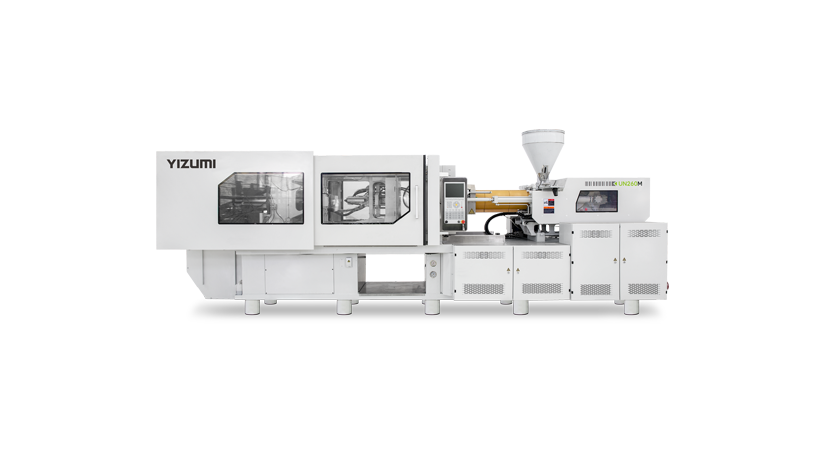
FF-M Series Injection Molding Machine Special for Medical Industry
Conclusion
Cleanroom injection molding supports cleaner, more controlled production for medical, pharmaceutical, diagnostic, semiconductor, optical, and precision plastic parts. By combining cleanroom-compatible equipment, stable process control, automation, material traceability, and proper documentation, manufacturers can reduce contamination risk and improve long-term production consistency.
FAQ
Q1. What is the biggest challenge in cleanroom injection molding?
A: The biggest challenge is contamination control throughout the entire process. It is not enough to control the air. Material transfer, operator movement, tooling condition, part removal, inspection, and packaging must also be managed carefully.
Q2. Does cleanroom injection molding make plastic parts sterile?
A: No. Cleanroom injection molding helps reduce contamination and supports cleaner production, but it does not automatically make parts sterile. If the final product must be sterile, it still needs a validated sterilization or aseptic process.
Q3. How do I know what cleanroom class my product needs?
A: The required cleanroom class depends on the product’s application, contamination sensitivity, regulatory requirements, and downstream process. Medical housings, diagnostic consumables, pharmaceutical packaging, optical parts, and semiconductor components may require different cleanliness levels.
Q4. Why is cleanroom injection molding more expensive than standard molding?
A: Cleanroom molding requires filtered air systems, controlled pressure, gowning procedures, environmental monitoring, cleaning validation, documentation, and often automation. These requirements increase both equipment investment and operating cost.