Vertical vs Horizontal Injection Molding Machine: Features, Pros, Cons, Applications, and How to Choose
Abstract:
Injection molding machines can be designed in different layouts to suit different production needs. Vertical machines focus on insert molding, overmolding, and compact production cells, while horizontal machines are better for high-speed, automated, and large-mold applications. Choosing the right type depends on part design, production volume, automation plans, and cost targets, with solutions available from YIZUMI.
Injection molding machines are often classified by the opening and closing direction of the clamping unit.
In a vertical injection molding machine, the mold opens and closes up and down. This layout gives operators and robots easier access to the mold area, making it suitable for insert loading and overmolding.
In a horizontal injection molding machine, the mold opens and closes side to side, parallel to the floor. This layout is widely used for standard plastic molding because finished parts can be ejected automatically, dropped onto conveyors, or removed by robotic systems.
Although both injection molding machines follow the same basic molding sequence — injection, holding pressure, cooling, mold opening, and ejection — their layouts create very different production advantages.
Vertical Injection Molding Machines
What Is a Vertical Injection Molding Machine?
A vertical injection molding machine is designed with a vertical clamping structure. The mold opens upward and closes downward, allowing inserts, metal parts, cables, terminals, electronic components, films, or other substrates to be placed into the mold before injection.
This machine type is commonly used when the molding process is not only about shaping plastic, but also about combining plastic with another component.
Key Features of Vertical Injection Molding Machines
Compact Production Footprint
Vertical machines usually take up less horizontal floor space than horizontal machines. This makes them suitable for compact workshops, production islands, and factories that need multiple molding cells in a limited area.
Open Mold Access
The mold area is easier to access from the operator side. This is useful for insert loading, part checking, mold setup, and semi-automatic production.
Rotary and Shuttle Table Configurations
Many vertical machines can be equipped with rotary tables, shuttle tables, or sliding tables. These systems allow one station to mold while another station is being loaded or unloaded, helping reduce idle time.
Strong Insert and Overmolding Capability
Vertical machines are well suited for molding plastic around metal inserts, electronic components, cables, magnets, bushings, or pre-formed substrates.
Flexible Material Compatibility
Depending on the machine configuration, vertical systems can process common thermoplastics, elastomers, thermoset materials, silicone materials, and other specialty compounds.
Application-Specific Automation
Vertical machines can be combined with insert feeders, robots, rotary tables, vision inspection, and custom fixtures for more stable insert placement and repeatable production.
Advantages of Vertical Injection Molding Machines
Better Insert Positioning and Mold Access
Vertical machines are especially useful when inserts must be placed accurately before injection. Gravity can help keep the insert in position, while the open mold area makes manual or robotic loading easier.
More Efficient Use of Factory Space
For factories with limited floor space, vertical machines can provide a more compact production layout. This is valuable when several molding cells must be installed in one production area.
Strong Ergonomics for Semi-Automatic Production
When operators need to load inserts or inspect positioning, vertical machines usually provide better access to the mold area. This can improve handling efficiency and reduce setup difficulty.
Improved Productivity with Rotary Tables
Rotary table systems allow loading and molding to happen at different stations. This helps reduce waiting time and makes vertical machines more efficient for insert molding applications.
Suitable for Specialized Components
Vertical machines are often used for precision parts, electronic components, plastic-metal hybrid parts, seals, and other products where positioning accuracy matters more than pure output speed.
Limitations of Vertical Injection Molding Machines
Lower Efficiency for Simple High-Volume Parts
Vertical machines can be productive, but they are not always the best choice for simple plastic parts that require high-speed, fully automated production. For these applications, horizontal machines often offer better scalability.
Higher Operator Involvement in Insert-Loading Processes
If the process depends on manual insert loading, labor demand can increase. Without rotary tables, robots, or automatic insert feeders, production may rely heavily on operator handling.
Increased System Complexity for Customized Cells
When a vertical machine requires insert feeders, special fixtures, rotary stations, or inspection systems, the total production cell becomes more complex. This can increase project cost and setup requirements.
Limited Advantage for Very Large Molds
Vertical machines are often better suited for small to medium-sized insert parts. For very large molds, wide mold plates, heavy tools, or high-cavitation molds, horizontal machines are usually more practical.
Horizontal Injection Molding Machines
What Is a Horizontal Injection Molding Machine?
A horizontal injection molding machine is the standard machine layout for general plastic molding. The mold opens and closes horizontally, and finished parts can often fall directly from the mold area or be removed automatically by robots.
This machine type is widely used when manufacturers need stable output, fast cycle times, multi-cavity molds, large mold space, and automated production lines.
Typical horizontal molding applications include:
· Packaging products
· Caps and closures
· Consumer goods
· Automotive plastic parts
· Medical packaging
· Appliance components
· Industrial containers
· Large plastic housings
Key Features of Horizontal Injection Molding Machines
General-Purpose Machine Layout
Horizontal machines are widely used across the injection molding industry because they fit many standard molding applications.
Strong Compatibility with Conveyors and Robots
Finished parts can be ejected automatically, picked by robots, or dropped onto conveyors. This makes horizontal machines suitable for continuous production.
Larger Mold Capacity
Horizontal machines are commonly used for larger molds, heavy tools, wide platens, and multi-cavity mold structures.
High-Speed and High-Cavitation Capability
For packaging, consumer goods, and mass production applications, horizontal machines can support fast cycle times and high-output mold configurations.
Broad Application Range
Horizontal machines can produce small precision parts, medium-sized components, and large molded products across many industries.
Advantages of Horizontal Injection Molding Machines
Stronger Fit for High-Volume Automated Production
When the goal is continuous output, multi-cavity molding, and reduced labor input, horizontal machines are usually the more scalable option.
Better Platform for Large Parts and Heavy Molds
Horizontal machines are generally more suitable for large molds, wide mold plates, heavy tools, and parts that require higher clamping force.
Stronger Compatibility with Automated Production Lines
Horizontal machines can be integrated with robotic arms, conveyors, automatic packaging systems, part collection systems, and inspection equipment. This makes them well suited for factories focused on repeatability and high output.
Better Unit Cost Potential at Scale
For high-volume production, horizontal machines can help reduce unit cost through faster cycle times, multi-cavity molds, automatic ejection, and lower manual handling.
Limitations of Horizontal Injection Molding Machines
Larger Total Production Footprint
A horizontal molding line often requires more space for the machine, mold area, robot, conveyor, safety guarding, dryer, loader, and other auxiliary equipment.
Less Convenient for Manual Insert Loading
Horizontal machines can perform insert molding, but they are usually less convenient when operators must place inserts manually. Inserts may need special fixtures or automation to stay in position before the mold closes.
More Demanding Safety Integration in Automated Cells
As automation increases, the production cell needs proper guarding, interlocks, robot safety coordination, operator access control, and maintenance procedures.
Higher Initial Investment for Advanced Production Lines
A complete horizontal molding line may require robots, conveyors, inspection equipment, packaging systems, and auxiliary equipment. This can increase the upfront investment.
Key Application Areas Compared
The best injection molding machine choice depends on what the part requires most: insert accuracy, mold access, automation, cycle speed, or mold size.
Best Applications for Vertical Injection Molding Machines
Vertical injection molding machines are better for parts that require inserts, overmolding, or accurate component positioning.
Typical applications include:
· Electronics and electrical parts — connectors, terminals, plugs, switches
· Cable assemblies — overmolded cable ends, wire harness parts
· Automotive sensors — sealed connectors, small hybrid parts
· Metal-plastic components — threaded inserts, bushings, magnets
· Specialty seals and overmolded parts — gaskets, soft-touch parts, precision assemblies
· Medical insert-molded parts — small components requiring stable insert placement
Best Applications for Horizontal Injection Molding Machines
Horizontal injection molding machines are better for standard plastic parts that require high output, automatic ejection, and stable mass production.
Typical applications include:
· Packaging products — thin-wall containers, caps, closures, pails
· Consumer goods — storage boxes, handles, household plastic parts
· Large automotive parts — housings, brackets, covers, interior components
· Appliance parts — panels, handles, covers, housings
· Industrial components — fittings, containers, technical plastic parts
· High-volume molded parts — repeat-production plastic components
How to Choose the Right Injection Molding Machine
Choosing between a vertical and horizontal injection molding machine should be based on the part, mold, production volume, and automation plan.
1. Start with the Part Structure
Choose a vertical injection molding machine if the part requires inserts, overmolding, metal components, cables, terminals, or electronic parts.
Choose a horizontal injection molding machine if the part is a standard plastic component without insert-loading requirements.
2. Check the Mold Size
Vertical machines are more suitable for small to medium molds, especially when mold access is important.
Horizontal machines are better for large molds, heavy tools, wide platens, and high-cavitation molds.
3. Consider Production Volume
Vertical machines are a good fit for flexible, specialized, or medium-volume production.
Horizontal machines are better for high-volume production with fast cycle times and automatic part handling.
4. Review the Automation Plan
Choose vertical when automation focuses on insert placement, rotary tables, shuttle tables, or semi-automatic loading.
Choose horizontal when the production line needs robots, conveyors, automatic ejection, packaging systems, or continuous operation.
5. Compare Total Production Cost
Do not compare only the machine price. Also consider mold cost, labor, automation, cycle time, energy use, scrap rate, maintenance, and floor space.
A vertical machine may be more cost-effective for insert-rich parts. A horizontal machine may offer lower unit cost for large-volume standard parts.
YIZUMI Injection Molding Machine Solutions
YIZUMI provides injection molding machine solutions for different production needs, from vertical insert molding to high-speed horizontal molding. With equipment selection support, process guidance, production planning, training, and after-sales service, YIZUMI helps manufacturers build more efficient and reliable molding production systems.
VM Series Vertical Plastic Injection Molding Machine
The YIZUMI VM Series Vertical Plastic Injection Molding Machine is designed for vertical injection and insert molding applications. It is suitable for plastic products with inserts and production scenarios that require stable positioning, precise control, and reliable molding performance.
Key Highlights
· Designed for insert molding: Suitable for plastic products with inserts, including metal, electronic, or other pre-placed components.
· Direct clamping structure: Helps support stable mold closing and reliable molding performance.
· High-rigidity machine design: Built for stable operation and consistent production.
· Precise control performance: Supports accurate molding control for insert and vertical injection applications.
· Optimized plasticizing screw: Helps improve plasticizing efficiency and color-mixing quality.
· Proportional plasticizing back pressure control: Supports more stable injection performance.
· Energy-saving servo technology: Designed for stable, reliable, low-noise, and energy-saving operation.
· Clamping force range: 600–3,000 kN.
· Industry applications: Suitable for medical, auto parts, 3C electronics, and high-speed packaging applications.
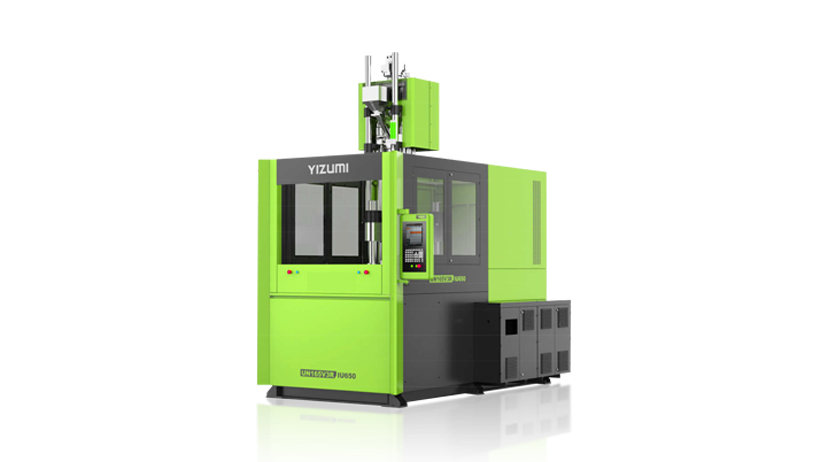
VM Series Vertical Plastic Injection Molding Machine
P Series Horizontal Injection Molding Machine
The YIZUMI P Series Horizontal Injection Molding Machine is built for high-speed horizontal molding applications, especially thin-wall and multi-cavity packaging products. It is suitable for production that requires fast cycle times, stable injection, and consistent product quality.
Key Highlights
· Designed for high-speed production: Suitable for thin-wall and multi-cavity packaging products.
· High-speed mold opening and closing: Built for faster molding cycles and improved production efficiency.
· High-rigidity clamping structure: Helps support stable mold movement and reliable production.
· Reinforced platen design: Designed to reduce deformation and improve force distribution.
· Horizontal dual-carriage injection design: Supports stable and reliable injection performance.
· Wide application range: Applicable to different high-speed molding needs.
· Humanized machine design: Built with user-friendly operation and practical production needs in mind.
· Clamping force range: 2,500–5,500 kN.
· Industry applications: Suitable for medical, auto parts, 3C electronics, and high-speed packaging applications.
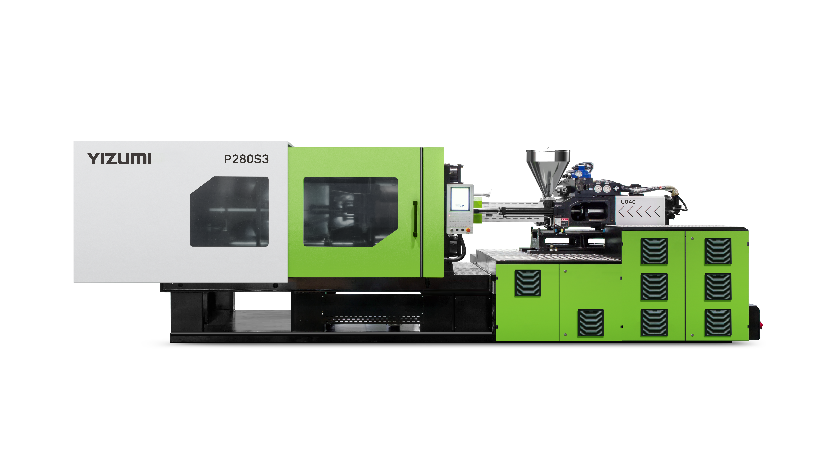
P Series High-speed Injection Molding Machine
Conclusion
Choosing between a vertical and horizontal injection molding machine depends on part structure, insert requirements, mold size, production volume, automation level, and total cost. Vertical machines are better for insert molding, overmolding, compact cells, and hybrid components, while horizontal machines are stronger for high-speed, automated, large-mold, and high-volume production. YIZUMI offers both vertical and horizontal solutions to support different molding applications.
FAQ
Q1. How do I reduce labor cost in injection molding production?
A: If the product is suitable for automatic ejection and conveyor handling, a horizontal machine can help reduce manual labor. For insert molding, adding rotary tables, shuttle tables, or robotic insert loading to a vertical machine can also reduce operator involvement.
Q2. Is a vertical injection molding machine suitable for mass production?
A: Yes, but it depends on the product. Vertical machines can be efficient for insert-molded and overmolded parts, especially with rotary tables or automation. For simple plastic parts with very high output requirements, horizontal machines are usually more scalable.
Q3. What factors affect the final machine selection?
A: Key factors include part design, insert requirements, mold size, clamping force, shot size, material type, cycle time, automation plan, floor space, labor cost, energy use, and long-term production cost.