Top Factors to Consider When Investing in a Two-Platen Injection Molding Machine
Abstract:
The two-platen injection molding machine has become one of the best options for manufacturers targeting high productivity and improved ROI in large-volume plastic molding and complex product manufacturing.
When plastic manufacturers plan to expand production capacity or upgrade molding equipment, choosing the right injection molding machine is one of the most important decisions — especially when the application demands large parts, high clamping forces, high precision molding, and energy efficiency. The two-platen injection molding machine has become one of the best options for manufacturers targeting high productivity and improved ROI in large-volume plastic molding and complex product manufacturing.
In this comprehensive guide, we will explore the top factors to consider when investing in a two-platen injection molding machine, what makes two-platen machines outstanding compared to other structures, and how leading industrial solutions — especially from YIZUMI — can help you maximize production performance.
Understanding Two-Platen vs Other Injection Molding Machines
Before diving into detailed investment criteria, it's helpful to understand the two-platen injection molding machine category and how it compares to other types:
- l Two-Platen Machines use two large platens and tie bars that allow for larger mold opening strokes and greater platen distances. This is especially beneficial for molding large components such as automotive bumpers, crates, housings, and structural panels.
- l Three-Platen Machines add an extra platen for clamping and moving molds, offering certain advantages in specific modular applications, but they tend to occupy more floor space and may be less efficient at larger tonnages.
- l Toggle-Type and All-Electric Machines also have their use cases. Toggles are typically well-suited for medium tonnage, while all-electric systems enhance precision and energy efficiency for smaller parts.
The two-platen structure effectively combines large mold capacity with efficient clamping and injection performance, making it ideal for large plastic part production and high-output industrial environments.
Clamping Force and Machine Size: Matching Requirements to Production Needs
One of the most critical factors in evaluating a two-platen injection molding machine is clamping force — the maximum force the machine can apply to keep the mold closed during injection.
Why Clamping Force Matters
- l If the clamping force is too low, the plastic melted material may push the mold open during injection, causing flash or incomplete parts.
- l A machine with properly matched clamping force ensures material flows evenly into the cavity and that molded parts maintain dimensional consistency and surface quality.
- l Larger molds, multi-cavity tools, and thick parts all require higher clamping forces.
YIZUMI’s Clamping Force Ranges
When considering an investment, reviewing machine specifications is essential. YIZUMI's two-platen injection molding machines offer a broad range of clamping force options to meet diverse production needs:
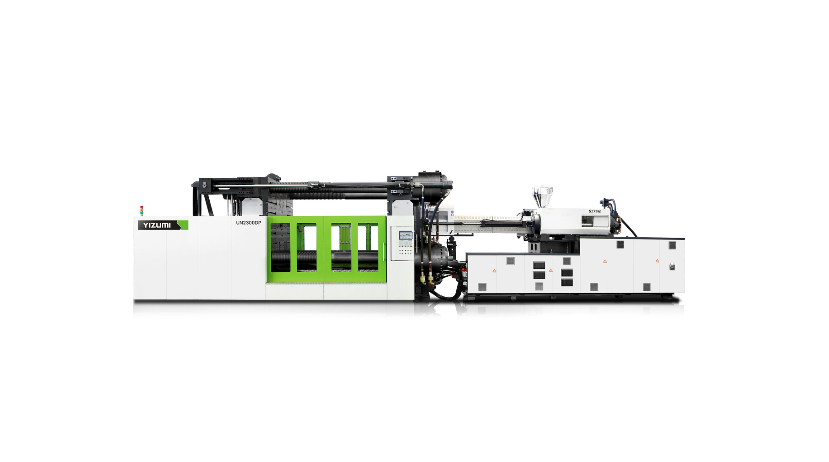
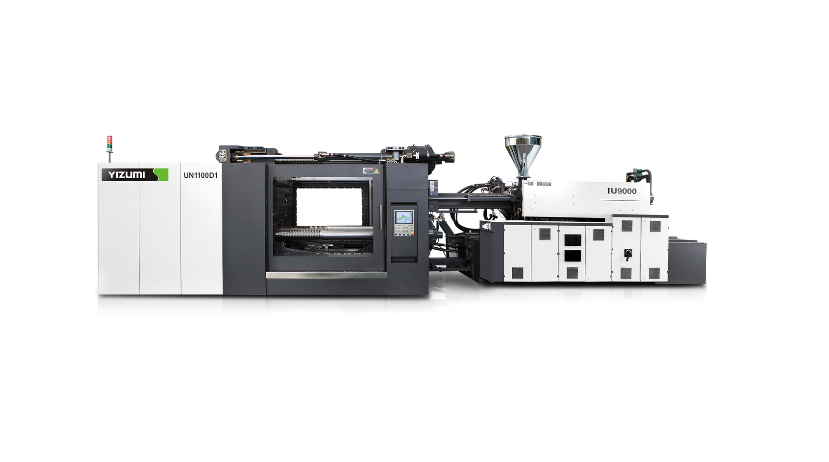
- l D1 Series Two‑Platen Injection Molding Machine — designed for large precision parts, the D1 Series includes direct-lock two-platen machines with robust clamping force and accurate guidance systems, ideal for large molding cycles.
- l D1‑N Series Two‑Platen Injection Molding Machine — this advanced series delivers high-tonnage clamping suitable for deep-cavity parts and high precision applications with extended opening strokes and rigid guide devices.
- l DP Series Two‑Platen Injection Molding Machine — integrates high-performance servo systems and optimized hydraulic drive modules to deliver stable clamping and energy-efficient operations across broad applications.
Selecting the correct clamping force range for your application ensures long-term performance and avoids costly machine under- or over-specification.
Injection Precision: Ensuring Quality and Consistency
Another critical investment factor is injection precision, which directly affects product quality, part repeatability, and process stability.
What Determines Injection Precision
- l Displacement Sensing: Machines equipped with high-accuracy sensors maintain precise injection positions and control plasticization and packing processes.
- l Control System: A high-performance controller can adjust parameters dynamically and support advanced molding processes such as injection compression, MuCell (microcellular foam molding), and ICM (injection compression molding).
YIZUMI’s Precision Technologies
YIZUMI equips its two-platen machines with cutting-edge technologies to enhance injection precision and repeatability:
- l The D1-N Series includes ultrasonic displacement sensors and adaptive PID temperature control to deliver precise injection performance with end-position repeatability to ±0.2 mm and part weight repeatability ≤ 3‰.
- l Both the D1 Series and DP Series use linear guide rails and high-rigidity injection units that minimize resistance and guarantee stable injection during high-speed operations.
High injection precision is especially important for multi-cavity molds and high tolerance applications, such as automotive components and precision housings.
Energy Efficiency and Servo Drive Systems
Industrial injection molding machines can consume significant energy, particularly in continuous high-volume production. Energy-efficient systems not only lower operating costs but also improve sustainability.
Servo-Driven vs Traditional Drives
- l Servo Drives adjust power output based on demand, reducing waste and lowering electricity usage.
- l Traditional hydraulic drives often run at constant pressure, which can waste energy and generate more heat.
YIZUMI’s Advantages in Energy Efficiency
- l The DP Series benefits from Ecoservo drive technology and piston variable pumps that enhance system response while reducing internal leakage and energy losses.
- l YIZUMI’s two-headed fully oil-cooled servo motors provide efficient power delivery, eliminating environmental influences and further decreasing hydraulic energy consumption.
Energy savings are a major consideration for operations looking to improve profitability while maintaining high output volumes.
Control Systems and Automation Compatibility
Modern injection molding systems must integrate seamlessly with automation and Industry 4.0 standards. The machine’s controller and software capabilities are therefore essential evaluation points.
Benefits of Advanced Control Systems
- l User-friendly interface with large displays (e.g., 15″ TFT screens).
- l Parameter visualization and real-time monitoring.
- l Free programming to support specialized molds and customized processes.
- l Data recording for production analytics and quality control.
YIZUMI’s Controllers
All of YIZUMI’s two-platen machines — including the DP, D1, and D1-N Series — employ advanced European controller systems (such as KEBA) that provide intuitive operation, detailed parameter recording, and integration for automation systems.
This connectivity not only enhances process consistency but also supports smart manufacturing practices.
Space Utilization and Factory Integration
Two-platen machines are often prioritized when space is a concern — especially in modern manufacturing environments where floor space is a premium:
- l The two-platen structure typically requires less floor space than three-platen machines of similar clamping capacity.
- l Automatic tie bar retraction (optional on some models) can reduce installation height restrictions, making integration with factory layouts easier.
- l Compatibility with automation peripherals (robots, conveyors) improves productivity and line throughput.
When investing in new equipment, consider how easily the new machine can be integrated into existing lines and material handling systems.
Maintenance, Durability and Long-Term Reliability
Long-term reliability and ease-of-maintenance are key considerations in total cost of ownership:
- l Fewer moving parts generally mean simpler maintenance and reduced downtimes.
- l High-rigidity structural components and uniform stress distribution on critical elements — like tie bars — improve machine longevity.
- l Comprehensive after-sales support accelerates problem resolution and reduces unexpected production interruptions.
YIZUMI offers industry-leading durability and support, with services ranging from mold analysis and process design to installation, training, and preventive maintenance.
Industry-Specific Considerations
Finally, your choice should take into account the industry and product types being molded:
- l Automotive parts often require large clamping forces and high stability during long production runs.
- l Packaging applications benefit from fast cycle times and precise injection controls.
- l Medical and Electronics sectors demand repeatability and tight tolerances.
By evaluating the range of clamping forces, precision control features, and machine models, you can choose a two-platen machine tailored to your specific application needs.
Conclusion: Making the Smart Investment
Choosing the right two-platen injection molding machine involves more than just reviewing clamping force numbers. Modern manufacturers need to evaluate injection precision, energy efficiency, controller capabilities, space and automation integration, and long-term reliability.
For companies looking to maximize output quality and efficiency — especially in large part molding — YIZUMI’s line of two-platen injection molding machines offers exceptional performance:
- l DP Series Two-Platen Injection Molding Machine — high performance and energy-efficient design.
- l D1 Series Two-Platen Injection Molding Machine — robust solution for precision and large parts.
- l D1-N Series Two-Platen Injection Molding Machine — advanced high-tonnage solution with precise injection control.
By carefully analyzing the factors discussed in this article, you can make an informed investment that boosts productivity, reduces costs, and positions your production lines for future growth in the competitive plastics manufacturing landscape.