Is a Multi-Component Injection Molding Machine Worth the Investment?
Abstract:
As product designs become more complex and customer expectations continue to rise, manufacturers are under increasing pressure to deliver higher functionality, improved aesthetics, and tighter tolerances—without compromising efficiency or profitability. In response, multi-component injection molding machines have become a practical solution for producing advanced plastic parts in a single, integrated process.
As product designs become more complex and customer expectations continue to rise, manufacturers are under increasing pressure to deliver higher functionality, improved aesthetics, and tighter tolerances—without compromising efficiency or profitability. In response, multi-component injection molding machines have become a practical solution for producing advanced plastic parts in a single, integrated process.
At the same time, these systems involve higher initial investment and more demanding process control than conventional single-shot injection molding. This naturally leads to an important question for decision-makers:
Is a multi-component injection molding machine truly worth the investment?
From our experience at YIZUMI, the answer depends on application requirements, production volume, and long-term manufacturing strategy. In this article, we share a fact-based perspective on how multi-component injection molding works, where its real value lies, how to evaluate return on investment (ROI), and under what conditions the investment makes commercial sense—based on real manufacturing needs rather than theory.
Understanding Multi-Component Injection Molding
What Is Multi-Component Injection Molding?
Multi-component injection molding (also known as multi-shot molding, two-shot molding, or multi-material injection molding) is a manufacturing process in which two or more materials or colors are injected into a single mold during one production cycle.
Unlike traditional injection molding—where one material is injected per cycle—multi-component molding enables manufacturers to produce complex, functional, and visually integrated parts without secondary assembly steps.
Common configurations include:
- Two-shot injection molding
- Rotary platen or index plate systems
- Multi-barrel injection units
- Core-back and transfer molding systems
These configurations allow different polymers, elastomers, or color variants to be combined into a single finished component.
Typical Applications of Multi-Component Injection Molding
Multi-component injection molding machines are widely used across industries that demand precision, durability, and design integration, including:
- Automotive interiors and exterior components
- Medical devices and disposable healthcare products
- Consumer electronics housings and seals
- Household appliances and control panels
- Industrial connectors and technical components
In many of these applications, multi-component molding replaces traditional processes such as overmolding, insert molding, or post-assembly, delivering both functional and economic advantages.
Key Benefits of Multi-Component Injection Molding Machines
Before assessing whether the investment is worthwhile, it is essential to understand where the value comes from.
1. Elimination of Secondary Assembly Processes
One of the most significant advantages is the ability to combine multiple materials or colors in a single cycle, eliminating:
- Manual assembly
- Adhesive bonding
- Ultrasonic welding
- Additional quality inspection steps
- This reduction in downstream processes leads to:
- Lower labor costs
- Shorter production cycles
- Reduced risk of assembly errors
2. Improved Part Quality and Consistency
Because all components are formed in a controlled mold environment, multi-component injection molding delivers:
- Stronger material bonding
- More consistent dimensional accuracy
- Improved surface finish
- Reduced part-to-part variation
This is particularly valuable in industries such as automotive and medical manufacturing, where repeatability and reliability are critical.
3. Design Freedom and Functional Integration
Multi-component injection molding allows designers to integrate:
- Soft-touch grips with rigid substrates
- Seals, gaskets, and functional elements
- Transparent and opaque materials
- Multi-color branding features
This design freedom enables manufacturers to create more competitive, higher-value products without increasing assembly complexity.
4. Long-Term Cost Efficiency
While machine costs are higher, total production costs often decrease over time due to:
- Reduced scrap rates
- Lower labor requirements
- Shorter lead times
- Higher automation levels
For high-volume or high-value parts, these efficiencies can significantly improve overall profitability.
The Cost Side: Why the Investment Is Higher
Despite its advantages, a multi-component injection molding machine is not a casual purchase.
Higher Initial Capital Expenditure
Compared with standard injection molding machines, multi-component systems involve:
- Multiple injection units
- Complex clamping and rotation mechanisms
- Advanced control systems
- Specialized molds
As a result, initial machine prices and tooling costs are typically higher.
Increased Process Complexity
Multi-component injection molding requires:
- Advanced process knowledge
- Skilled technicians and engineers
- Careful material compatibility analysis
- Precise timing and temperature control
Without sufficient technical capability, manufacturers may struggle to fully realize the benefits of the technology.
Tooling and Mold Design Considerations
Multi-component molds are:
- More complex to design
- More expensive to manufacture
- More demanding in terms of maintenance
This makes mold quality and supplier experience especially critical to project success.
Evaluating ROI: When Is the Investment Worth It?
The real question is not whether multi-component injection molding machines are expensive—but whether they generate sufficient value over time.
High-Volume Production Scenarios
For high-volume manufacturing, the ROI becomes clearer:
- Reduced labor costs accumulate quickly
- Cycle time savings scale with volume
- Scrap reduction delivers measurable cost benefits
In such cases, multi-component injection molding machines often achieve faster payback periods than expected.
Products Requiring Functional Integration
If your product requires:
- Multiple materials
- Sealing and structural functions in one part
- High aesthetic standards
Then multi-component molding may be the offer the most viable solution to meet both performance and cost targets.
Long Product Lifecycles
Products with long production runs benefit most from:
- Stable process optimization
- Amortization of tooling costs
- Continuous efficiency gains
This makes the investment particularly attractive for automotive platforms, medical devices, and industrial components.
Choosing the Right Multi-Component Injection Molding Machine
Not all multi-component injection molding machines are created equal. Selecting the right system is critical to achieving a positive return on investment.
Key Selection Factors
- Clamping force and platen configuration
- Injection unit flexibility
- Precision and repeatability
- Energy efficiency
- Control system intelligence
- Supplier experience and service support
A machine must be matched not only to the current project, but also to future production flexibility.
YIZUMI’s Approach to High-End Multi-Component Injection Molding
As a globally recognized injection molding machine manufacturer, YIZUMI has developed a comprehensive portfolio of high-end multi-component injection molding machines designed to address both technical performance and long-term investment value.
Rather than positioning multi-component technology as a one-size-fits-all solution, YIZUMI focuses on application-driven machine design, process stability, and lifecycle efficiency.
Below is an objective overview of YIZUMI’s multi-component solutions and where they fit best.
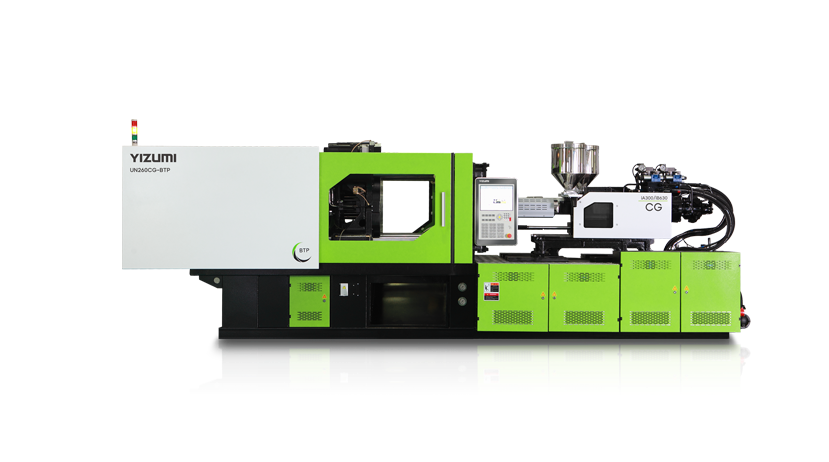
High-end Electric Multi-component Injection Molding Machine
YIZUMI’s high-end electric multi-component injection molding machine is designed for applications where precision, cleanliness, and energy efficiency are critical.
Key characteristics include:
- Fully electric drive systems
- High positioning accuracy and repeatability
- Low energy consumption
- Reduced noise and cleanroom compatibility
This solution is particularly suitable for:
- Medical devices
- Electronics components
- Precision technical parts
For manufacturers prioritizing process stability and sustainability, electric multi-component systems can offer strong long-term value.
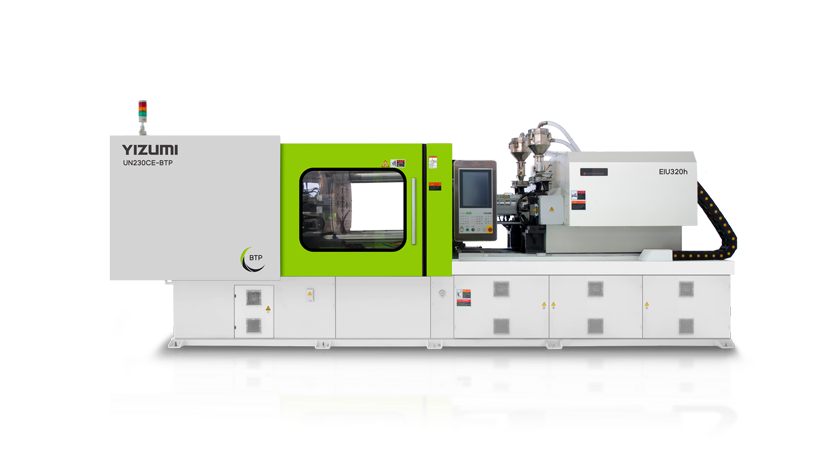
C-NTW Series High-end Multi-component Injection Molding Machine
The C-NTW Series represents YIZUMI’s focus on flexibility and advanced multi-material integration.
Typical advantages include:
- Modular multi-injection configurations
- Stable rotary platen systems
- Compatibility with a wide range of materials
- Optimized cycle times for complex parts
This series is well-suited for manufacturers producing functionally integrated components across automotive, appliance, and industrial sectors.
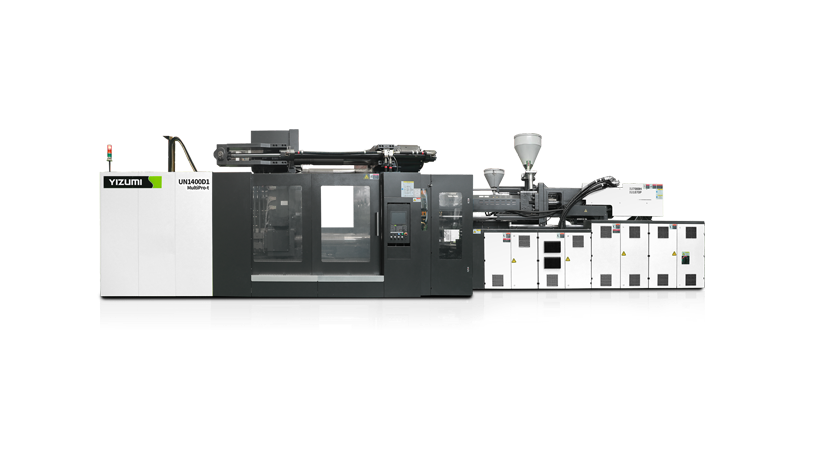
Two-Platen Multi-component Injection Molding Machine
For large parts and high clamping force requirements, YIZUMI’s two-platen multi-component injection molding machine(https://www.yizumi.com/en/ims/Two-platen_Multi-component_Injection_Molding_Machine) offers a practical balance between machine footprint and performance.
Key benefits include:
- Reduced machine length compared to toggle systems
- High rigidity and platen parallelism
- Efficient handling of large multi-component molds
This configuration is often selected for:
- Automotive structural components
- Large housings and panels
- Multi-material exterior parts
High-end Multi-component Injection Molding Machine Platform
YIZUMI’s broader high-end multi-component injection molding machine platform focuses on:
- Intelligent control systems
- Process data monitoring
- Automation readiness
- Long-term operational stability
This makes it suitable for manufacturers pursuing smart manufacturing and Industry 4.0 strategies, where data-driven optimization and production transparency are increasingly important.
Risk Mitigation: How to Maximize Investment Value
Even with advanced equipment, success depends on execution.
Partnering with Experienced Suppliers
Machine suppliers with proven multi-component expertise can provide:
- Process validation support
- Mold compatibility guidance
- Training and commissioning assistance
This reduces startup risk and accelerates time to stable production.
Investing in Process Development
Allocating resources to:
- Material trials
- Mold flow simulation
- Pilot runs
can significantly improve yield and shorten the learning curve.
Planning for Scalability
Selecting a machine platform that supports:
- Additional injection units
- Automation integration
- Future product variants
helps protect the investment over the long term.
Final Verdict: Is It Worth the Investment?
A multi-component injection molding machine is not automatically worth the investment—but in the right context, it can be a powerful competitive advantage.
It is most worthwhile when:
- Product complexity demands material or functional integration
- Production volumes justify automation and efficiency gains
- Quality, consistency, and aesthetics are critical
- Long-term manufacturing strategy prioritizes advanced molding capabilities
Manufacturers that approach the decision strategically—evaluating both technical requirements and lifecycle economics—often find that multi-component injection molding delivers strong ROI and sustainable differentiation.
With its structured portfolio of high-end multi-component injection molding machines(https://www.yizumi.com/en/ims/high-end-multi-component-injection-molding-machine), YIZUMI provides manufacturers with flexible options to adopt this technology in a controlled, scalable, and investment-conscious manner.