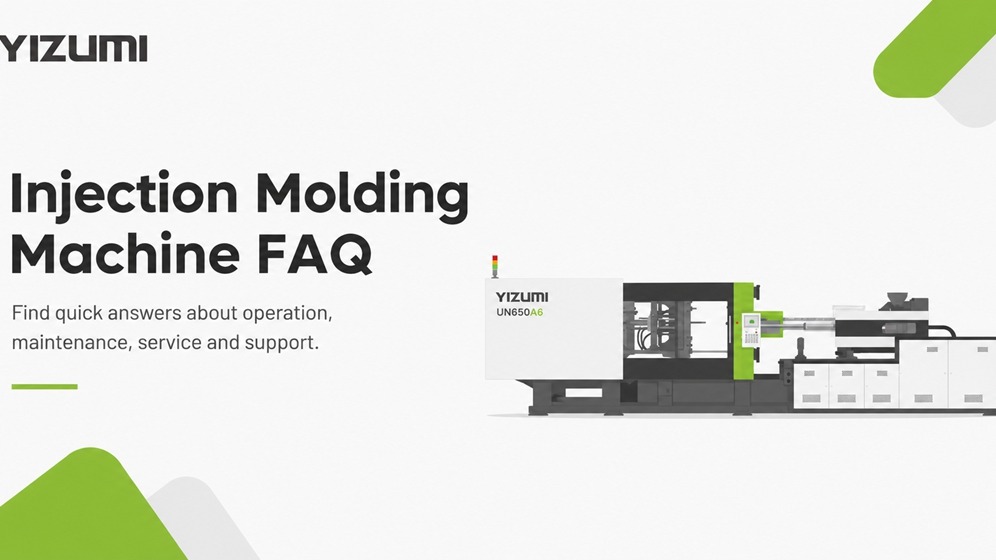
Injection Molding Machine FAQs
Abstract:
injection molding machine FAQ goes beyond tonnage to cover specifications, mold fit, shot size, plasticizing rate, pressure, daylight, cycle time, energy use, and RFQs. It covers PET preforms, PPR fittings, automotive parts, and causes of flash.
Q1. Which injection molding machine specifications should I check beyond tonnage?
A: Tonnage alone cannot determine whether a machine is suitable. Buyers should also check shot capacity, injection pressure, plasticizing rate, platen dimensions, tie-bar spacing, mold-height range, daylight, opening stroke, ejector stroke and force, mold weight, core-pull circuits, hot-runner controls, power requirements, and automation space.
Q2. How do I know whether my mold will physically fit an injection molding machine?
A: Compare the mold width and height with the platen dimensions and tie-bar spacing. Confirm that mold thickness is within the machine's permitted range and that daylight and opening stroke provide enough space for ejection or robot take-out. Also verify locating-ring size, nozzle radius, mounting holes, ejector position, mold weight, and cooling connections.
Q3. How do I calculate the required shot size for an injection molding machine?
A: Add the weight of all molded parts, runners, sprue, and cold slug produced in one cycle, then include a stable process cushion. Convert the total weight into volume using the actual resin density. Do not rely only on the machine's polystyrene-rated shot weight because different materials have different densities.
Q4. Why is plasticizing capacity important when selecting a machine?
A: Plasticizing capacity determines whether the screw can prepare the next shot before cooling finishes. If screw recovery is slower than the rest of the cycle, it becomes the production bottleneck. Buyers should compare the required material per hour with the machine's plasticizing rate using the actual resin, screw, back pressure, and cycle time.
Q5. What is the difference between injection pressure and holding pressure?
A: Injection pressure provides the force required to move molten material through the nozzle, runner, gate, and cavity during filling. Holding pressure acts after the cavity is almost full and supplies additional material to compensate for shrinkage until the gate seals.
The practical distinction is that injection pressure controls whether the cavity fills, while holding pressure strongly affects weight, sink marks, voids, shrinkage, and dimensions. Increasing holding pressure cannot correct a flow restriction after the gate has frozen, and excessive pressure can create flash, stress, or difficult ejection.
Q6. What are daylight, mold opening stroke, and mold height?
A: Mold height is the thickness of the closed mold installed between the platens. Opening stroke is the distance traveled by the moving platen. Daylight is the total clear distance between the platens when the machine is fully open.
These values determine whether the mold can be installed and whether the finished part, runner, or robot gripper can leave the mold safely. More daylight is useful for deep parts and automation, but excessive opening movement increases cycle time. The goal is adequate clearance, not maximum travel.
Q7. When should I choose a two-platen injection molding machine?
A: A two-platen machine is generally attractive when the project involves a large mold, large projected area, high mold weight, or a need for generous mold space without an excessively long machine footprint.
YIZUMI's two-platen portfolio is positioned for large-tonnage and large-mold applications, including automotive and industrial parts. However, machine structure should not be selected by part size alone. Buyers should also evaluate mold access, platen rigidity, injection capacity, core-pull requirements, automation, service access, and long-term energy use.
Q8.What should I check when buying a PET preform injection molding machine?
A: Start with preform weight, cavity count, total shot volume, neck-finish requirements, mold dimensions, cycle target, annual output, and PET grade. Then check plasticizing capacity, drying, injection pressure, cooling, mold dehumidification, preform take-out, and energy monitoring.
YIZUMI's SPET solution is designed for PET preform production, but system performance still depends heavily on the dryer, mold, cooling water, and automation.
Q9.What machine characteristics are important for PPR pipe fittings?
A: PPR fittings often contain thick sections, cores, and sealing surfaces that require stable dimensions and reliable pressure performance. The machine needs sufficient shot capacity, stable plasticizing, suitable injection pressure, balanced clamping, repeatable holding control, and effective cooling.
Q10.What machine is suitable for large automotive plastic parts?
A: Large automotive parts require generous mold space, stable force distribution, rigid platen support, suitable shot and plasticizing capacity, core-pull functions, and sufficient automation access.
YIZUMI's two-platen machines are relevant to large automotive molds, while its multi-component and special-process solutions can support lighting, interior, and surface applications. The best machine is not necessarily the one with the highest tonnage. The better choice is the machine that supports the actual mold with the lowest stable clamping force and repeatable part quality.
Q11.How can cycle time be reduced without increasing defects?
A: Separate the total cycle into filling, holding, cooling, recovery, mold movement, ejection, robot take-out, and downstream handling. Improve the stage that actually limits output.
YIZUMI's high-speed, electric, and intelligent machine platforms can shorten machine movements and improve repeatability, but machine speed should not be optimized in isolation.
Q12.How does injection speed affect molded-part quality?
A: Higher speed can help thin-wall filling and improve weld-line formation, but excessive speed may cause flash, burns, jetting, trapped air, shear degradation, and increased mold wear. Low speed can cause hesitation, flow marks, premature freezing, or short shots.
A staged injection-speed profile is usually more effective than one constant speed. Each stage should correspond to a physical part feature, such as the gate, a thin wall, a rib section, or the end of fill.
Q13.How should injection molding energy consumption be measured?
A: Measure kilowatt-hours per qualified part during a representative production run. Where possible, include the molding machine, barrel heaters, dryers, chillers, loaders, robots, compressors, and downstream equipment.
Q14.What information should be included in an injection molding machine RFQ?
A: A useful RFQ should include part drawings, tolerances, resin grade, fillers, color, part and runner weight, projected area, wall thickness, cavity count, mold dimensions and weight, core pulls, hot runner, cycle target, output, automation, utilities, destination, standards, service, spare parts, and acceptance testing.
YIZUMI provides equipment selection, plant planning, installation, commissioning, training, and lifecycle support. Even so, buyers should define FAT/SAT criteria in advance and require suppliers to state assumptions, inclusions, exclusions, and guaranteed test conditions clearly.
Q15.What causes flash in injection molding?
A: Flash occurs when molten material escapes through a gap at the parting line, insert, shutoff, vent, or ejector. Start by inspecting the mold for contamination, damage, wear, or misalignment. Then check clamping performance, V/P transfer, injection speed, melt temperature, and packing pressure.
Increasing clamping force should not be the first response. If the root cause is mold damage or excessive cavity pressure, more force may hide the symptom while increasing mold and machine stress.