Consumer Electronics Injection Molding Machine: Precision, Surface Quality and Fast Changeovers
Abstract:
Explore how precision control, stable injection speed, surface quality and faster changeovers support consumer electronics molding, including thin-wall housings, connectors, multi-component parts and insert-molded components for efficient production.
Consumer electronics manufacturers do not buy an injection molding machine simply to melt plastic. They buy repeatable assembly fit, clean cosmetic surfaces, dependable cycle times and the flexibility to change products without losing hours to setup.
A smartphone frame, earbud case, connector housing or smart-home enclosure can fail for reasons that are not obvious in a brochure: unstable shot size, slow pressure response, uneven plasticizing, platen deflection or a changeover process that takes too long to return to approved production.
A suitable consumer electronics injection molding machine must therefore be selected around the part, mold, resin, quality standard and production plan—not clamping force alone.
What Must the Machine Deliver?
| Production requirement | Capability to verify |
| Tight assembly fit | Repeatable injection position, pressure control, stable shot weight and rigid clamping |
| Thin-wall filling | Fast acceleration, sufficient injection speed and pressure, stable mold temperature |
| Premium visible surfaces | Consistent plasticizing, fine velocity control and repeatable V/P transfer |
| Multi-cavity output | Balanced filling, stable recovery and process monitoring |
| Soft-touch or two-color parts | Multi-component injection, accurate positioning and automation |
| Insert-molded connectors | Low-shot control, insert positioning and safe robot integration |
| Frequent model changes | Recipe management, quick connections and efficient first-piece approval |
The key purchasing question is not, "How precise is the machine?" It is: Can the complete molding cell repeatedly produce my approved part at the required cycle time?
High-Precision Injection Molding Means Stable Production
High precision injection molding is often reduced to one position-tolerance figure. In practice, part accuracy comes from the injection, plasticizing, clamping, temperature-control, mold, cooling and measurement systems working together.
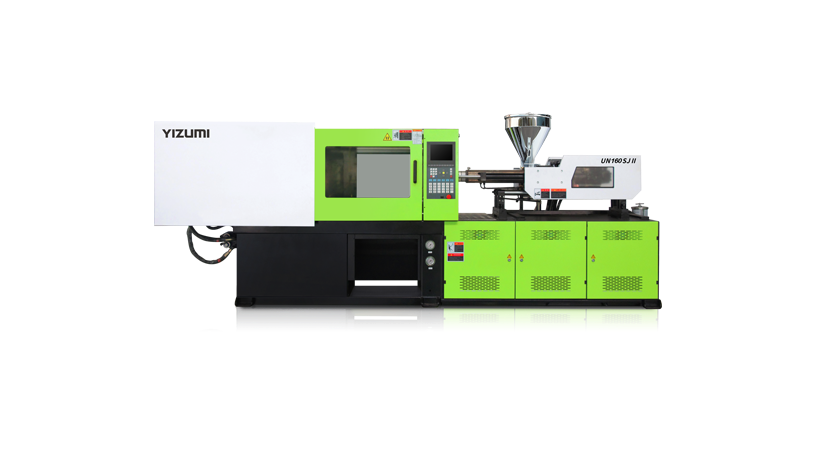
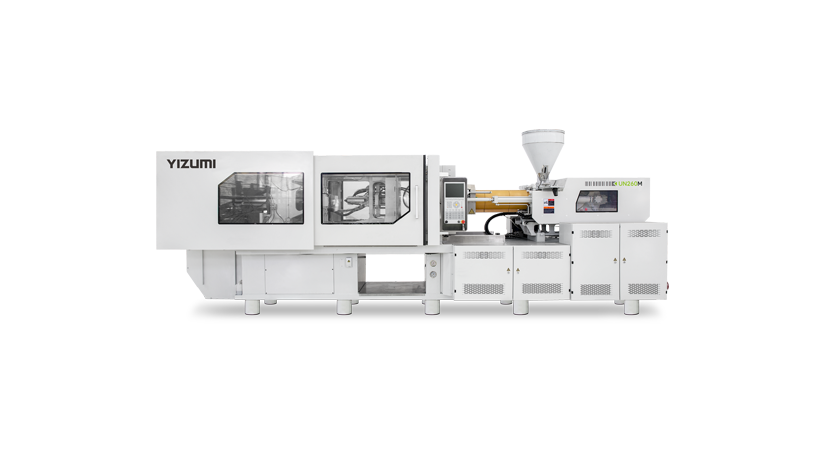
YIZUMI's FF Series electric injection molding machine uses independent servo control for injection, plasticizing, clamping and ejection. Published specifications include injection- and holding-pressure stability of ±0.1 MPa and ejection-position accuracy up to 0.2 mm. The series covers clamping forces from 15 to 13,80T. Actual part capability must still be verified with the customer's mold, resin and quality criteria.
When comparing a precision injection molding machine, ask the supplier to demonstrate:
1. Shot-weight variation over 50 to 100 consecutive cycles.
2. Critical dimensions after thermal stabilization.
3. Injection pressure, screw position and V/P transfer curves.
4. Restart performance after a planned stop.
5. Ejection and mold-opening repeatability with automation.
6. Process alarms and statistical process control.
A good-looking five-shot sample is not evidence of mass-production stability.
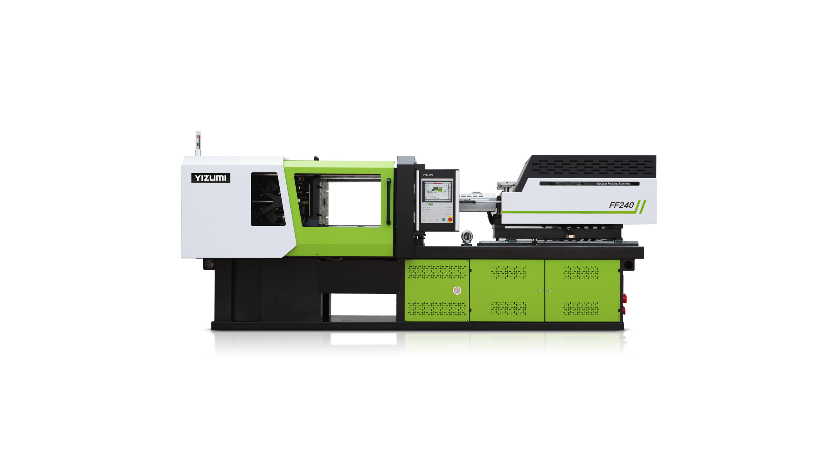
FF Series electric injection molding machine
Surface Quality Is a System Result
Visible electronics parts expose small process variations. Flow lines, weld lines, gloss differences, sink marks, burns and gate blush can turn a functional housing into scrap.
The machine affects appearance through melt homogeneity, barrel-temperature stability, injection acceleration, velocity control, pressure response and repeatable transfer from filling to holding. It cannot, however, correct poor venting, uneven cooling, an unsuitable gate or abrupt wall-thickness changes.
| Defect | What to check first |
| Flow marks or gloss variation | Fill-speed profile, melt temperature, mold temperature and transfer position |
| Weld lines | Filling balance, venting, injection speed and melt-front temperature |
| Sink marks | Holding pressure, holding time, gate freeze and local wall thickness |
| Flash | Clamping force, platen condition, cavity pressure and parting surfaces |
| Silver streaks | Resin drying, residence time, screw recovery and contamination |
| Burn marks | Trapped air, excessive shear and end-of-fill speed |
For premium surfaces, test the final resin, color, texture and mold temperature. A trial with another material or an untextured mold does not validate the production appearance.
YIZUMI also supports in-mold decoration and polyurethane in-mold coating solutions for integrated patterns, soft-touch effects, scratch resistance and enhanced surface quality. These processes may reduce secondary finishing, but they require coordinated control of the machine, mold, material and automation.
Injection Molding Speed Must Increase Good Output
Maximum injection molding speed helps thin-wall parts fill before the melt front freezes. Yet a faster machine is not automatically a faster production system.
Buyers should distinguish among:
· Maximum injection speed;
· Injection acceleration;
· Dry-cycle time;
· Plasticizing time;
· Cooling time;
· Robot take-out time;
· Total cycle time;
· Good parts produced per hour.
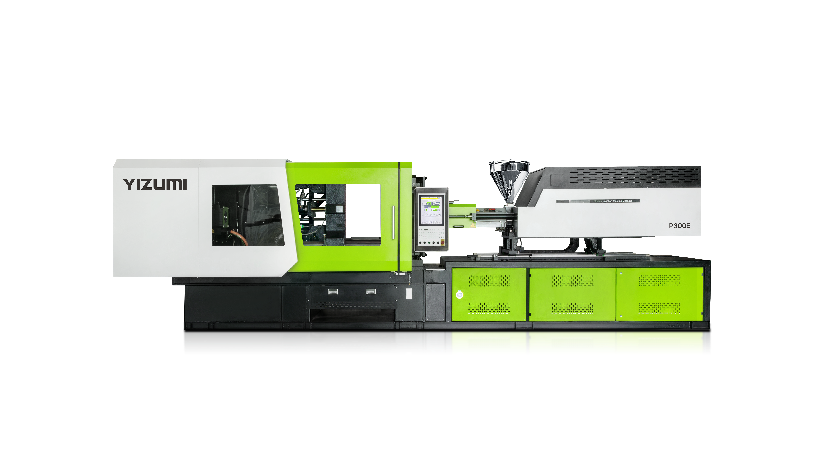
YIZUMI's PS5 high-speed series publishes maximum injection speeds of up to 550 mm/s and uses a high-rigidity clamping structure for thin-wall precision molding. The P-E Series includes a 1 ms controller scan cycle, servo direct control, process quality control and statistical process control. These figures matter only when assessed against the real part. High speed that creates burns, flash or unstable weight does not improve output.
Set the acceptance criteria first—part weight, dimensions, surface standard, cycle time and scrap rate—then find the fastest stable process window.
Short Changeovers: Last Good Part to First Good Part
A mold can be installed quickly while the line remains stopped for material changes, robot setup, parameter entry and inspection. The better KPI is the time from the last approved part of one job to the first approved part of the next.
A short-changeover system should include:
1. Offline preparation of the mold, robot tooling and resin.
2. Standard mold and utility layouts where practical.
3. Quick water, air, hydraulic, electrical and hot-runner connections.
4. Stored machine, temperature-control, robot and inspection recipes.
5. Mold identification and parameter-version control.
6. Guided setup checks and a defined first-piece release process.
YIZUMI's 3C solutions can combine molding with automated take-out, runner processing, weighing and packaging. The Yi+ platform supports equipment monitoring, efficiency analysis, maintenance management, fault diagnosis, process tracking and production traceability.
Which Configuration Fits the Part?
| Application | Priority capabilities | YIZUMI direction to evaluate |
| Phone frames, earbud cases and precision housings | Clean operation, pressure repeatability and fine motion control | FF Series electric machine |
| Thin-wall covers and multi-cavity parts | High speed, rigid clamping and synchronized movements | P-E or PS5 Series |
| Two-color buttons, seals and hard-soft parts | Multi-component control and accurate mold positioning | CE-P Series |
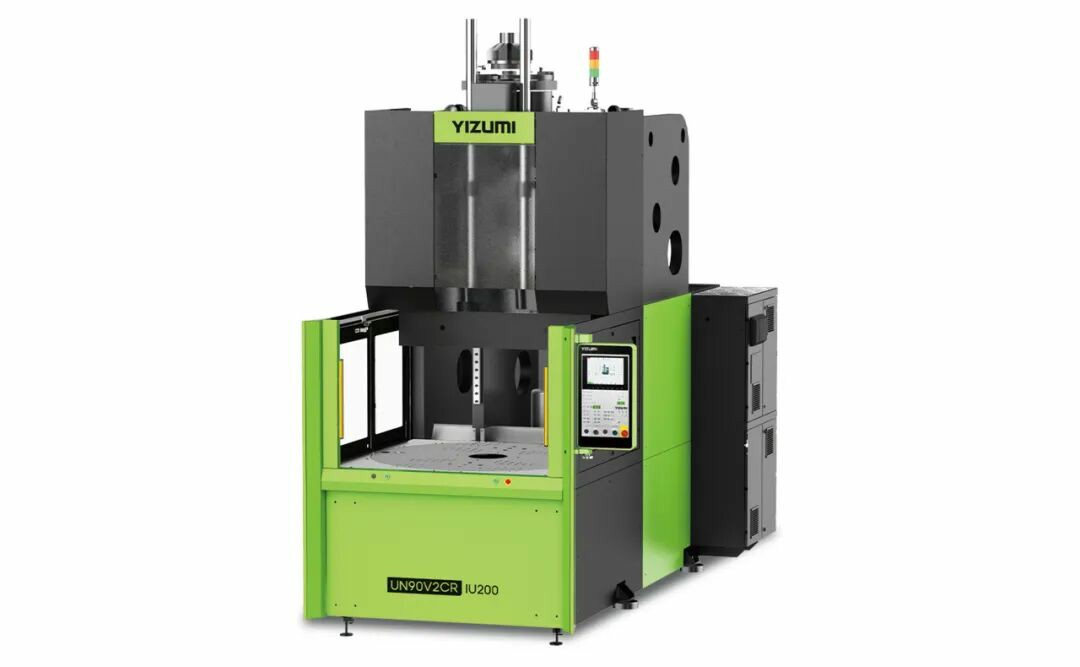
| Terminals and metal-insert connectors | Insert positioning and automation | VM vertical machine |
| Larger structural enclosures | Stable servo-hydraulic control and flexible mold range | A6 Series |
YIZUMI reports 2‰ product-weight repeatability for the A6 platform, with clamping forces from 900 to 18,500 kN. Published data also state that upgraded dry cycles are 14% to 25% shorter, depending on configuration and process. Treat these figures as selection inputs and confirm them through an application-specific trial.
Validate the Machine Before Purchase
Before requesting a quotation, prepare:
· Part drawing, projected area and minimum wall thickness;
· Resin grade, additives, color and drying requirements;
· Part and runner weight, number of cavities and annual volume;
· Mold dimensions, weight, opening stroke, core pulls and utilities;
· Critical dimensions and cosmetic limits;
· Target cycle, automation requirements and changeover frequency.
Then require a factory acceptance test based on the real production objective.
Measure:
· Consecutive shot weight;
· Critical-to-quality dimensions;
· Cosmetic defects;
· Cycle-time breakdown;
· Electrical energy use;
· Restart performance;
· Changeover to the first approved part.
Common Buying Mistakes
Choosing Only by Clamping Force:
Two machines with the same nominal clamping force can have different injection units, screw diameters, mold space, response speed and process-control capability.
Buying an Oversized Injection Unit:
A larger injection unit is not always safer. For small precision parts, an oversized screw can reduce shot-control resolution and increase material residence time.
Comparing Maximum Speed Instead of Stable Cycle Time:
Maximum speed is a machine capability. Stable cycle time is a production result.
Treating Machine Accuracy as Part Accuracy:
Part dimensions also depend on mold construction, material shrinkage, cooling balance, process settings and the measurement system.
Ignoring Changeover and Startup Losses:
A short molding cycle provides limited value when every product change requires lengthy setup, purging, robot adjustment and first-piece approval.
Selecting by Purchase Price Alone:
Energy, scrap, maintenance, downtime, training and spare-parts availability all affect the real cost per approved part.
Choose the Production System, Not the Brochure
The best consumer electronics injection molding machine is the one that produces approved parts consistently, changes products efficiently and remains supportable throughout its operating life.
A precision housing may favor an electric platform with stable pressure control. A thin-wall multi-cavity part may need higher speed and rigid clamping. A soft-touch control may benefit from multi-component molding. An insert-molded connector may make vertical molding and automation decisive.
YIZUMI approaches these applications as complete molding systems, combining injection molding machines, process technology, automation, digital production management and service. Overseas support includes on-site and online training for operation, maintenance, safety and troubleshooting.
FAQ
Q1. What is the best injection molding machine for consumer electronics?
A: An electric machine is often the first option for small and medium precision parts, but the final choice depends on shot size, mold dimensions, resin, wall thickness, speed, automation and required output.
Q2. Is maximum injection speed the main factor for thin-wall parts?
A: No. Acceleration, pressure capacity, clamping rigidity, mold temperature, venting and resin flow also matter. The target is the fastest stable cycle that still meets dimensional and cosmetic requirements.
Q3. Can a high-precision machine guarantee tight tolerances?
A: No machine can guarantee part tolerance independently. The result depends on the machine, mold, material, process window, cooling and measurement system. Validate the complete process with consecutive production data.
Q4. How can buyers reduce changeover time?
A: Prepare the next job offline, standardize connections, store verified recipes, integrate robot and inspection settings, and measure changeover from the last good part to the first good part.