Multi-Component Injection Molding Machines: Built for Complexity
Abstract:
Multi-component injection molding machines combine plastics, elastomers, colors, and functional layers in one cycle. It covers injection control, mold transfer, material bonding, applications, and machine selection for stable complex-part production.
A multi-component injection molding machine produces one integrated part from two or more materials, colors, or functional layers during one coordinated production cycle. Independent injection units meter each material, while a turntable, moving core, mold plate, or transfer system places the first shot in the correct position for the next.
This process is most useful when a product needs repeatable material placement, reliable bonding, fewer separate components, or functions such as sealing, soft touch, transparency, insulation, or multi-color appearance. The key question is not simply whether a machine can inject two materials. It is whether the part, material pair, mold movement, injection-unit sizing, and quality requirements can operate as one stable system.
Why Complex Parts Need More Than a Second Injection Unit
Modern products often ask one component to perform several jobs. An automotive control may need a rigid body and soft seal; a medical housing may combine a structural shell with a transparent window; an electronic enclosure may require impact resistance and a flexible perimeter.
Producing these features separately adds handling, alignment, joining, and inspection. Multi-material injection molding moves those interfaces into the mold, where steel and controlled machine motion define material position.
That advantage creates new engineering demands. The materials must tolerate each other's processing temperatures and shrinkage behavior. The first shot must be transferred without distortion, and the second must fill without moving or damaging it. A successful Multi-component molding project therefore starts with the material interface and part geometry—not machine tonnage alone.
How One-Cycle Multi-Component Molding Works
A typical two-shot injection molding cycle has four stages:
1. First injection: The primary unit fills the first cavity to create the substrate, structural body, or first color.
2. Repositioning: A rotary table, rotating platen, index plate, moving core, or robot moves the first shot into the next molding position.
3. Second injection: A separate unit fills the new cavity around, through, or beside the substrate.
4. Cooling and ejection: The materials leave the mold as one finished component.
"One cycle" does not always mean every material enters at the same instant. Most two-platen applications use sequential injection. Co-injection may introduce skin and core materials through the same gate in a controlled sequence or partial overlap. Multi-component injection molding can add third or fourth materials through additional units and stations.
Main Processing Routes
| Process | How it works | Typical use |
| Two-shot or 2K molding | Two materials are injected sequentially, usually with a rotating mold system | Hard-soft parts, two-color components, seals and controls |
| One-cell overmolding | A molded substrate is moved and partly covered by a second material | Grips, protective edges and ergonomic surfaces |
| Co-injection | Skin and core materials share a controlled flow path | Parts needing one surface material and another core |
| Multi-shot molding | Three or more injections use multiple units or stations | Multi-color lighting and highly integrated controls |
The correct route depends on material location, exposed surfaces, and how the first shot can move without losing accuracy.
What Keeps the Process Accurate?
Independent Injection Control
Each material has its own melt temperature, viscosity, shot size, speed, pressure profile, and cooling behavior. Every injection unit must be controlled separately while remaining synchronized with the mold. This is critical when the second material forms only a small part of the total weight; an oversized barrel can create excessive residence time.
For precision production, the CE-P electric multi-component injection molding machine uses position sensors with a stated resolution of 2 million counts per revolution and is specified for product-weight repeatability up to 1‰ under suitable conditions. The series covers clamping forces from 1,500 to 5,500 kN.
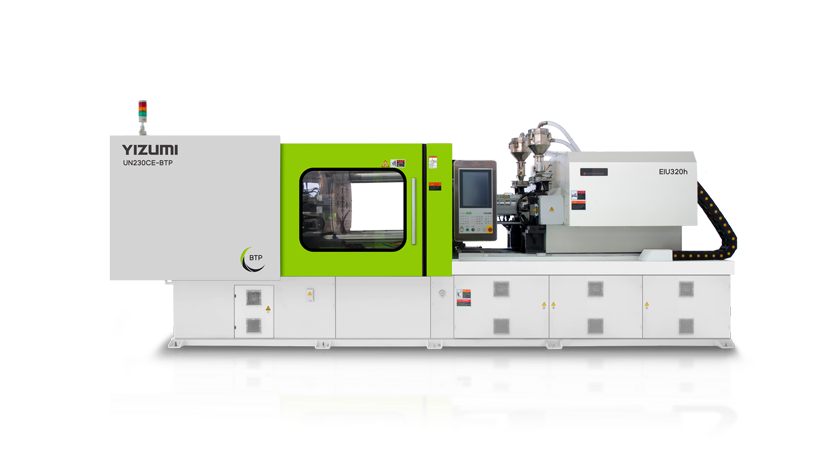
CE-P Series electric multi-component injection molding machine
Accurate Transfer and Positioning
The second cavity must align with the first substrate. Position errors can cause uneven borders, flash, exposed substrate, variable seal thickness, or optical defects. Closed-loop turntable control manages acceleration, deceleration, and final position rather than relying only on a mechanical stop.
For larger parts, the D1M two-platen series specifies turntable positioning repeatability up to ±0.005°. It covers 5,000 to 24,000 kN and can support rotation angles including 90°, 120°, 180°, 240°, and 360°, depending on the production concept.
Stable Temperature and Bonding Conditions
A strong bond is not automatic. Compatible polymers may bond through interdiffusion, while other combinations need holes, grooves, undercuts, or texture for mechanical interlocking. The first shot must remain clean and warm enough for the intended bond, yet stable enough to resist the second-shot pressure.
Published specifications include static temperature-control accuracy up to ±0.4°C on modular multi-component systems and up to ±0.5°C on the D1M platform. Actual results depend on resin, screw design, barrel size, mold, and process settings.
Where Multi-Component Molding Fits
| Industry | Example parts | Combined functions |
| Automotive | Lighting covers, interior controls, trim and seals | Transparency, color, soft touch and sealing |
| Medical | Diagnostic housings, grips and fluid components | Rigid structure, soft interface and visibility |
| Electronics | Housings, buttons, connectors and wearables | Impact resistance, grip, insulation and sealing |
| Consumer goods | Tool handles, kitchenware and toothbrushes | Rigid core, non-slip surface and color |
| Packaging | Multi-color caps and functional closures | Appearance, tactile difference and movement |
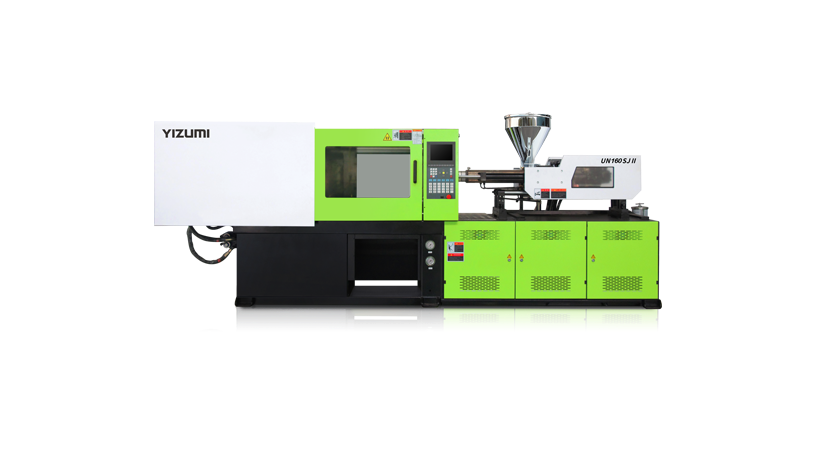
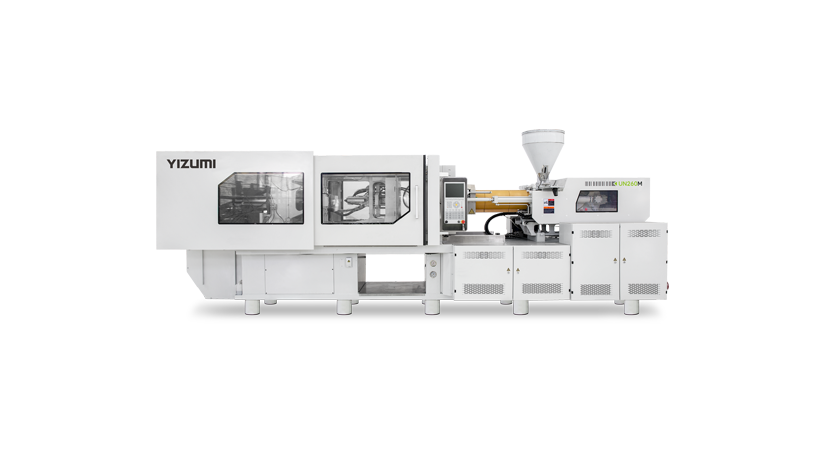
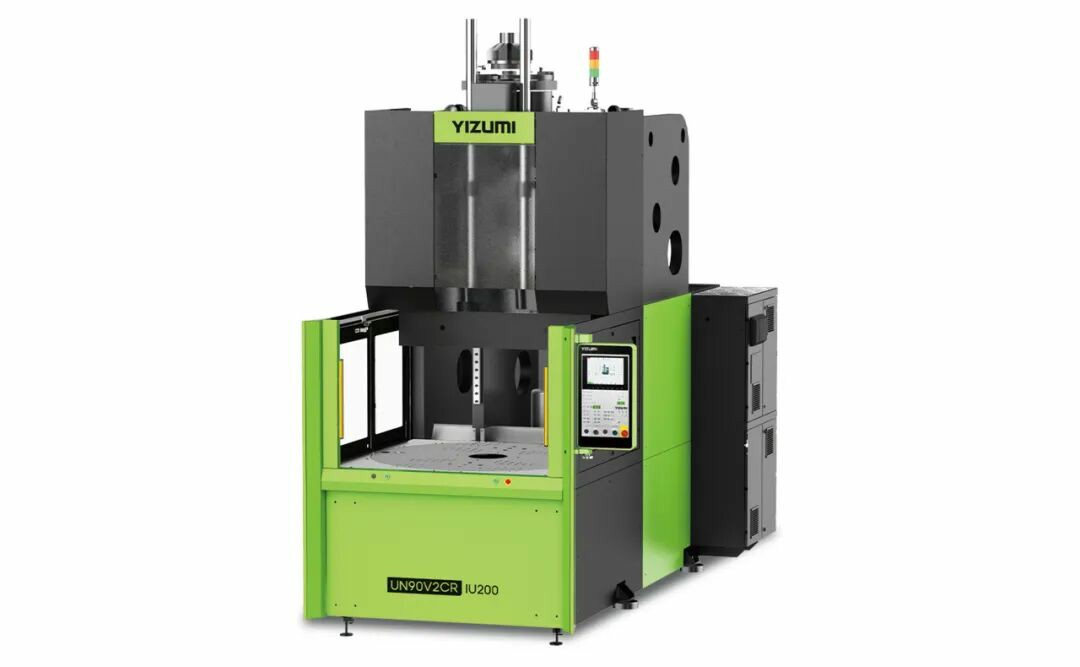
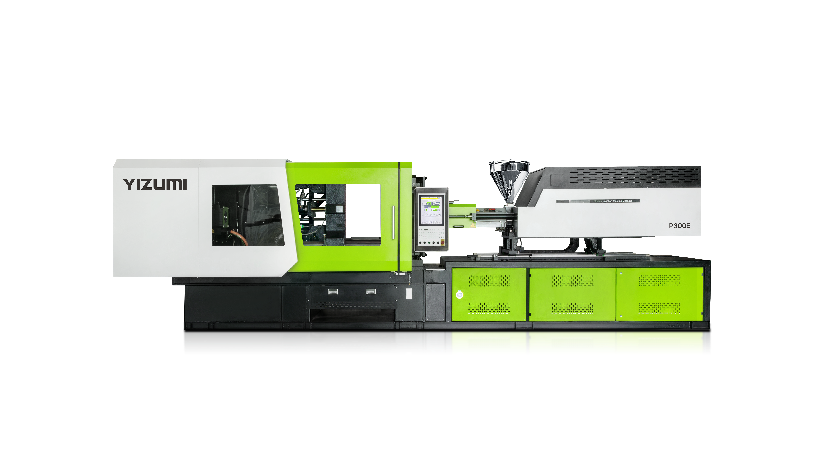
YIZUMI's multi-component injection molding machine portfolio is designed to match different part sizes, mold structures, precision requirements, and production environments. The range includes the CG-P and C-NTW high-end customizable systems, the CE-P all-electric series for precision and clean production, and the D1M two-platen series for large integrated components.
Modular L-type and V-type injection units can be configured around the required shot sizes and mold layout, while coordinated control of multiple injection units, turntable positioning, hot runners, core pulling, and auxiliary equipment supports stable multi-material molding. This flexible product platform serves automotive, medical, 3C electronics, packaging, and other applications requiring accurate material placement and reliable one-cycle production.
When Is It the Right Choice?
A multi-component injection molding machine is a strong candidate when:
· The part needs multiple colors, materials, hardness levels, or optical properties.
· Placement must remain consistent around a seal, window, grip, button, or decorative boundary.
· Separate molding and joining would create alignment, contamination, leakage, or cosmetic risks.
· Production demand and product life support a dedicated mold and validated process.
· The material pair has been tested for adhesion, or the design includes mechanical interlocks.
· The design is stable enough to define cavities, transfer movements, gates, and automation.
· Quality requirements justify precise control and traceable parameters.
A conventional machine with secondary overmolding may be more practical for low volumes, frequently changing designs, or parts that can be loaded manually without affecting quality. Separate molding may also be better when materials must later be disassembled or have incompatible processing windows.
How to Select the Machine Configuration
Calculate every shot separately: Record the weight and resin grade of each component. Select every screw and barrel for its shot size, plasticizing demand, residence time, and pressure—not the total part weight.
Choose the mold movement early: Rotary tables suit many high-volume 2K parts. Horizontal turntables can fit long or large products. Core-back molding creates a second cavity without transferring the whole part. Complex geometries may require an index plate or robot transfer.
Check mold space as well as clamping force: Confirm tie-bar spacing, platen dimensions, mold thickness, opening stroke, rotation diameter, mold weight, and utility connections.
Match the drive system to the application: An electric multi-component injection molding machine is attractive where repeatability, clean operation, low noise, and coordinated motion matter. Hydraulic or two-platen configurations can provide the space and force needed for large molds.
Plan controls and automation together: The cell may coordinate hot runners, sequential valves, core pulls, robots, temperature controllers, inspection, and production systems. Applicable YIZUMI configurations support SPC for multiple injection units, movement-curve tracking, auxiliary control, and hot-runner extension up to 128 zones.
Common Mistakes
Assuming any two plastics will bond: Validate the intended commercial grades after heat aging, chemical exposure, vibration, or leakage testing relevant to the product.
Sizing only by total part weight: A 200 g part with a 10 g soft component needs a second injection unit suited to the 10 g shot.
Choosing transfer technology after mold design: Rotation, core movement, cooling, gates, and robot access must be considered from the start.
Treating it as a machine-only project: The result depends on part design, resin, mold, injection units, transfer accuracy, temperature control, automation, and acceptance criteria.
FAQ
Q1. Is Two-Shot Molding the Same as Multi-Component Molding?
A: Two-shot molding is the most common form and uses two injections. Multi-component or multi-shot molding is broader and may involve three, four, or more materials or colors.
Q2. Can Different Materials Always Be Molded in One Cycle?
A: Only when their temperatures, shrinkage, adhesion, and geometry are compatible. Test the intended resin grades under production-like conditions.
Q3. Does One-Cycle Molding Eliminate Every Secondary Operation?
A: It can eliminate joining operations, but parts may still need inspection, gate treatment, printing, coating, or assembly with other components.
Q4. What Information Is Needed for Machine Selection?
A: Provide the 2D or 3D drawing, material grades, separate shot weights, annual volume, cavity count, target cycle, mold dimensions, quality requirements, and automation needs.
Build the Process Around the Part
A multi-component injection molding machine can turn several functions into one repeatable molding cycle—but only when the configuration follows the product's real requirements. Begin with material interfaces, individual shot sizes, geometry, transfer method, mold dimensions, and quality targets. Then define the clamping unit, injection modules, controls, and automation.
YIZUMI offers electric, modular, and large two-platen multi-component solutions across a published clamping-force range from 1,500 kN for precision applications to 24,000 kN for large integrated parts. Send your drawing, material combination, expected volume, and target cycle to receive a configuration proposal built around your application.