How Injection Molding Solutions Improve Blood Collection Tube Production
Abstract:
Blood collection tube production relies on more than molding speed. PET preparation, multi cavity precision, controlled cooling, clean handling, automation, and machine setup work together to support stable, scalable medical manufacturing.
Blood collection tubes may be small, but their manufacturing requirements are not. A tube that looks acceptable at mold release can still create problems later in capping, labeling, vacuum processing, inspection, or packaging. For manufacturers, the real objective is not simply to run a faster injection molding machine. It is to create a stable production cell that delivers consistent tube geometry, clean handling, repeatable cycles, and reliable downstream flow.
That is why blood collection tube injection molding should be evaluated as a system. Material preparation, injection performance, mold design, cooling, part removal, inspection, and data management all influence the final result. When these elements are planned together, manufacturers can improve output without losing sight of product consistency or process control.
Quick Answer
Injection molding solutions improve blood collection tube production by controlling the full process from PET material preparation to molding, cooling, part handling, and inspection. A well matched system helps manufacturers improve dimensional consistency, reduce handling and contamination risks, support stable multi cavity production, and connect molding with downstream automation. The best solution is selected according to the tube material, cavity count, output target, cleanroom layout, and quality control requirements.
Start with the production risks that matter
Blood collection tubes are commonly produced in multi cavity molds and often use PET or PP, depending on the product design and application. These materials, together with thin walls, long flow paths, and high cavity counts, leave little room for inconsistent processing.
A practical production review should begin with a few questions:
· Is the tube body dimensionally stable enough for downstream handling and assembly?
· Are the wall thickness and concentricity consistent across all cavities?
· Does the material handling process protect PET from excessive moisture exposure?
· Can the molding cycle stay stable as molds, materials, and ambient conditions change?
· Is the transfer method gentle enough to avoid scratches, deformation, or unnecessary manual contact?
These questions are more useful than asking only for machine tonnage or maximum injection speed. A machine can look suitable on a specification sheet but still be poorly matched to the mold, material, or automation plan.
What a complete blood collection tube molding solution includes
| Production area | What to evaluate | Why it matters |
| Material preparation | Drying, enclosed feeding, resin traceability | Supports stable plasticizing and reduces contamination opportunities |
| Injection molding machine | Injection response, clamping rigidity, repeatability | Helps maintain stable filling and mold protection |
| Mold and hot runner | Cavity balance, cooling layout, venting | Influences wall thickness, appearance, cycle time, and part consistency |
| Part handling | Take out, transfer, tray loading | Protects delicate parts and supports stable downstream flow |
| Quality control | Weight monitoring, visual inspection, process records | Helps identify variation before it reaches later processes |
| Production planning | Maintenance, spare parts, training, capacity planning | Reduces avoidable interruptions after ramp up |
This system view is important because a bottleneck often appears outside the molding machine. For example, a short molding cycle brings limited value if parts cannot be removed, inspected, or transferred at the same rhythm.
PET preparation is part of molding quality
For PET blood collection tubes, material preparation deserves the same attention as the press and mold. PET is sensitive to moisture, so drying and enclosed conveying should be considered part of the quality plan, not simply peripheral equipment.
The practical goal is stable material condition at the machine hopper. If the resin condition changes, the molding process may become less predictable. That can affect appearance, dimensional stability, or the consistency of subsequent processing. The best response is not to rely on an operator to correct every shift. It is to define material handling requirements before the project starts.
Manufacturers should ask equipment suppliers to explain:
· How the resin will be dried, stored, and conveyed
· How material changes and cleaning will be managed
· Which process parameters will be monitored
· How the system will support traceability between raw material and finished product batches
· What validation work is needed before volume production
The same discipline applies to PP tubes and other medical consumables. Material behavior, screw design, melt condition, and mold filling all need to be evaluated against the actual part, not a generic product category.
Multi cavity output requires more than a fast cycle
High output blood collection tube production depends on consistent performance across every cavity. If one cavity produces a tube that is slightly different in weight, wall thickness, or shape, the issue may only become visible during a later operation. By then, the cost of sorting, rework, or scrap is higher.
For this reason, manufacturers should review the relationship between the machine, mold, and automation system. Key factors include clamping stability, platen rigidity, injection response, hot runner design, cooling uniformity, and mold opening repeatability.
A useful rule is to judge cycle time together with quality evidence. A supplier should be able to show the material, cavity count, runner type, target part, test conditions, and the limits of the data. Cycle time alone does not reveal reject rate, maintenance demand, or downstream handling capability.
The process should also be designed around controlled cooling. Faster filling does not automatically mean better production. If cooling is uneven, the part may become more difficult to handle, inspect, or assemble. A stable cycle is usually more valuable than a short cycle that requires frequent correction.
Clean production depends on the whole material flow
Medical injection molding is often discussed in terms of cleanroom classification. That matters, but the production layout deserves equal attention. Dust accumulation, open material movement, contaminated compressed air, manual transfer, and poorly planned maintenance areas can all introduce risk into a process that otherwise uses capable equipment.
A clean production plan should consider:
· Enclosed material feeding where appropriate
· Accessible machine surfaces and maintenance points
· Clear separation between raw material, molding, inspection, and packaging flow
· Controlled compressed air and cooling water quality
· Automated part transfer where it reduces handling risk
· Defined cleaning, maintenance, and changeover procedures
A machine alone does not make a production line compliant with a medical quality system. Each manufacturer must validate its own cleanroom environment, quality controls, documentation, and finished product requirements. Equipment selection should support that work rather than create additional uncertainty.
Yizumi P250M Injection Molding Solution for Blood Collection Tubes
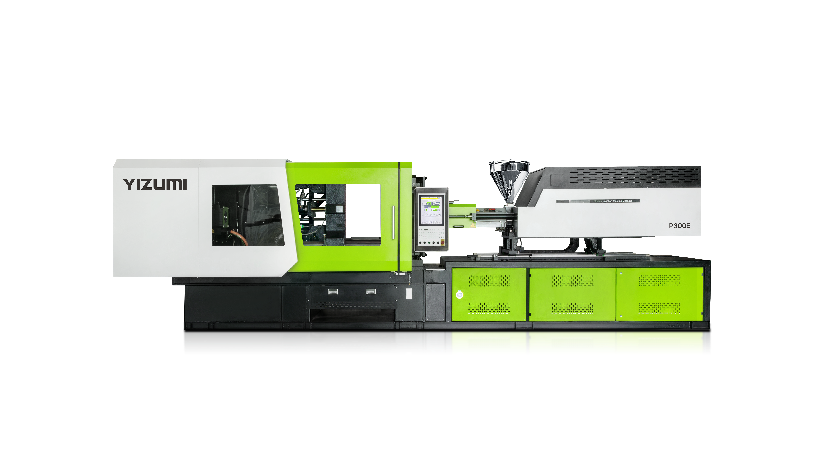
The YIZUMI P250M Medical Injection Molding Machine is a hydraulic high speed solution designed for the efficient production of medical consumables, including PET blood collection tubes, centrifuge tubes, and Petri dishes. It is intended for manufacturers that need to combine multi cavity output, stable molding control, and clean production planning in one integrated cell.
In a PET blood collection tube application, the P250M was configured with a 64 cavity full hot runner mold and achieved a reference cycle time of 8±1 seconds. At an 8 second cycle, this configuration represents a theoretical molding capacity of 28,800 tubes per hour. Actual output will vary according to the tube design, material condition, mold performance, automation cycle, maintenance plan, and quality requirements.
The machine offers an optional maximum injection speed of up to 500 mm/s to support high speed filling requirements. Its high rigidity clamping unit and high strength toggle structure are designed to support stable operation with deep cavity or high cavity molds. With machine dimensions of 5.76 m × 1.73 m × 2.28 m, the P250M can also help manufacturers plan production capacity within limited cleanroom space.
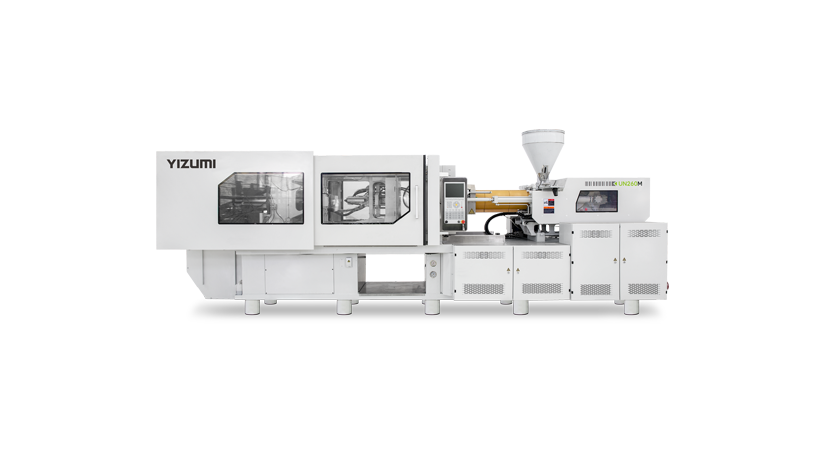
FF-M Series Injection Molding Machine Special for Medical Industry
Plan the cell around downstream production
The molding process is only the first stage of a blood collection tube production line. After molding, tubes may need to be conveyed, inspected, arranged in trays, processed with additives, assembled, labeled, packed, and tracked.
This is where automation becomes a practical production tool rather than a visual upgrade. A synchronized take out system can reduce manual handling and move parts at a consistent rhythm. Visual inspection can help identify defined appearance or dimensional issues before later processing. Production records can help teams trace variation to a mold, material batch, or machine setting.
Manufacturers should also plan for future needs. A line designed only for today's output target may be difficult to expand when cavity count, automation, or product range changes. It is worth discussing interfaces, space, robot access, utilities, and data connectivity during the initial project stage.
YIZUMI's medical injection molding solutions cover production consultation, mold and machine selection, handling, inspection, production planning, and intelligent production management. This gives manufacturers a useful starting point for discussing a full cell rather than a single machine.
Questions to ask before choosing a supplier
Before selecting a blood collection tube injection molding machine manufacturer, ask for project specific answers to the following questions:
1. What tube dimensions, material, cavity count, and runner system were used for the reference case?
2. What cycle time is expected, and what conditions define that figure?
3. How will PET drying, feeding, cooling, and clean handling be configured?
4. What automation is included from mold release to tray loading or downstream transfer?
5. Which process data can be monitored and recorded?
6. What factory acceptance criteria will be used for the machine, mold, and automation cell?
7. What training, maintenance, and service support will be available after installation?
Clear answers to these questions make it easier to compare proposals on value, risk, and long term operating needs rather than on headline specifications alone.
FAQ
Q1. What is the most important factor in blood collection tube injection molding?
A: There is no single factor. Stable material preparation, cavity balance, controlled cooling, clean handling, and process monitoring must work together.
Q2. Can a faster injection speed improve production?
A: It can support a suitable molding process, but it must be matched with the material, mold, cooling system, and take out cycle. Speed should be evaluated with part quality and process stability.
Q3. Why is automation important for blood collection tubes?
A: Automation can reduce unnecessary handling, protect delicate parts during transfer, and keep molding, inspection, and downstream processes synchronized.
Q4. How should cycle time be compared between suppliers?
A: Compare the part material, cavity count, mold type, runner system, automation scope, test conditions, and quality criteria. Do not compare a cycle time in isolation.
Q5. Is P250M suitable for every blood collection tube project?
A: Suitability depends on the tube specification, mold design, output target, material, cleanroom layout, and automation requirements. A project review is needed before final selection.
Conclusion
Blood collection tube production depends on more than a fast molding cycle. Reliable results come from matching PET or PP preparation, multi-cavity mold performance, controlled cooling, clean handling, automated transfer, inspection, and process data in one production cell. YIZUMI's medical injection molding solutions, including the P250M high-speed injection molding machine, help manufacturers plan these elements around their tube design, output target, cleanroom space, and downstream assembly requirements.
For a production proposal tailored to your tube design, share the material, dimensions, target cavity count, expected output, cleanroom conditions, and automation requirements with YIZUMI.