Medical Injection Molding Solutions for PVC Drip Chambers
A medical injection molding Solutions for PVC Drip Chambers must combine controlled PVC processing, a balanced multi cavity mold, repeatable machine movement, clean handling and quality data that follows each batch into final validation.
The YIZUMI FF300M application molds a 16 g PVC drip chamber in a 24 cavity tool with a 28 ± 1 second cycle. Buyers should focus on how many qualified parts the line can deliver with stable clarity, dimensions and sealing performance.
What Should a PVC Drip Chamber Solution Control?
A drip chamber supports fluid observation and helps prevent air entering the infusion line. Wall geometry, sealing surfaces, connection fit and clarity can influence assembly and device performance.
Before equipment selection, define whether the chamber is flexible or rigid, vented or nonvented, plus its dimensions, filter arrangement, drop factor, sterilization method and market requirements. These inputs affect material, mold, inspection and automation.
A useful proposal should answer five buyer questions:
1. Can the selected PVC be processed without unacceptable discoloration or degradation?
2. Can all cavities remain balanced during extended production?
3. Is the output calculation based on qualified parts rather than ideal cycles?
4. How are parts protected and traced after ejection?
5. What evidence will support installation, process and product qualification?
A 24 Cavity FF300M Application with Measurable Output
The YIZUMI application uses the following conditions:
| Item | Application data |
| Medical injection molding machine | YIZUMI FF300M |
| Product | Beveled PVC drip chamber |
| Part dimensions | Diameter 28 × 130 mm |
| Part weight | 16 g |
| Mold configuration | 24 cavities |
| Molding cycle | 28 ± 1 seconds |
| Material | PVC |
The basic output formula is: Parts per hour = cavity count × 3,600 ÷ cycle time in seconds
At 28 seconds, theoretical output is about 3,086 parts per hour. The 27 to 29 second range equals 3,200 to 2,979 parts per hour. A 24 hour run would produce about 74,000 molded parts before downtime and rejects.
An illustrative 85 percent operating factor gives about 63,000 parts per day. This is not guaranteed. Qualified output depends on trials, scrap, maintenance, changeovers and downstream availability.
The 16 g part represents about 49.4 kg of finished material per hour. Conveying, removal, inspection and packing must be sized for this flow to avoid downstream constraints.
Why Choose the FF300M Medical Injection Molding Machine for Producing PVC Drip Chambers?
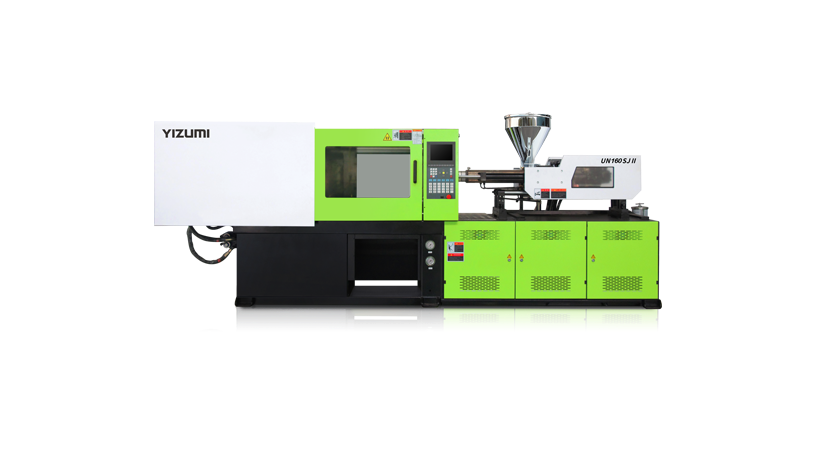
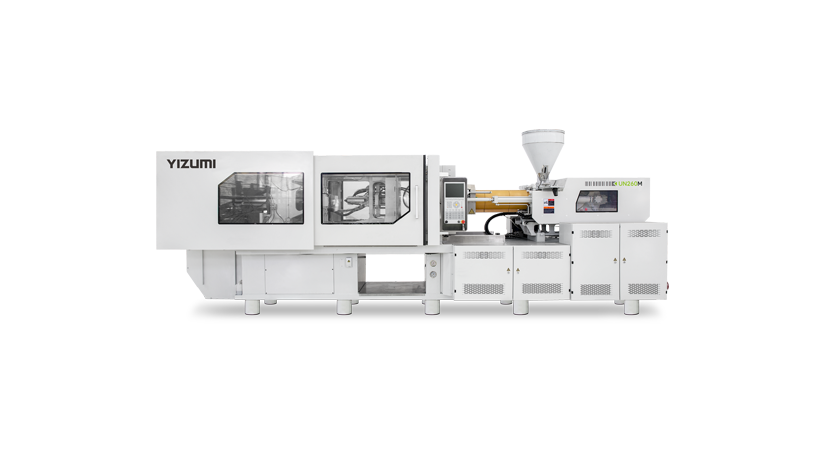
The YIZUMI FF300M medical injection molding machine supports clean, stable and high-volume production of PVC drip chambers. Its main advantages include:
· Cleaner production: The tie-bar-free platen structure requires no tie-bar lubrication around the molding area, reducing a potential contamination source.
· Stable multi-cavity molding: Injection and holding-pressure stability of up to ±0.1 MPa helps maintain consistent filling and part weight across the 24-cavity mold.
· Repeatable machine movement: Guiding accuracy of up to 0.02 mm and mold-movement repeatability of up to ±0.03 mm support controlled ejection and robotic removal.
· Fast process control: YIZUMI's SDC technology reduces the control cycle to 0.125 millisecond, while intelligent weight control adjusts parameters when mold temperature or material behavior changes.
Combined with automated handling, inspection and production-data monitoring, the FF300M is well suited to PVC drip chamber applications requiring consistent clarity, dimensions, sealing surfaces and traceability. The final process should be validated with the intended medical PVC grade and production mold.
Match the PVC Compound to the Device and Sterilization Route
Medical grade PVC is not a complete specification. Select the formulation according to contact, target market, flexibility, clarity, shelf life and sterilization.
If DEHP free PVC is required, a TOTM or other suitable formulation may be evaluated for regulatory status, extractables, processing and device compatibility. Clear molded resin may still change color, stiffness or sealing after sterilization and aging.
Ethylene oxide, gamma and electron beam processing affect formulations differently. Qualification should use the production compound, molded assembly, sterilization dose and aging protocol. ISO 10993-1:2025 places biological evaluation within risk management, so conformity cannot be assigned to a resin or machine alone.
PVC is sensitive to thermal history. Evaluate screw design, temperature, residence time, venting and runner design for the exact grade. A hot runner may reduce waste, but excessive heat can increase discoloration or degradation. Use material data, mold analysis and trials.
Control Each Cavity, Not Only the Average Part
A 24 cavity average can conceal one unstable cavity. Sampling plans should preserve cavity identity and connect weight, dimensions and defects to the corresponding cavity. When a trend develops, engineers can determine whether the cause is mold balance, process control, material variation or cooling.
| Defect or risk | What the buyer should investigate | Practical control |
| Yellowing or black specks | Temperature, residence time and degraded material | Record melt history and define a validated purge procedure |
| Bubbles or poor clarity | Volatiles, trapped air and filling conditions | Review material handling, venting and injection profile |
| Flash at sealing surfaces | Mold loading, pressure and parting line wear | Trend cavity data and inspect the mold condition |
| Weight or wall variation | Gate balance and pressure transfer | Record cavity level weight and critical dimensions |
| Warpage or poor assembly fit | Cooling balance and ejection timing | Verify cooling circuits and the safe ejection window |
| Leakage after assembly | Dimensions, surface damage and sealing mismatch | Link molding records with assembly and leak test results |
This cavity based approach is more actionable than adjusting the entire machine from an average measurement. It also creates better evidence for process qualification and root cause analysis.
Clean Production Requires a Defined Process Boundary
ISO 14644-1 classifies air cleanliness by airborne particle concentration. A cleanroom class alone does not establish sterility or prove that a drip chamber is suitable for fluid contact. The required environment should follow the device risk assessment and regulatory pathway.
The production boundary should cover resin handling, molding, robot surfaces, enclosed transfer, inspection, packing and maintenance access. Automated removal limits handling and maintains orientation for inspection. Records should connect the PVC lot, settings, alarms, cavity results and batch.
ISO 8536-4:2019 addresses single use gravity feed infusion sets. Applicable requirements should be translated into measurable controls for the molded part and finished assembly. Depending on the design, validation may include clarity, dimensions, part weight, collapse resistance, connection fit, leakage, flow, filter or air vent function, sterilization effects and package integrity.
Compare Cost per Qualified Part
Machine price and speed do not show complete cost. Compare resin, runner use, cycle, energy, labor, cleanroom space, inspection, maintenance, uptime and rejects. Check local support for troubleshooting, training and critical parts.
For every proposal, request the assumptions behind daily output. Confirm cavities, cycle time, operating hours, operating factor and reject rate. Ask how cavity balance will be measured, which process data will be stored and who coordinates the mold, automation and downstream qualification. Clear ownership can shorten corrective work when a defect crosses equipment boundaries.
FAQ
Q1. How many PVC drip chambers can the FF300M produce per day?
A: With 24 cavities and a 28 second cycle, theoretical output is about 74,000 parts in 24 hours.
Q2. Is ISO Class 8 always required for molding drip chambers?
A: No single class applies to every project. Define the environment through the device risk assessment, regulatory requirements and customer specification. Transfer, inspection, assembly and packing controls remain important regardless of the selected class.
Q3. Can the same settings process every medical PVC grade?
A: No. Plasticizer, viscosity, thermal stability and sterilization requirements can change the process window. Trials should use the intended production grade and realistic residence time.
Q4. What should be checked during an FF300M mold trial?
A: Check filling balance, cavity level weight, critical dimensions, clarity, discoloration, flash, ejection, cycle stability and assembly fit. Record the process window rather than only the best cycle.
Discuss Your PVC Drip Chamber Requirements
Use the 24 cavity FF300M data as a starting point, then configure the solution around your PVC grade, product design, qualified output and validation plan. Explore the YIZUMI FF medical injection molding platform or contact YIZUMI to discuss the machine, mold, automation and clean production requirements for your project.