Exploring the Industrial Applications of Two-Platen Injection Molding Machines
Abstract:
Two-platen injection molding machines support large molds, long opening strokes, and stable high-tonnage production for automotive parts, appliance housings, logistics containers, and industrial components. Learn how the right platen design improves mold space, automation compatibility, and long-run efficiency in large-part manufacturing.
In large-part injection molding, machine structure matters just as much as clamping force. It affects mold capacity, opening stroke, automation layout, and long-run production efficiency. That is why two-platen injection molding machines are widely used in industries that require large molds, large plastic parts, and stable high-volume output.
Compared with more conventional machine structures, two-platen systems are often better suited to larger molds and longer opening strokes. In practical production, that makes them a strong fit for automotive parts, appliance housings, pallets, bins, and other large industrial products.
This is also why two-platen technology has become more relevant in modern manufacturing. As products grow larger and factories push for more automation, manufacturers need machine platforms that can support both output and flexibility.
Why Two-Platen Machines Matter
Two-platen injection molding machines are valued mainly for their ability to handle large molds efficiently. In many industrial applications, the challenge is not only tonnage. It is whether the machine can provide enough mold space, enough opening stroke, and enough room for automation.
A longer opening stroke helps with deep parts, complex mold actions, and robotic part removal. Generous mold space makes it easier to run larger tooling. In high-tonnage applications, these advantages can improve layout efficiency and production stability.
For manufacturers, the appeal is straightforward: a machine that better supports large-part molding can also improve automation planning, reduce operational constraints, and support more efficient long-run production.
Main Industries Using Two-Platen Machines
Two-platen injection molding machines are widely used in sectors that require large molds, long opening strokes, and stable high-volume production.
Automotive Components
- · Bumpers
- · Door panels
- · Dashboards
- · Radiator grilles
- · Wheel arch liners
- · Tailgate trim parts
- · Battery covers
- · EV structural housings
Home Appliance Parts
- · Washing machine tubs
- · Refrigerator inner liners
- · Air-conditioner housings
- · Dishwasher components
- · Large exterior covers
- · Structural plastic panels
Logistics and Packaging Products
- · Plastic pallets
- · Foldable crates
- · Attached-lid containers
- · Industrial bins
- · Turnover boxes
- · Storage totes
- · Large waste containers
Industrial and Infrastructure Products
- · Utility housings
- · Battery storage enclosures
- · Municipal bins
- · Water treatment components
- · Heavy-duty storage systems
- · Large construction-related plastic parts
These application areas may serve different markets, but they often rely on two-platen technology for the same reasons: larger mold capacity, longer opening stroke, better automation compatibility, and more efficient large-part production.
Why These Industries Choose Two-Platen Technology
Although the end products are different, the production logic is often similar. Manufacturers choose two-platen machines when they need to manage large molds more efficiently, improve automation compatibility, and maintain stable output in high-tonnage applications.
| Key Advantage | Production Value |
| Large tie-bar spacing | Easier handling of large molds |
| Longer opening stroke | Better support for deep parts and automation |
| Efficient use of machine space | Helps optimize plant layout |
| Better automation compatibility | Easier integration with robots and conveyors |
| Strong fit for high-tonnage work | Supports stable large-part production |
These advantages explain why two-platen machines are often selected for large-format molding rather than general-purpose molding.
What to Consider When Choosing a Two-Platen Machine
Choosing the right two-platen injection molding machine starts with the application itself. The best machine is not simply the one with the highest tonnage, but the one that matches the mold, the part, and the production target.
Clamping Force
Clamping force should match the projected area of the part, the material being processed, and the overall molding requirements. If the machine is undersized, part quality and process stability may suffer. If it is oversized, the investment and operating cost may be higher than necessary.
Tie-Bar Spacing and Platen Size
Tie-bar spacing and platen dimensions are critical when working with large molds. A machine may have sufficient clamping force on paper but still be unsuitable if the mold cannot be installed properly. Buyers should always confirm that the mold dimensions fit the machine comfortably.
Injection Capacity
Shot size and injection capacity should be selected based on part weight, runner design, and material flow requirements. This is especially important for large plastic parts, where insufficient injection capacity can affect filling consistency and cycle performance.
Automation Compatibility
For many large-part molding projects, the machine must work smoothly with robots, conveyors, and downstream handling systems. Manufacturers should consider whether the machine layout supports easy automation integration and efficient part removal.
Energy Efficiency and Control System
Energy use and process control also matter in machine selection. A well-designed control system can improve repeatability, reduce waste, and support more stable production over long runs. For high-volume applications, these factors have a direct effect on operating cost.
Service and Application Support
After-sales service, spare parts availability, and application support are often just as important as machine specifications. For large industrial projects, fast technical support and reliable service can reduce downtime and improve long-term production confidence.
A good two-platen machine should support the full production process, not just the clamping requirement. When machine structure, mold size, automation needs, and service capability are evaluated together, manufacturers are more likely to make the right investment decision.
Why YIZUMI Is a Trusted Partner for Two-Platen Injection Molding Machines
YIZUMI offers a broad injection molding portfolio for global markets, and its official service information highlights overseas support plus on-site and online training for equipment operation, maintenance, and safety, giving customers stronger technical support beyond machine delivery.
DP Series Two-platen Injection Molding Machine
Flexible process capability — The DP Series is designed for diverse applications and supports processes such as injection compression molding, FoamPro microcellular foam, long glass fiber molding, and multi-material micro injection molding, with clamping forces from 550 to 4,000 tons.
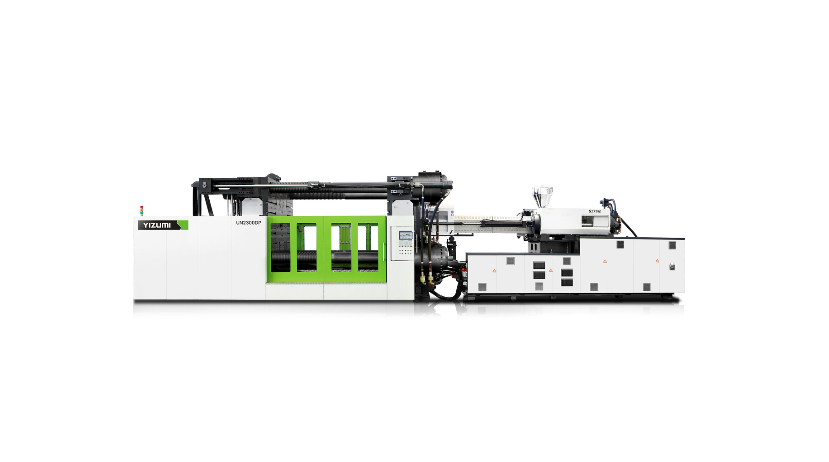
DP Series Two-platen Injection Molding Machine
D1 Series Two-platen Injection Molding Machine
Advanced solution for large-tonnage molding — YIZUMI positions the D1 Series as a German-technology two-platen platform for large-tonnage applications, offering 5,500 to 40,000 kN clamping force with fast dry cycles and high injection stability.
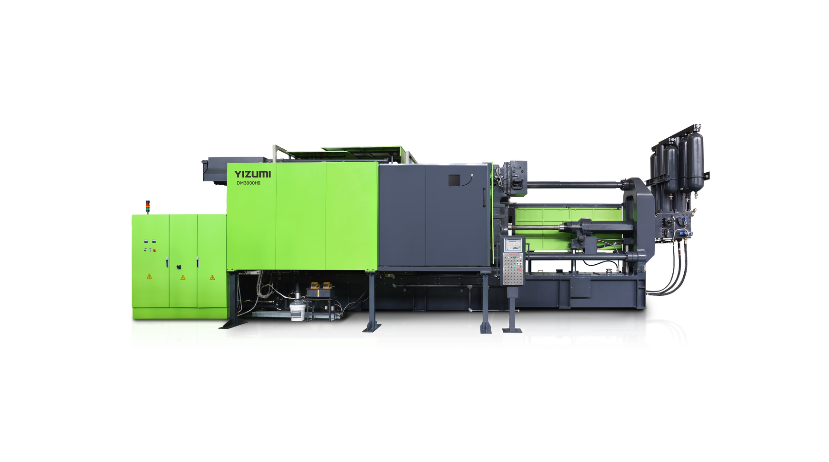
D1-N Series Two-platen Injection Molding Machine
High-end platform for more demanding large-part projects — The D1-N Series is presented as an advanced benchmark-oriented two-platen machine built with German technology and extensive expertise, with clamping forces from 5,500 to 44,000 US tons, up to 55% shorter dry cycle, and smaller tie-bar force variation.
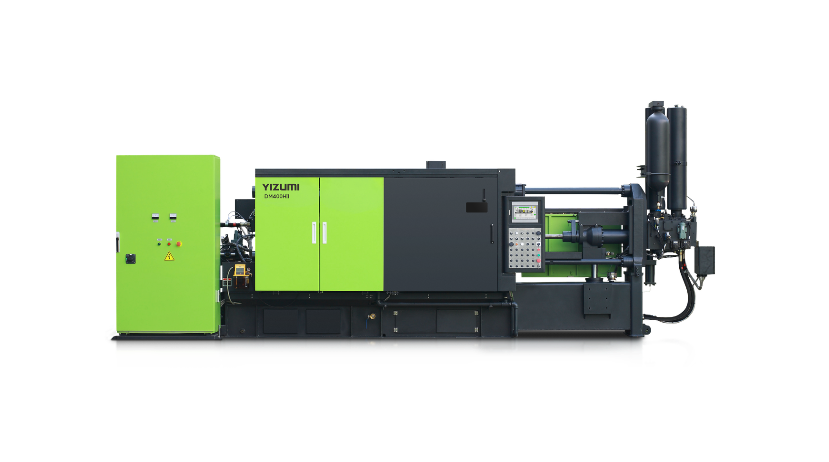
Conclusion
Two-platen injection molding machines are especially valuable in applications that involve large molds, long opening strokes, and high-tonnage production. That is why they are widely used in automotive, home appliances, logistics, packaging, and industrial manufacturing.
Their strength is not just in size capability. It is in how they support practical production needs, including mold flexibility, automation integration, and stable output.
For manufacturers planning large-part molding projects, choosing the right two-platen machine can make a direct difference in efficiency, consistency, and long-term operating performance.