Medical Injection Molding Machine Configuration: A Practical Buyer’s Guide
Abstract:
Medical molding depends on more than tonnage. The right machine must fit the part, resin, mold and cleanroom setup while supporting stable injection, efficient plasticizing, automation, traceability and validation from trial to production.
Choosing a medical injection molding machine is not simply a matter of selecting a press with sufficient clamping force. The machine must match the medical part, resin, mold, cleanroom strategy, target output, automation system and validation plan.
A machine can have enough tonnage and still be unsuitable for the project. The mold may not fit between the tie bars. The injection unit may be too large for a low shot weight. The machine may fill the part quickly but lack the plasticizing capacity required for a short cycle. It may also produce acceptable samples while failing to provide the production records needed for long-term traceability.
Medical Injection Molding Machine Configuration Checklist
Before discussing machine models, collect the information that controls the engineering decision.
| Project Input | Why It Matters |
| Part drawing and projected area | Determines approximate clamping-force requirements |
| Part and runner weight | Defines the required injection-unit capacity |
| Resin grade | Affects screw design, drying, pressure and temperature |
| Mold dimensions and weight | Determines platen size, tie-bar clearance and mold support |
| Cavity count | Affects shot weight, output and cavity balance |
| Wall thickness and flow length | Influences injection pressure and filling speed |
| Annual production volume | Determines productivity and automation requirements |
| Target cycle time | Affects injection, plasticizing, cooling and handling |
| Cleanroom requirement | Influences machine construction and part handling |
| Inspection requirements | Defines sensors, vision systems and reject handling |
| Validation requirements | Determines documentation, controls and data storage |
Two useful starting calculations are: Total shot weight = part weight × number of cavities + runner weight
Required plasticizing rate = total shot weight ÷ available plasticizing time
These calculations are only the beginning. Final machine sizing should also consider resin density, screw travel, residence time, cavity pressure, projected runner area, safety margin and the machine's recommended operating range.
1. Configure the Machine Around the Medical Part
A common purchasing mistake is selecting the machine first and trying to make the product fit it later. A more reliable process starts with the component.
Define the Product and Process Risk
Clarify how the part will be used:
· Will it contact blood, medication or patient tissue?
· Is it part of a fluid path?
· Will it be implanted?
· Is it a diagnostic consumable or an external housing?
· Will it be cleaned, assembled or sterilized after molding?
· At which points is the molded part exposed to operators or the surrounding environment?
The answers affect the cleanroom strategy, automation level, material controls and validation scope. The medical-device classification alone should not be used to assign a cleanroom class automatically.
Confirm the Resin and Sterilization Method
Common medical molding materials include PP, PE, PC, COC, COP, TPE and engineering thermoplastics. Liquid silicone rubber may be selected for flexible seals, valves, membranes and drug-delivery components.
The machine and plasticizing unit must account for:
· Processing-temperature range
· Moisture sensitivity
· Shear sensitivity
· Required melt homogeneity
· Material residence time
· Transparency requirements
· Resistance to the intended sterilization process
· Approved additives, colorants and regrind policy
Material selection should be completed with the resin supplier's processing and regulatory documentation rather than relying on a generic "medical-grade plastic" description.
Check the Complete Mold Envelope
In addition to clamping force, verify:
· Mold length, width, thickness and weight
· Tie-bar spacing
· Platen dimensions
· Minimum and maximum mold thickness
· Opening stroke
· Ejector stroke and force
· Hot-runner circuits
· Hydraulic, pneumatic or servo core pulls
· Robot access
· Utility-connection positions
· Space required for mold installation and maintenance
A machine with the correct tonnage may still be unusable if the mold does not fit or if there is insufficient opening stroke for safe robotic removal.
2. Select the Right Machine Architecture
Different medical products require different machine designs.
| Machine Type | Suitable Applications | Main Selection Reason |
| All-electric medical machine | Precision consumables, transparent parts and cleanroom molding | Clean operation and independent servo control |
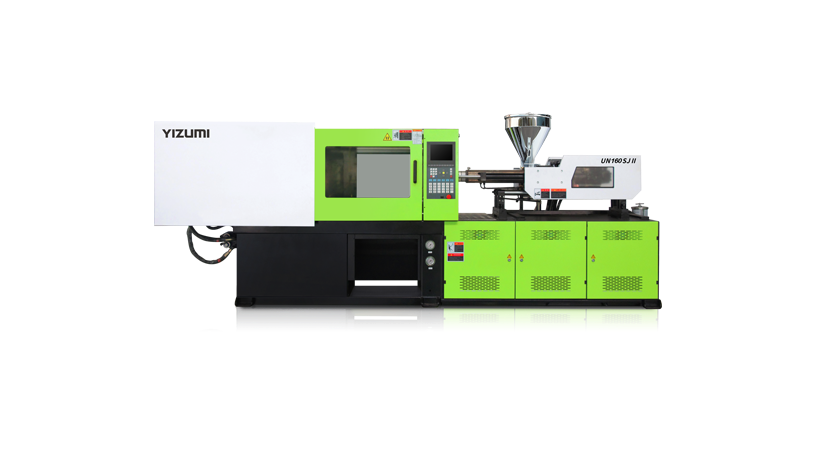
| High speed injection molding machine | Pipette tips, syringe caps, Petri dishes and thin-wall tubes | Fast filling and high-volume production |
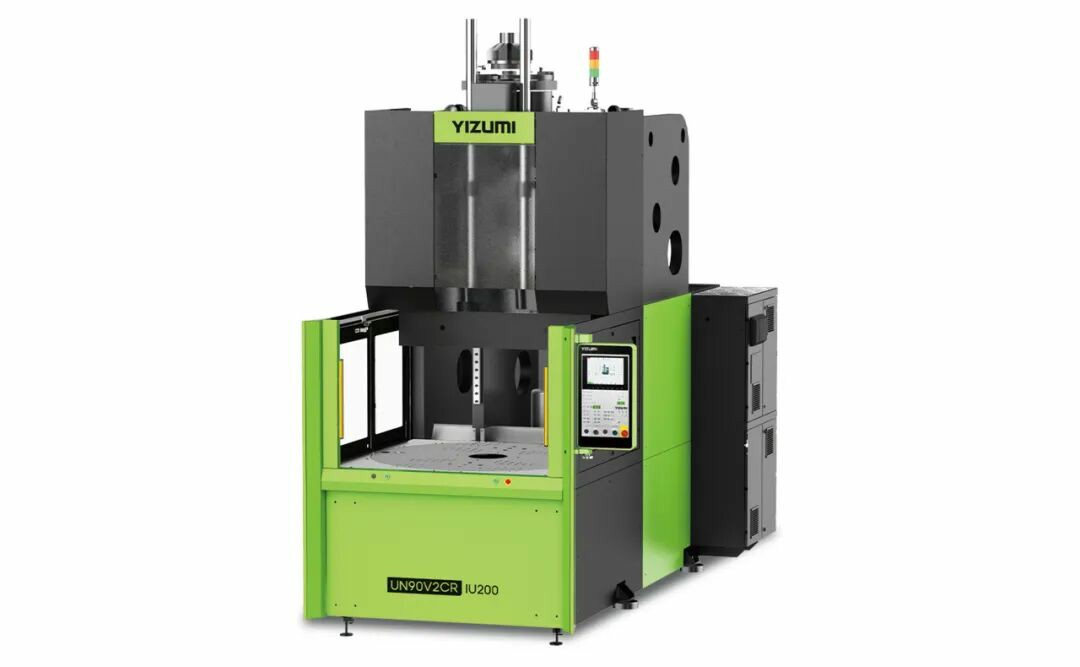
| Vertical injection molding machine | Needles, sensors, terminals and insert-molded parts | Controlled insert placement and multi-station operation |
| LSR injection molding machine | Silicone seals, valves, membranes and flexible components | Dedicated dosing, mixing and curing control |
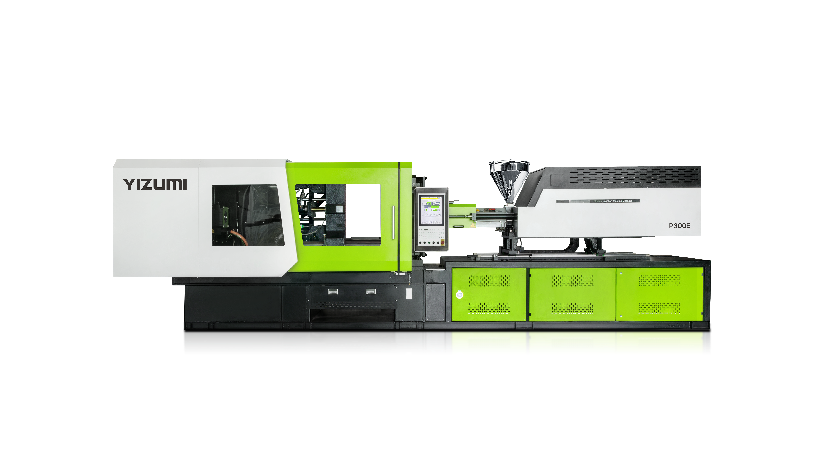
| Servo-hydraulic or hybrid machine | Large molds, multiple core pulls and cost-sensitive projects | Flexible hydraulic functions and broad mold compatibility |
Electric Medical Injection Molding Machines
An electric platform is often preferred for cleanroom and precision applications because servo motors can control injection, plasticizing, clamping and ejection independently. Eliminating or reducing exposed hydraulic systems can also lower oil-leakage and heat-management risks.
However, an all-electric machine is not a universal regulatory requirement. Projects with large molds, complex hydraulic core movements or different investment priorities may use sealed servo-hydraulic or hybrid configurations when contamination risks are appropriately controlled.
High-Speed Injection Molding Machines
A high speed injection molding machine may be required for thin-wall, multi-cavity products such as laboratory consumables and diagnostic components.
Machine comparisons should not be based on maximum injection speed alone. Buyers should also evaluate:
· Injection acceleration
· Pressure response
· V/P transfer accuracy
· Plasticizing capacity
· Platen rigidity
· Mold-protection control
· Simultaneous machine movements
· Robot take-out time
· Cooling and packaging capacity
For applications requiring a higher filling rate, the YIZUMI P-M Series offers an optional maximum injection speed of up to 247 mm/s. The actual production speed should be established through trials with the intended resin, mold, cavity count and automation system.
Vertical and LSR Configurations
A vertical injection molding machine is particularly useful when metal, electronic or preformed inserts must be loaded into the mold. Rotary-table or sliding-table arrangements can separate loading and molding stations, improving operator access and automation planning. YIZUMI identifies medical applications among the supported industries for its VM Series vertical machines.
An LSR injection molding machine requires more than a standard thermoplastic injection unit. The production cell normally needs controlled A/B-component dosing, accurate mixing, a cooled material path, a heated mold and process control suitable for vulcanization. YIZUMI's LSR Series integrates a specialized liquid-silicone injection unit with its machine platform for controlled blending and molding.
3. Configure the Machine for Clean Handling
The appropriate environment should be determined from product risk, customer requirements, downstream cleaning, assembly conditions and contamination sensitivity.
Review Contamination Sources
The machine and production cell should be assessed for:
· Tie-bar lubrication
· Exposed grease or hydraulic oil
· Mechanical wear particles
· Resin dust
· Unfiltered compressed air
· Open conveyors and part drops
· Operator contact
· Cooling-water connections
· Mold maintenance
· Packaging and downstream handling
A cleanroom-compatible configuration may include smooth, easy-to-clean surfaces, enclosed utility lines, closed material conveying, controlled mold-area airflow, suitable lubricants and robotic transfer into a protected container.
Clean production does not automatically mean sterile production. If the finished device must be sterile, a separate validated sterilization or aseptic process may still be required.
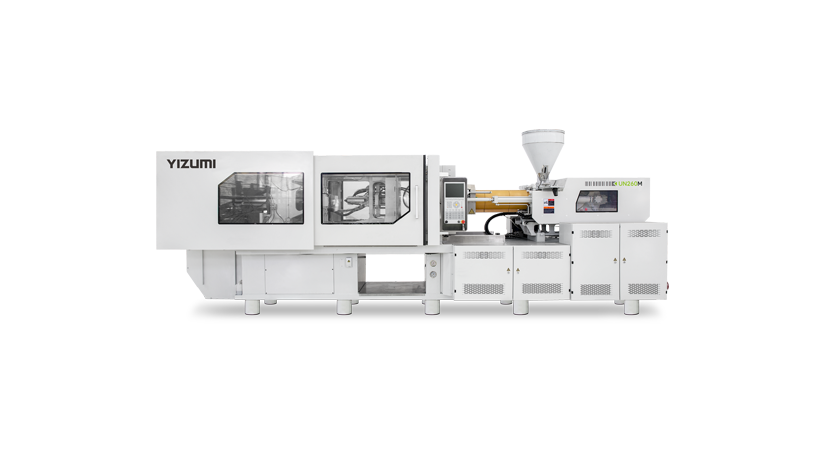
YIZUMI FF-M Clean-Production Features
The YIZUMI FF-M Series is available with clamping forces from 1,50 to 3,800 kN and is designed for medical molding applications. Its Tie-Bar Free structure avoids contact between the platen and tie bars and does not require lubricating oil on the tie bars, helping reduce a potential source of product contamination.
The FF-M linear guide structure provides stated guiding accuracy of up to 0.02 mm, while mold-opening and closing repeatability can reach ±0.03 mm. These characteristics support controlled mold movement, but final part capability must still be confirmed with the production mold and measurement system.
4. Match Injection Performance to the Process Window
Medical parts often combine low shot weights, narrow tolerances, multiple cavities and demanding production volumes. Nominal shot capacity does not fully describe whether the injection unit is suitable.
Injection and Holding-Pressure Control
The machine should provide stable control during filling, V/P transfer and holding. This is particularly important for thin walls, sealing features, microfluidic channels and dimensional interfaces.
The FF-M Series uses closed-loop injection-pressure control. YIZUMI states that injection- and holding-pressure stability accuracy can reach ±0.1 MPa under the machine conditions. Its injection speed can reach 200–350 mm/s, supporting applications such as micro tubes, deep-well plates, collection vials, blood-tube filters and disposable syringe caps.
These values should be treated as machine-performance specifications rather than guarantees for every molded part. Actual results depend on the machine size, injection unit, material, mold design, process window and inspection method.
Screw Design and Plasticizing Capacity
For commonly used medical thermoplastics such as PP and PS, the FF-M configuration uses a high-plasticizing, high-mixing screw. YIZUMI states that, under its referenced comparison, this screw can improve plasticizing efficiency by more than 20% compared with a general-purpose screw.
Buyers should validate this gain with the actual resin grade, additives, screw diameter, shot size and target cycle during mold trials. Plasticizing output and melt quality depend on the entire processing setup, so the stated improvement should not be applied as a universal production assumption.
The selected injection unit should also avoid excessive material residence time. Using a large barrel for a very small shot can lead to unstable metering, extended heat exposure and material degradation.
Control Response
YIZUMI's SDC servo direct control integrates the process algorithm into the servo drive. On the FF-M platform, the stated control cycle is reduced from 2–4 ms to 0.125 ms, supporting more responsive control of injection position, mold movement and switching positions.
When comparing control systems, buyers should also ask about:
· Sensor resolution
· Sampling and logging frequency
· Recipe protection
· Alarm history
· Parameter-limit control
· Data export
· Software-version management
· Backup and recovery
5. Build Traceability Into the Production Cell
Medical traceability should connect each production batch to its material, machine, mold, process and inspection results.
Depending on the product and quality system, the digital record may include:
· Machine and production-cell identification
· Mold and cavity identification
· Resin supplier and batch number
· Certificate of Analysis
· Drying temperature and time
· Recipe name and revision
· Injection pressure and velocity
· V/P transfer position
· Cushion
· Cycle time
· Mold and cooling-water temperatures
· Process alarms
· Rejected-part records
· Operator and inspection results
· Packaging and downstream assembly data
The machine should not be treated as an isolated data source. Where required, it should exchange information with a manufacturing execution system or ERP environment.
YIZUMI's Yi+ intelligent-manufacturing platform includes Yi MES and Yi CMS. YIZUMI describes Yi MES as supporting flexible management of the injection molding process and full production traceability, while Yi CMS is used for machine-condition monitoring.
Before placing the order, define who owns the data, how long it must be retained, how records are exported and how system access is controlled.
6. Plan FAT, IQ, OQ and PQ Before Ordering
Validation should influence the machine specification before the design is frozen.
Factory Acceptance Test
The FAT should verify agreed machine and cell functions before shipment. Depending on project scope, it may include:
Installation Qualification
· Safety functions
· Machine movements
· Alarm handling
· Mold trial
· Cycle-time demonstration
· Robot sequence
· Inspection and reject logic
· Recipe management
· Data collection
· Utility consumption
· Documentation review
IQ documents that the machine, mold, auxiliaries, software and utilities are installed according to approved requirements.
Typical IQ records include:
· Equipment identification
· Component verification
· Utility connections
· Electrical and pneumatic drawings
· Software and firmware versions
· Calibration status
· Manuals
· Spare-parts lists
· Preventive-maintenance requirements
Operational Qualification
OQ challenges the process and equipment at defined operating limits. Scientific molding or a structured Design of Experiments approach may be used to understand how critical parameters affect the part.
The objective is not simply to find one successful setting. It is to establish and document a robust operating window.
Performance Qualification
PQ demonstrates that the production process can repeatedly manufacture acceptable parts under routine operating conditions. It should use the intended machine, mold, material, operators, inspection methods and production environment.
Process validation generally means establishing objective evidence that a process consistently produces results meeting predetermined specifications.
Before ordering, agree which party will provide:
· URS response
· FAT and SAT protocols
· Electrical, water and pneumatic drawings
· Software identification
· Calibration certificates
· Critical-component lists
· Lubricant information
· IQ/OQ support documents
· Training records
· Maintenance plans
· Recommended spare parts
7. Understand the Regulatory Context
ISO 13485 defines quality-management-system requirements for organizations involved in medical-device design, production, installation and servicing. It is an organizational quality-system standard, not a product certificate for an individual injection molding machine.
A machine can support production within an ISO 13485-based quality system through stable controls, traceability, documentation and validation support. It cannot replace the medical-device manufacturer's own quality responsibilities.
For products supplied to the United States, the FDA Quality Management System Regulation became effective on February 2, 2026. The QMSR amended 21 CFR Part 820 and incorporated ISO 13485:2016 by reference, together with additional FDA requirements.
Machine specifications should therefore support the manufacturer's applicable quality system and regulatory strategy rather than rely on broad claims such as "FDA-approved machine" or "ISO 13485-certified machine."
Conclusion
Medical injection molding machine configuration begins with the part, resin, mold, cleanroom requirements and production target. Key decisions include machine type, clamping force, shot size, plasticizing capacity, contamination control, automation, traceability and IQ/OQ/PQ planning. Careful selection helps avoid oversized injection units, poor mold fit, incomplete records and costly validation delays while supporting stable, repeatable and traceable medical-part production over time.
FAQ
Q1. How Do I Choose the Right Tonnage and Shot Size for a Medical Injection Molding Machine?
A: Calculate clamping force from the total projected area, expected cavity pressure and a suitable safety margin. Size the injection unit from the combined part and runner weight, resin density and recommended shot range. Also confirm tie-bar spacing, platen size, mold thickness, opening stroke and robot access.
Q2. Is an All-Electric Injection Molding Machine Always Better for Medical Production?
A: Not always. All-electric machines are often preferred for clean, precise molding because they provide independent servo control and reduce hydraulic-oil-related risks. Servo-hydraulic or hybrid machines may be more suitable for large molds, hydraulic core pulls or projects with different cost and maintenance requirements.
Q3. What Cleanroom Class Is Required for Medical Injection Molding?
A: There is no universal cleanroom class for every medical part. The decision should be based on contamination risk, product exposure, customer requirements, downstream cleaning, assembly and sterilization.
Q4. How Can I Avoid Selecting an Oversized Injection Unit?
A: Compare the actual shot weight with the machine’s recommended operating range, not only its maximum capacity. A very small shot in a large barrel may cause long residence time, unstable metering and material degradation. Confirm the screw diameter and shot size through trials with the intended resin and mold.